Natural Disasters in China: Floods, Earthquakes, Typhoons, and More
1. Introduction
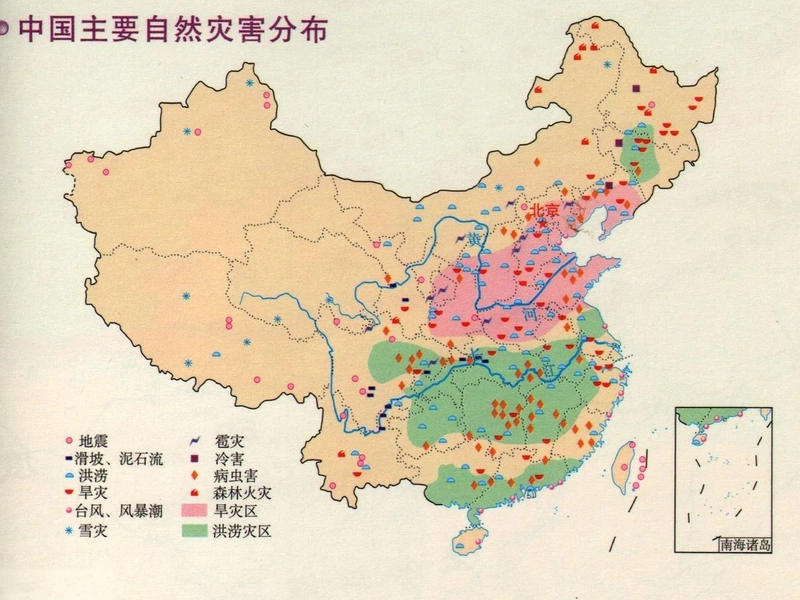
China is vast and geographically diverse, with mountains, plains, plateaus, coastal, and inland regions interwoven across the country. This diversity results in a wide variety of natural disasters (自然灾害). Floods, droughts, earthquakes, typhoons, landslides, and mudslides are common disaster types, affecting people’s lives, production, and social-economic stability. Understanding the main types of natural disasters in China (Natural disasters in China), their occurrence patterns, and mitigation strategies is crucial for disaster preparedness and reducing risks. This article introduces meteorological, geological, marine, biological, and other types of natural disasters, analyzing their regional distribution and suggesting practical disaster safety tips.
2. Main Types of Natural Disasters
2.1 Meteorological Disasters
Meteorological disasters are the most frequent natural disaster types in China, caused by abnormal climate, monsoon activity, and extreme weather events. They affect agriculture, disrupt transportation and energy supply, and impact daily life.
Floods
Floods include river flooding and flash floods. From early summer to autumn (June–September), especially during the plum rain season and typhoon periods, the middle and lower reaches of the Yangtze River, the Yellow River basin, the Pearl River basin, and southern hilly regions are prone to flooding. Floods are a major natural disaster example in China. Protective measures include constructing dikes, dredging rivers, flood warning systems, and emergency evacuation. (Flood prevention measures, Floods in China)
Drought
Droughts occur when rainfall is insufficient or evaporation is excessive. They mainly affect the North China Plain, northwest arid regions, and parts of Yunnan from late spring to summer. Droughts impact agriculture, water supply, and livestock, representing a key natural disaster in China. Mitigation measures include water-saving irrigation and planting drought-resistant crops. (Drought effects and prevention, Drought impact China)
Typhoons
Typhoons are tropical cyclones bringing strong winds and heavy rain, mainly affecting coastal areas from July to October. They can cause flooding, structural damage, and storm surges. Protective strategies include reinforced buildings, coastal dikes, early warning systems, and evacuation drills. (Typhoon safety tips, Typhoon in China)
Heavy Rain and Torrential Rain
Heavy rainfall can trigger urban waterlogging, landslides, and mudslides. Notable events include the 2021 Zhengzhou extreme rainfall. Measures include urban drainage systems, slope reinforcement, and timely weather alerts.
Hail, Snowstorms, and Cold Waves
Northern China experiences snowstorms, hail, and cold waves, which disrupt transport and power facilities. Protective measures include snow removal, building reinforcement, and agricultural protection.
Sandstorms
Northwest China and the North China Plain often experience spring sandstorms, reducing air quality and visibility. Measures include afforestation, land coverage, and monitoring air quality forecasts.
Thunderstorms, Fog, and Smog
Thunderstorms, fog, and smog affect summer and winter conditions, impacting safety and health. Protective measures include electrical safety, traffic control, and public health guidance.
2.2 Geological Disasters
China is located at the intersection of multiple tectonic plates, making geological disasters like earthquakes, landslides, and mudslides highly destructive.
Earthquakes
Frequent in southwest, North China, and parts of Northeast China. Earthquakes can trigger secondary disasters such as landslides and mudslides. Mitigation measures include earthquake-resistant construction, early warning systems, and emergency drills. (Earthquake preparedness, Earthquake disaster China)
Landslides and Collapses
High-risk in mountainous areas, especially during rainy seasons. Protective strategies include slope stabilization, vegetation restoration, and monitoring. (Landslide prevention, Landslide risk China)
Mudslides
Common in mountainous areas during heavy rain or snowmelt. Protective measures include sand dams, mountain monitoring, safe zones, and alerts.
Ground Subsidence and Cracks
Caused by groundwater extraction, mining, or geological changes. Mitigation includes water management, engineering reinforcement, and monitoring.
2.3 Marine Disasters
Storm Surges
Caused by typhoons or strong winds raising sea levels, affecting low-lying coastal regions. Measures include coastal dikes, early warning systems, and evacuation plans.
Tsunamis
Rare but destructive, mainly affecting East China Sea, South China Sea, and Taiwan Strait coasts. Measures include Tsunami evacuation guides and public education. (Tsunami preparedness China)
Red Tides
Harmful algal blooms affecting fisheries and ecosystems. Mitigation includes pollution control, water monitoring, and regulated aquaculture.
2.4 Biological Disasters
Forest and Grassland Fires
Caused by lightning or human activity, especially in dry seasons. Protective measures include fire monitoring, management, and firefighting infrastructure.
Pests and Rodent Infestation
Peaks in summer and autumn, affecting crops. Measures include chemical and biological control, crop rotation, and monitoring.
Desertification
Occurs in arid northwest regions, leading to poor soil, water scarcity, and dust storms. Mitigation includes vegetation restoration, sustainable farming, and soil-water conservation.
2.5 Other Disasters
Heatwaves
Summer heatwaves affect health, energy, and water supply. Measures include public education, indoor cooling, and urban greening.
Freezing Rain and Low-Temperature Hazards
Northern winter hazards disrupt transportation and harm crops. Measures include road safety, crop protection, centralized heating, and cold-weather supplies.
3. Distribution Patterns of Natural Disasters
- Eastern Monsoon Region: Frequent meteorological disasters like floods and typhoons.
- Southwest and North China Mountains: Geological disasters including landslides and mudslides.
- Coastal Regions: Marine disasters such as typhoons, storm surges, and red tides.
Overall: Understanding these patterns is crucial for natural disaster risk management, disaster education for students, and community emergency planning for natural disasters.
4. Disaster Prevention and Mitigation
- National level: Early warning systems for natural disasters in China, infrastructure like dikes, reservoirs, emergency routes, and coastal defenses.
- Local and community level: Emergency teams, drills, public education, and training.
- Individual level: Knowledge of evacuation procedures, emergency kits, and following alerts.
Through coordinated efforts, the impact of natural disasters can be significantly reduced.
Conclusion
China faces a variety of natural disasters, but through resilience, preparedness, and scientific mitigation, the people effectively protect lives and property. Understanding natural disaster causes, effects, and response tips ensures safety and strengthens the nation’s resilience.
Related Vocabulary
| Chinese | Pinyin | English |
|---|---|---|
| 自然灾害 | zìrán zāihài | Natural disaster |
| 地震 | dìzhèn | Earthquake |
| 洪水 | hóngshuǐ | Flood |
| 干旱 | gānhàn | Drought |
| 台风 | táifēng | Typhoon |
| 滑坡 | huápō | Landslide |
| 泥石流 | níshíliú | Mudslide |
| 海啸 | hǎixiào | Tsunami |
| 火山 | huǒshān | Volcano |
| 沙尘暴 | shāchén bào | Sandstorm |
| 暴雪 | bàoxuě | Snowstorm |
| 高温热浪 | gāowēn rèlàng | Heatwave |
FAQ – Natural Disasters in China
- Q1: What are the most common natural disasters in China?
A1: China experiences a variety of natural disasters, including earthquakes, floods, typhoons, landslides, droughts, tsunamis, volcano eruptions, tornadoes, and heatwaves. These natural disasters in China affect agriculture, transportation, infrastructure, and daily life. - Q2: How can I prepare for natural disasters in China?
A2: Effective disaster preparedness involves learning about natural disaster types, creating an emergency kit, understanding evacuation routes, and staying informed with natural disaster alerts in China. Specific measures depend on the type, such as earthquake preparedness, flood prevention measures, typhoon safety tips, and tsunami evacuation plans. - Q3: Which areas in China are most prone to earthquakes and landslides?
A3: Earthquake-prone regions in China are mainly in the southwest (Sichuan, Yunnan, Chongqing), north (Beijing, Hebei, Shanxi), and northeast (Liaoning, Jilin). These areas also have higher landslide risks in China, particularly in mountainous and hilly regions, and during heavy rains or snowmelt periods. - Q4: How often do floods and typhoons occur in China?
A4: Floods in China are common in the summer and early autumn (June–September), particularly in the Yangtze and Pearl River basins. Typhoons in China mainly hit coastal regions such as Guangdong, Fujian, Hainan, Zhejiang, and Shanghai from July to October. - Q5: What are the effects of droughts and heatwaves in China?
A5: Droughts in China lead to water shortages, reduced crop yields, and pasture degradation, especially in northern and northwestern regions. Heatwaves affect northern, eastern, and southern areas, causing health risks like heatstroke and increasing energy demand. - Q6: How does China manage tsunami, volcano, and tornado risks?
A6: Although rare, tsunamis, volcano eruptions, and tornadoes in China are addressed through early warning systems, emergency planning for natural disasters, evacuation drills, and public education campaigns. Coastal and high-risk areas are prioritized for monitoring and risk reduction. - Q7: Where can I learn more about natural disasters in China?
A7: To gain knowledge about types of natural disasters, disaster safety tips, and disaster risk management in China, resources include government websites, meteorological services, educational programs, and natural disaster awareness campaigns.