In the Wind, In the Rain, Yunnan Awaits
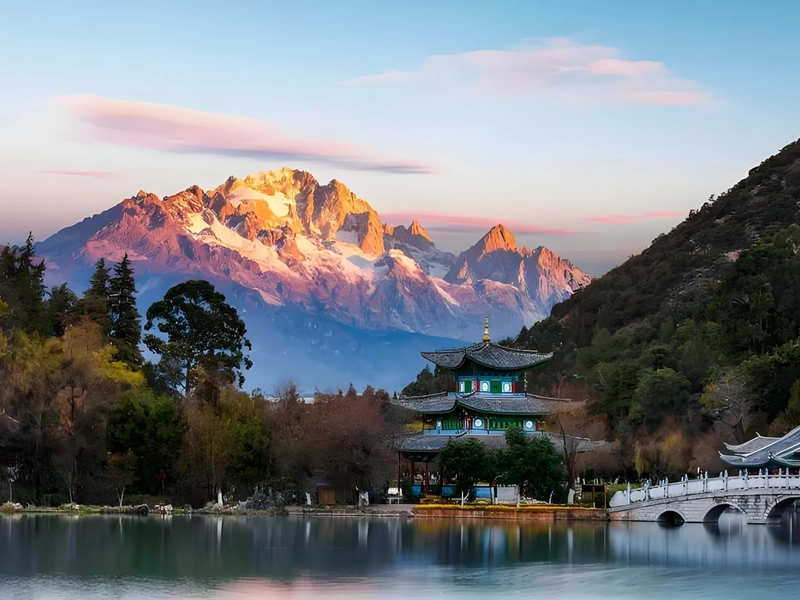
I. Check me out
When we softly utter the word “Yunnan,” it is as if we can taste the flavor of the wind—a wind carrying the crispness of cedar from the Hengduan Mountains, the gentle humidity rippling under the moonlight on Erhai Lake, the century-old richness brewing deep within a Pu’er tea cake, and the exuberant vitality of life wafting freely through tropical rainforests. Travelers seeking Yunnan travel or planning a Yunnan sightseeing tour can immediately sense why Yunnan attractions are celebrated worldwide.
Located at China’s southwestern frontier, the land called “Yunnan” is embraced by mountains and mist, like a jade gem embedded at the edge of the world. It is at once mysterious and passionate, drawing global visitors in search of their own “Eastern Utopia” through Yunnan tourism experiences.
Yunnan has never been merely a geographical term. It is a three-dimensional painting that the Creator, with both grandiose vision and meticulous care, has spread across the earth’s edge. As one of China’s most diverse provinces, it is home to 25 ethnic minorities whose languages, clothing, and festivals intertwine like flowing ribbons, revealing the nation’s most vivid Yunnan culture. From the sacred peaks of Shangri-La to the tropical forests of Xishuangbanna, one feels immersed in an extraordinary encounter with Yunnan natural beauty.
Here, nature is no longer a mere backdrop for human activity—it breathes alongside human civilization. Snow-capped mountains gaze upon the smoke rising from ancient towns; rushing rivers carve corridors for ethnic migration; the blazing sun ripens heavy rice grains while illuminating the colorful embroidery of festival attire.
From the cobblestone alleys of Dali Old Town to the Mosuo villages by Lugu Lake; from the morning mist over Yuanyang Terraces to the starry sky above Jade Dragon Snow Mountain in Lijiang, Yunnan sightseeing tours offer an irreplicable experience where nature and humanity coexist, and tradition and modernity harmonize.
This is a land poetically named the “South of the Colorful Clouds,” remarkable for its luxurious abundance—a grand and gentle revelation about harmony, color, and vitality. For travelers arriving from afar, Yunnan travel guide is not just a destination—it is an experience. Here, the world feels vast, time feels tender, and every sunrise and smile leaves an indelible memory.
II. The Geography of an Epic: A Three-Dimensional Canvas of Creation
If one were to unfold Yunnan scenic spots on a map, it would first reveal not a flat territory, but an epic composed by the earth itself—a tale of dramatic undulations. This vast land of approximately 394,000 square kilometers (roughly the size of a medium-sized country), with its capital Kunming at its heart, stretches northwest to the biting cold of snow-capped peaks and southwest to the warmth of rainforests. Its administrative divisions themselves reflect the grandeur of natural geography, making Yunnan travel itinerary planning both exciting and rich in discovery.
Its skeleton is a magnificent symphony of plateaus, mountains, and basins. As one of China’s most geologically active regions, Yunnan natural landscapes have been sculpted over hundreds of millions of years through compression, uplift, and faulting, carving out the majestic backbone of the Hengduan Mountains. Against this grand backdrop, Dianchi Lake rests like a massive jade in the Kunming Plain, its vast waters soothing the ruggedness of the plateau. Meanwhile, the Red Earth of Dongchuan seems to set the land ablaze, weaving rich red hues and colorful crops into some of the most striking Yunnan photography spots.
In the Ailao Mountains, the Yuanyang Terraces exemplify the collaboration of humanity and nature: the tiered curves molded by the Hani people follow the mountains’ contours, embedding life into the land. When the water reflects the sunlight, the terraces shimmer like a stairway to the heavens—an iconic highlight in Yunnan sightseeing tours.
Nourishing this enchanted land are rivers born in snowy regions and flowing toward the seas. The Jinsha River (the upper Yangtze) carves through mountains and valleys with primeval force, while the Lancang River (the Mekong) flows like a gentle jade ribbon, linking civilizations and life along its banks. Together with the scattered lakes across the province, they form Yunnan natural beauty’s pulsing veins and moist breath, softening the rugged mountains with endless grace and spirit.
III. Climate and Ecology: A Symphony of Life
If Yunnan’s geography forms its resolute skeleton, then its unique Yunnan climate is its delicate, ever-changing breath and pulse. Here, subtropical and tropical monsoon climates coexist like two contrasting yet harmonious conductors, jointly orchestrating the cycles of the seasons. Together, they temper extreme cold and heat, giving Kunming its famed “Springtime All Year” reputation and bathing the entire province in abundant rainfall and gentle sunshine.
This gift of climate is not monotonous or uniform; it is a vertical, three-dimensional richness—“one mountain, four seasons; ten miles, different skies.” From valley to peak, countless natural stages are prepared for the ultimate flourishing of life. Stepping into Yunnan is like entering a living climate museum: morning mist cloaks the tea gardens, afternoon sunlight dances on terrace waves, evening raindrops tap lightly on bamboo groves, and the night breeze brushes across lake surfaces. Everywhere, the air carries a gentle plenitude that invites deep breaths, a quiet savoring of the moment’s freshness.
This warm and humid breath nurtures and guards one of China’s most astonishing reservoirs of Yunnan biodiversity. Yunnan, recognized by scientists as a “world-class biodiversity hotspot,” is a living, continuously evolving natural museum. Though it covers only 4% of China’s land area, it harbors more than half of the nation’s plant and animal species. Here, miracles unfold along the Tropic of Cancer in Yunnan—glacial peaks of the highlands and the hum of tropical rainforest insects coexist in the same vision.
Flora and fauna in Yunnan are not rare exhibits but participants in daily life. Matsutake mushrooms quietly peek from the humus beneath pine forests, epitomizing the pinnacle of mountain delicacies. On alpine scree, snow lotuses bloom with sacred resilience amidst ice and wind. At morning flower markets, orchids, azaleas, camellias, and cherry blossoms compete for attention, turning streets and alleys into a silent festival of spring.
From the Asian elephants wandering Xishuangbanna’s rainforest to gibbons leaping through the cloud forests of the Gaoligong Mountains; from the towering kapok trees piercing the sky to the tender embrace of Yunnan snub-nosed monkeys, every life here is an indispensable note in this grand Yunnan ecology symphony. Migratory birds traverse Dianchi Lake, while the Lancang River hums its gentle lullaby; the rhythm of Yunnan itself composes a living score for the planet.
This rich ecology is not merely nature’s gift but a crystallization of human-nature coexistence. Yunnan’s peoples have learned to live in harmony with their environment: the Dai build bamboo houses to let the wind pass freely; the Hani construct terraces amid mist to harmonize water and soil; the Naxi revere snow-capped mountains as sacred, befriending the wind and embedding gratitude and respect into their daily rituals. It is through this wisdom that the province maintains its pristine vitality amidst modern tides.
For travelers, Yunnan’s climate and ecology are more than scenery—they are an experience. One may gaze at the stars atop the Shangri-La plateau, listen to insects in Banna’s jungles, or feel the cloud-kissed breath of the Yuanyang terraces. Every step is an exploration, every glance an awe, every pause a meditation on life’s oldest melodies.
Yunnan is a grand symphony of nature, a poem of life composed by sunlight, rain, and wind—and this poem continues to be quietly rewritten with each morning and every breeze.
IV. Ethnic Groups and Human Warmth: A Splendid Tapestry on the Land
Amid Yunnan’s vast mountains and rivers, the most captivating scenery is not the still landscapes, but the living tapestry woven by the province’s 26 Yunnan ethnic groups. Yi, Bai, Dai, Hani, Naxi, Jingpo, Lahu… these peoples are like colorful threads flowing through the river of time, intersecting and intertwining across highlands and valleys to create a uniquely diverse cultural panorama.
These groups are not isolated islands but relatives sharing the same land. Mountains and rivers demarcate, yet do not divide; languages differ, yet hearts communicate. Songs, clothing, and customs have long interwoven through interaction, forming Yunnan’s characteristic cultural symbiosis—a miracle of diversity flourishing in harmony.
This vibrant cultural vitality is not static memory but a series of dazzling seasonal feasts:
- When Yi torches ignite the night sky, flames illuminate the mountains and people dance around the fire; copper ornaments and smiles shimmer, reflecting millennia of bold tradition and passion.
- During the Dai Water-Splashing Festival in Xishuangbanna, sunlit droplets refract rainbow hues, mingling laughter and joy into a heavenly symphony that seems to wash away worldly fatigue and sorrow.
- At the Hani Long-Street Feast, smoke rises gently from bamboo houses, and smiling faces reflect the harvest’s delight.
- In Bai villages during the March Street Festival, the strings of the sanxian and beats of flower drums convey emotion through song and dance, the natural romance warming even the hearts of strangers.
During these celebrations, time seems to retreat to antiquity, leaving only the resonance of human hearts with nature—a pure, living culture that exists not for display but for the continuation of life itself.
Even beyond festivals, Yunnan’s ethnic charm flows through daily life:
- In Bai villages of Dali, blue-tiled white walls and painted doorways convey auspicious symbols;
- In Dai villages of Xishuangbanna, bamboo houses stand by water, mingling floral and sandalwood fragrances, while women in gold-thread skirts smile like blossoms;
- At night by Lugu Lake, Mosuo culture comes alive as women softly sing “walking marriage” tunes under moonlight, reflected in the lake’s dreamlike ripples.
Every smile, bowl of rice wine, and sincere handshake embodies the land’s gentlest welcome.
Yunnan culture is also expressed through its art:
- In Jianchuan, woodcarvers carve the passage of time into doors and beams, blending Confucian spirit with rustic mountain character;
- In Jianshui, potters transform kiln and breath into poetry, producing purple pottery “dark as ink, bright as mirror”;
- In Tengchong, jade and jadeite carvings shimmer with life under shifting light;
- In Dehong, weavers intertwine gold thread with cotton and hemp to craft Dai brocades, embedding tribal memory and tropical dreams into warp and weft.
All of this is not museum-bound heritage—it is living, breathing, used, and continually created. In Yunnan, culture, like nature, has warmth. It captivates not through luxury, but through sincerity; not through complexity, but through tranquil resonance. Every ethnic group, every craft, every dance is a testament to human coexistence with the heavens and earth—a glimpse of the truest humanity and romance in China’s southwestern mountains.
For travelers, visiting Yunnan is stepping into an unending storybook. One may hear songs around a campfire in ancient villages, unexpectedly encounter elephants in tropical forests, or watch a young girl weave floral ribbons beneath snow-capped peaks. In that moment, one realizes—Yunnan is not just a landscape, but a way of life, a soft light hidden within mist and human hearts.
V. History and Cultural Heritage: Layers of Time and Echoes of Civilization
Yunnan’s mountains and rivers have not only nurtured countless lives but also fostered a profound and distinctive civilization. Beyond the grand narrative of Chinese civilization, this southwestern plateau has developed its own unique system, shining with its own brilliance and mystery. This is the essence of Yunnan history and Yunnan cultural heritage, a tapestry that travelers and scholars alike come to explore.
Amid the mist of Dianchi Lake and the whispers of wind between Cangshan and Erhai, one can faintly hear the drums and ritual songs of the ancient Dian Kingdom. Over two thousand years ago, this kingdom, shrouded in a touch of historical mystery, built a remarkable chapter on the highlands, using bronze culture as its medium. Excavated bronze artifacts from Shizhaishan in Jinning—such as the Bull-Tiger Bronze Table, bronze chariots, and enigmatic ritual figurines—display fantastical compositions and exquisite craftsmanship, reflecting the ancients’ reverence for heaven and earth and their understanding of life. These artifacts not only resonate with Central Plains civilization but also reveal the primal, dynamic, and transcendent aspects of southern culture, like the very breath of time, still inspiring awe today.
Following the river of history, the chapters of the Nanzhao Kingdom and the Dali Kingdom unfold. In the 8th century, the Nanzhao Kingdom rose by Dianchi Lake, thriving through trade along the Tea Horse Road, and maintaining exchanges with the Tang Dynasty, the Tibetan Empire, and Southeast Asia, becoming a true “cultural crossroads of Asia.” Later, the Dali Kingdom elevated Buddhism to new heights—its Three Pagodas stood tall, and golden temples resonated with sacred chants. During this era, Yunnan’s spiritual world was nourished by Buddhist teachings, harmonizing Confucianism, Daoism, and Buddhism, forming a unique ethos of “mountains as temples, heaven and earth as shrines.”
Although the Dali Kingdom gradually declined under the Yuan Dynasty, Yunnan’s frontier governance and multiethnic structure were preserved and strengthened during the Ming Dynasty. The establishment of the Xuānwèisī (local administrative offices) and Tusi (native chieftain) system allowed central oversight while maintaining local self-governance and cultural continuity. Mountains and rivers remained majestic, towns and fortresses retained their ancient layouts, and the Tea Horse Road continued as a conduit for trade and cultural exchange. Against this historical backdrop, Yunnan once again became a focal point in the late Ming and early Qing periods. Frontier general Wu Sangui’s military and political activities in central Yunnan maintained the region’s strategic significance during turbulent times, leaving behind rich legends. Later, western Yunnan became a strategic site during the War of Resistance Against Japan, with the construction of the Burma Road and the Hump Route placing Yunnan on the world stage once more. These roads, forged through blood and courage, are still hailed today as “lifelines to freedom and hope,” bearing witness to China and the world standing side by side in times of peril.
These remarkable civilizations and historical events have not faded with the wind; they are etched tangibly into the land, architecture, and hearts of the people, forming Yunnan’s awe-inspiring map of cultural heritage:
- Lijiang Old Town: Listed as a UNESCO World Cultural Heritage site, this ancient town is a living testament to Naxi culture. Blue stone streets crisscross, the Jade River meanders through the town, and Dongba pictographs shimmer on ancient wooden gates, conveying ancient wisdom.
- Dali Old Town: Facing Erhai Lake and backed by Cangshan Mountain, the wind, flowers, snow, and moon here transcend mere natural imagery, becoming a philosophy of life. Bai residences, with their white walls, dark tiles, and screen walls, exhibit symmetrical aesthetics, and door couplets still bear the age-old sentiment, “Harmony in the home brings prosperity in all things.”
- Stone Forest: Carved by millions of years of karst formations, the stone pillars resemble swords, peaks, and human figures. The legends of the Sani people make it more than a geological marvel—it symbolizes love and courage, with the voice of Ashima echoing through the rocks as the mountains and stones respond.
- Yuanyang Hani Terraces: Generations of the Hani people have sculpted the mountains with their hands, weaving clouds, sunlight, rain, and soil into magnificent “flowing sculptures.” At sunrise, the terraces reflect like mirrors, and the mountain wind brushes the face, as if the entire land is breathing.
In addition, Songzanlin Monastery in Shangri-La, with its golden roofs reflecting the snow-capped mountains, is a spiritual center of Tibetan Buddhism; Heshun Ancient Town in Tengchong, with its Sino-Western architecture, tells the story of a century-old overseas community; and Jianshui Ancient Town, with its brick carvings, purple pottery, and literati atmosphere, conveys the depth and elegance of central Yunnan culture.
This profound history is not a cold past; it remains vivid today. Yunnan’s opera, dance, crafts, and faith represent another form of historical continuity:
- Bai and Dai Operas: Express human joys and sorrows in native languages, turning ancient folklore into stage poetry.
- Dai Peacock Dance: Every stretch of the arms and turn of the head is a salute to heaven and earth.
- Yi Embroidery, Miao Silverwork, and Jingpo Weaving: Weave myths, totems, and daily life into garments and jewelry, becoming “wordless epics” worn on the body.
In Yunnan, history is not a sealed scroll but a resonant symphony. Walking through the land, every ancient site continues its story, and every old town preserves the echoes of civilization. The wind here carries the changes of dynasties and tribes; the water reflects the light of faith and dreams. Setting foot on this land, travelers are not merely exploring Yunnan history or visiting Yunnan ancient towns—they are listening to the heartbeat of human civilization etched on the highlands.
VI. Flavors and Local Treasures: The Gifts of Earth to the Tongue and Palm
The taste of Yunnan cuisine, like its terrain and climate, is complex, multi-dimensional, and layered. Its culinary character cannot be simply summarized as “sour and spicy.” It is a vitality rooted in mountains and rivers—sourness comes from wild tomatoes, sour papaya, and fermented juices, naturally countering the humid summer heat; spiciness comes from millet chili and fiery hot peppers, striking like the concentrated sunlight of the plateau; and a hint of numbing is provided by local spices such as tsaoko and Sichuan peppercorns, adding the final flourish to a culinary painting. Ingredients are directly harvested from nature’s generosity: the exquisite freshness of mountain delicacies, the delicate sweetness of freshwater fish, and the crisp, clean flavors of wild vegetables all embody the Yunnan food philosophy of “eat in season, source locally.”
Among these flavors, wild mushrooms hold a special place. Situated at the intersection of plateau and rainforest, Yunnan’s climate—with its large diurnal temperature differences and abundant rainfall—has nurtured roughly 250 edible species, spanning two classes, eleven orders, thirty-five families, and ninety-six genera, accounting for more than half of the world’s edible mushroom varieties. Yunnan mushrooms are rightfully celebrated as the “Kingdom of Fungi.” Matsutake mushrooms exude majesty, Chizong mushrooms are plump and flavorful, Boletus are smooth and tender, Bamboo mushrooms are crisp, Black Tiger Palm mushrooms are uniquely aromatic, Green-cap mushrooms are sweet, and Ganba mushrooms are rich and intense. Each variety is a natural treasure, embodying Yunnan cuisine’s philosophy of “gifts of the mountains, in harmony with the seasons.” Locals possess a near-obsessive passion for mushrooms: whether for seasonal gathering, home soups, or banquet dishes, mushrooms are considered precious ingredients showcasing both culinary skill and harmony with nature. For non-locals, caution is essential, as some wild mushrooms resemble edible varieties but are toxic if misidentified or improperly prepared. Enjoying Yunnan mushrooms responsibly, with local guidance, is as important as savoring their flavors.
Cross-the-Bridge Rice Noodles, a signature Yunnan food, have evolved beyond a snack into a ritualized dining philosophy. A steaming bowl of chicken broth is used to cook raw meat and fresh vegetables right at the table, preserving their utmost tenderness while embodying care and intimacy. Steamed Pot Chicken, prepared in a unique ceramic vessel without adding water, relies solely on steam to extract the natural essence, producing a clear yet rich broth—a return to culinary simplicity. Grilled Milk Fan, a Bai cuisine specialty from Dali food culture, offers a fragrant, sweet indulgence, while Xuanwei Ham, with its unique rosy flavor and firm texture, competes with Jiangsu and Zhejiang hams. The meal concludes perfectly with a cup of tamarind juice, sweet, sour, and refreshing, sealing the feast with a delicate finish.
Yunnan local specialties extend beyond the table into a wealth of tangible treasures travelers can take home:
- Tea as a vessel of time: Pu’er tea matures into richness and serenity over the years; Dianhong tea, with its golden tips and vivid red infusion, warms countless afternoons.
- Herbal treasures from remote mountains: Wenshan Sanqi promotes circulation, Zhaotong Tianma calms the body, and alongside Cordyceps, snow lotus, saffron, and other rare herbs, Yunnan is a living repository of medicinal plants.
- Mountain delicacies from rainforest monsoons: Matsutake mushrooms, Chizong, Boletus, Bamboo mushrooms, Black Tiger Palm mushrooms, Green-cap mushrooms, Ganba mushrooms… each carries the flavor of the mountains and the rhythm of the seasons. For locals, mushrooms are more than ingredients—they are cultural and culinary rituals. Visitors must respect local expertise and avoid indiscriminate harvesting or consumption.
- Seasonal fruits and coffee: From tart tamarind and bayberry to plump walnuts and high-altitude coffee beans from southwest Yunnan, the province’s fruits consistently surprise and delight.
- Artisan craftsmanship: Tengchong jade and Huanglong jade exude gentle elegance, Dai brocades shine with vibrant patterns, Jianshui purple pottery conveys rustic charm, and Tengchong jade showcases refined artistry—all examples of ethnic wisdom blossoming in the palm.
- Street delicacies and everyday sweetness: The creamy milk aroma of Grilled Milk Fan, the bursting texture of fermented tofu, the soft and chewy rice cakes, and rose-infused teas and candies all narrate the everyday sweetness and warmth of life in Yunnan cuisine.
VII. Travel Guide: An Invitation from Mountains, Rivers, and Ancient Towns
Yunnan travel is a dreamscape crafted by a generous Creator and a group of romantic poets, extending a sincere invitation to every traveler. Its natural wonders, rich and extraordinary, are enough to soothe even the weariest soul. The Stone Forest, a karst masterpiece, rises like a forest made of stone; jagged rocks and winding paths make walking through it feel like traveling along a geological time corridor. The thirteen snow-capped peaks of Jade Dragon Snow Mountain leap like a silver dragon, revered by the Naxi people as the “Three Sacred Peaks,” symbols of purity and grandeur. Lugu Lake, cradled by surrounding mountains, shines like a sapphire, preserving the Mosuo people’s matriarchal tradition of “men do not marry, women do not wed,” adding a layer of mystery and tenderness. The very name Shangri-La travel evokes an earthly paradise, where meadows, Tibetan monasteries, and pristine skies satisfy all longings for distant wonders. Meanwhile, the Red Land of Dongchuan and the Yuanyang rice terraces showcase nature and humanity painting together with colors and lines, providing endless inspiration for photographers.
Complementing these natural marvels are cultural sites steeped in history. Dali travel offers the Bai people’s leisurely elegance against the backdrop of “wind, flowers, snow, and moon.” Lijiang travel, with its streams, bridges, and Naxi courtyards, slows down time, offering a quiet refuge amidst the bustling world. Kunming tourism, the provincial capital, merges modernity with historical depth, featuring Dianchi Lake, Cuihu Park, and the World Expo Garden, all set within a springlike climate year-round. Tengchong, known for its volcanoes and geothermal landscapes, combines geological wonders with rich borderland culture. Qujing, an agricultural hub, harmonizes the natural beauty of the Yunling Mountains with eastern Yunnan culture, while Chuxiong preserves Yi cultural heritage through its vibrant festivals and folk customs. Other areas such as Baoshan, Lincang, Honghe, Xishuangbanna tourism, Dehong, Nujiang, Lijiang, and Yuxi each offer unique natural and ethnic experiences, weaving tea mountains, terraces, rainforests, waterfalls, and minority villages into a rich travel tapestry.
For travelers seeking an immersive journey, the classic route from “Dianchi—Kunming—Dali—Lijiang—Shangri-La” is ideal. This Yunnan itinerary resembles a ladder of civilization: beginning at Dianchi Lake, the “Pearl of the Plateau,” and modern Kunming, proceeding through the poetic Dali, reaching the serene Lijiang, and culminating at the sacred and tranquil Shangri-La. Traveling northward is not only a geographical ascent in altitude but also a spiritual journey—from a modern city to ancient towns, and ultimately to a place of inner serenity—connecting Yunnan travel’s natural and cultural essence into a complete epic of exploration and discovery.
VIII. Path of Development: The Symphony of Tradition and Modern Waves
Yunnan economy, like its terrain, is layered and complex. Its three primary industries form solid pillars that support steady progress in modernization, creating a unique symphony of development where tradition and innovation meet.
The primary sector forms the province’s foundational color, drawing nutrients from fertile red soils and diverse climates. Pu’er tea and Dianhong tea, alongside small-grain Yunnan coffee, have evolved from local specialties into internationally recognized geographic indications, blending cultural depth with market reach. The large-scale cultivation of tropical fruits (mangoes, citrus) and medicinal herbs (Sanqi, Tianma) transforms Yunnan’s botanical abundance into tangible economic value, creating a distinctive modern plateau agriculture system and a green industry that enriches local communities.
The secondary sector showcases Yunnan’s rich mineral endowment. Its abundant resources, particularly copper, zinc, and tin, provide a strong industrial base. The associated non-ferrous metal processing industry has propelled Yunnan from a “resource-rich province” to a “high-value processing powerhouse,” converting subterranean treasures into industrial materials, connecting extraction, smelting, and advanced manufacturing into a complete industrial chain and driving regional economic growth.
The tertiary sector demonstrates the province’s most vitality and potential. Yunnan tourism, the flagship industry, transforms the aforementioned natural landscapes and cultural heritage into a sustainable economic engine. Meanwhile, Yunnan leverages its strategic location to embrace the digital era; the rise of cross-border e-commerce positions it as a “digital hub” for South and Southeast Asia, enabling local high-quality products to reach global markets. Deep-rooted ethnic culture has also inspired a flourishing creative industry—from fashion incorporating minority elements to cultural products based on ancient towns or the Dongba script—where traditional skills and symbols are given new life and shine in the wave of creative economy.
IX. Modern Pulse: New Growth Sprouting from Traditional Soil
Yunnan travel is not only etched in ancient towns and terraced fields but also pulses through its modern cities. Each urban center acts as a vital organ, infusing contemporary vitality into this ancient land. Kunming tourism, the provincial capital and a major transportation hub, transcends its identity as the “Spring City,” developing into an open, inclusive metropolis with its year-round blooming flowers and proximity to South and Southeast Asia. Dali travel, set against the eternal backdrop of Cangshan and Erhai, preserves millennia of tourism heritage while attracting new residents in pursuit of “poetry and distance,” fostering vibrant community culture and creative ecosystems. Qujing, an important industrial base, demonstrates Yunnan’s robust and resilient side, supporting stable economic development through a strong manufacturing foundation.
This land values diversity in nature and culture as well as the power of knowledge and innovation. Yunnan universities and educational institutions are cornerstones of the province’s future. Yunnan University, leveraging the “Kingdom of Plants” as a natural laboratory, builds expertise in ecology and ethnology. Kunming University of Science and Technology, with its research strengths in metallurgy and materials science, aligns closely with local industries, translating academic innovation into tangible economic growth. These institutions cultivate talent and energy for sustainable development, contributing to Yunnan’s modern pulse.
The modern vitality of Yunnan is most visible in its urban culture. At night, bustling city markets are filled with the aroma of barbecues and local dialects, presenting an authentic and lively picture of daily life. At the same time, a more refined, international lifestyle is emerging. Yunnan coffee culture flourishes—from small-grain coffee in independent Baoshan coffee estates to boutique cafes in Kunming—making coffee Yunnan’s new flavor signature. Creative markets blending ethnic culture Yunnan with youth innovation thrive, where tie-dye, silverware, and modern design merge, allowing Yunnan traditional crafts to enter everyday life with a fresh identity, vividly illustrating the coexistence of tradition and modernity.
Conclusion
From snow-capped peaks to tropical rainforests, from ancient melodies to the aroma of street-side Yunnan coffee, from the bronze echoes of antiquity to the cloud-based wisdom of today, Yunnan travel reveals its three-dimensional richness.
It teaches us that true abundance is not merely a feast for the eyes or palate, but the harmony of terraced fields and algorithms under the same sky, the blending of Pu’er tea’s mellow fragrance with the aroma of coffee beans at a single street corner.
Perhaps this is Yunnan’s most precious lesson to the world: in an age of rapid change, we can still preserve what fundamentally defines us—a reverence for nature, a commitment to cultural heritage, and an unextinguishable love for life itself.
| Chinese Vocabulary | Pinyin | English |
|---|---|---|
| 云南 | Yúnnán | Yunnan |
| 旅行 | lǚxíng | travel |
| 景点 | jǐngdiǎn | scenic spot / attraction |
| 古镇 | gǔzhèn | ancient town |
| 高原 | gāoyuán | plateau |
| 民族 | mínzú | ethnic group |
| 茶 | chá | tea |
| 咖啡 | kāfēi | coffee |
| 美食 | měishí | cuisine / delicacy |
| 生态 | shēngtài | ecology |
| 雪山 | xuěshān | snow-capped mountain |
| 湖泊 | húpō | lake |
| 梯田 | tītián | terraced fields |
| 温暖 | wēnnuǎn | warm |
| 传统 | chuántǒng | tradition |
| 节日 | jiérì | festival |
| 茶叶 | cháyè | tea leaves |
| 山水 | shānshuǐ | mountains and rivers |
| 温泉 | wēnquán | hot spring |
Yunnan Travel FAQ
Q1: What is special about Yunnan’s geography?
A: Yunnan, located in Southwest China, is known for its diverse landscapes, including highlands, mountains, valleys, rivers, and lakes. Famous spots like Cangshan Mountain, Erhai Lake, and Yuanyang Terraces showcase its dramatic scenery. The province spans nearly 394,000 km² and is one of China’s most geographically diverse regions.
Q2: What kind of climate does Yunnan have?
A: Yunnan experiences both subtropical and tropical monsoon climates. This mild and humid climate gives Kunming its nickname “Spring City” and allows biodiversity to flourish. Visitors can enjoy different weather conditions depending on altitude, from misty mountains to tropical rainforests.
Q3: What are the must-visit historical sites in Yunnan?
A: Key historical attractions include Lijiang Ancient Town (UNESCO World Heritage), Dali Ancient City, Shilin Stone Forest, and Yuanyang Hani Terraces. Sites like Songzanlin Monastery in Shangri-La and Heshun Ancient Town in Tengchong reflect both Buddhist and local cultural heritage.
Q4: What ethnic groups can I experience in Yunnan?
A: Yunnan is home to 25+ ethnic minorities, including the Bai, Dai, Yi, Hani, Naxi, Jingpo, and Lahu. Travelers can experience local customs, festivals like the Dai Water-Splashing Festival, traditional dances, handicrafts, and colorful ethnic attire throughout the province.
Q5: What is Yunnan famous for in terms of food and local products?
A: Yunnan cuisine is known for its use of mushrooms, wild vegetables, spices, and local delicacies such as Crossing-the-Bridge Noodles and Steam-Pot Chicken. The region also produces Pu’er tea, Dianhong black tea, tropical fruits, coffee, and traditional handicrafts like Dai brocade and jade carvings.
Q6: How can travelers explore Yunnan’s natural biodiversity?
A: Yunnan is a world-class biodiversity hotspot. Visitors can hike in Xishuangbanna’s tropical rainforests to see Asian elephants, explore the Gaoligong Mountains for rare primates, or observe seasonal flora like snow lotuses and orchids. Ecotourism and guided nature trips ensure safe and sustainable exploration.
Q7: When is the best time to visit Yunnan?
A: Thanks to its mild climate, Yunnan can be visited year-round. Spring and autumn are ideal for hiking, festivals, and terrace photography, while summer is perfect for exploring cooler highlands, and winter allows for snow-capped mountain views and fewer tourists in popular towns.