Guangzhou Introduction
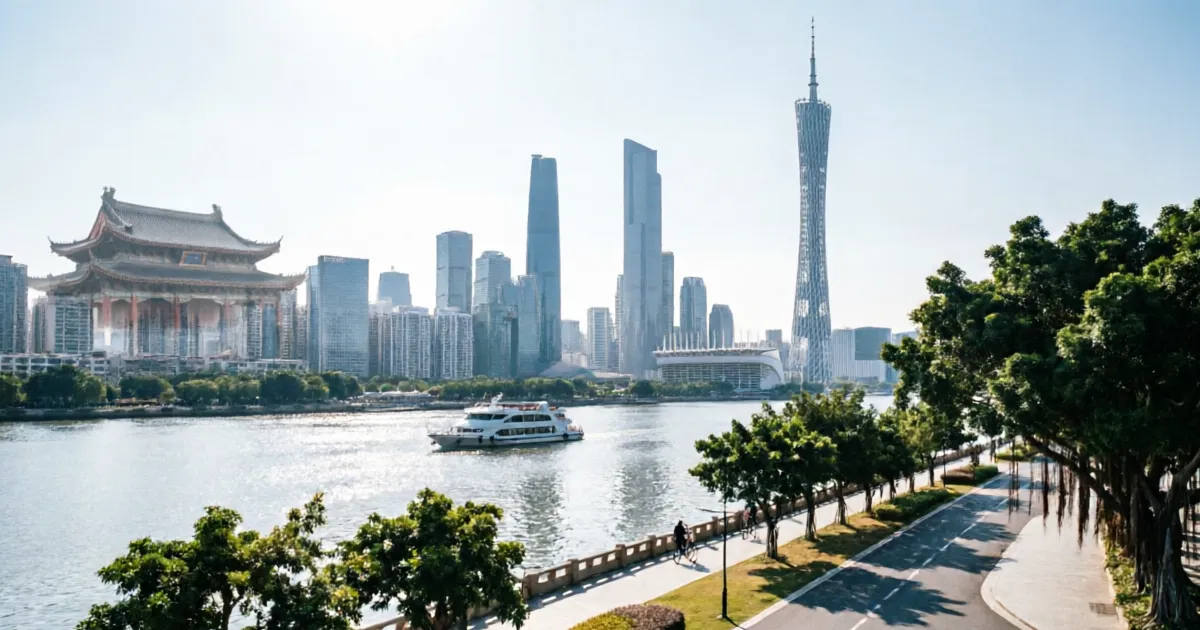
Table of Contents [hide]
- Welcome to Guangzhou: China’s Southern Metropolis
- A City Through Time: History of Guangzhou China
- Geography and Climate: Setting the Stage
- Guangzhou City Overview: Size, Population, and Urban Fabric
- What to See in Guangzhou: Iconic Landmarks and Hidden Gems
- Guangzhou Culture and Economy: Tradition Meets Innovation
- Cuisine Capital: The Soul of Guangzhou Food Culture
- Practical Tips for Visitors: Guangzhou China Travel Guide
- Quick Facts at a Glance
- FAQ
Welcome to Guangzhou: China’s Southern Metropolis
Welcome to Guangzhou: China’s Southern Metropolis — a city where centuries-old traditions pulse alongside cutting-edge innovation. As the capital of Guangdong Province and one of China’s oldest continuously inhabited cities, Guangzhou offers a compelling Guangzhou introduction for travelers, business professionals, and culture seekers alike. With over 2,200 years of recorded history, it served as a vital terminus of the Maritime Silk Road, welcoming Arab, Persian, Indian, and European merchants long before Western colonial powers arrived. This legacy lives on in its cosmopolitan spirit, reflected in Lingnan architecture, Cantonese opera, dim sum culture, and the melodic cadence of Yue (Cantonese) — a language still spoken by over 85 million people worldwide. A Guangzhou city overview reveals a metropolis of striking contrasts: ancient Buddhist temples like the 1,400-year-old Temple of the Six Banyan Trees stand just blocks from sleek skyscrapers in Zhujiang New Town. The Pearl River winds through the heart of the city, its banks lined with illuminated walkways, riverside parks, and iconic landmarks — including the needle-thin Canton Tower, which soars 604 meters and offers panoramic views that define the modern Guangzhou skyline. For anyone consulting a Guangzhou China travel guide, practicality meets richness: the city hosts the biannual Canton Fair — the world’s largest trade fair — drawing over 200,000 international buyers annually, underscoring its pivotal role in global supply chains. Its economy is among China’s most diversified and dynamic, anchored in advanced manufacturing, fintech, electric vehicle R&D, and AI-driven logistics. Yet Guangzhou culture and economy coexist organically: you’ll find robotics startups sharing innovation hubs with century-old herbal medicine shops and family-run siu mei (roast meat) stalls serving char siu that has been perfected across five generations. The history of Guangzhou China isn’t confined to textbooks — it’s tangible. Visit the Nanyue King Mausoleum to see 2,100-year-old jade burial suits; stroll through Shamian Island’s colonial-era buildings, built after the Opium Wars; or explore the Chen Clan Ancestral Hall, a masterpiece of Qing-dynasty craftsmanship now housing the Guangdong Folk Art Museum. What to see in Guangzhou extends beyond monuments: join locals for morning tai chi in Yuexiu Park, sip aged pu’er tea in a quiet teahouse near Beijing Road’s ancient stone pavement, or savor steamed shrimp dumplings (har gow) at a 70-year-old dai pai dong (open-air food stall). Crucially, Guangzhou is not merely a stopover — it’s a gateway. Its high-speed rail links to Shenzhen, Hong Kong, and beyond in under an hour; Baiyun International Airport serves over 70 million passengers yearly; and its metro system — one of the longest in the world — makes navigation seamless. Whether you’re drawn by its entrepreneurial energy, culinary depth, historical resonance, or strategic position in the Greater Bay Area, Guangzhou delivers authenticity without pretense. It’s a city that doesn’t just welcome visitors — it invites them to taste, touch, debate, and return. Learn more: Gap Year Program in China | Gap Year Chinese Program.A City Through Time: History of Guangzhou China
Guangzhou’s story begins over 2,200 years ago with the founding of Panyu—the heart of the ancient Nanyue Kingdom (204–111 BCE)—a hybrid state blending Yue indigenous traditions with Han Chinese administration and military strategy. This early cosmopolitanism laid the groundwork for Guangzhou’s enduring identity as a crossroads of cultures. By the Tang Dynasty (618–907 CE), Panyu—renamed Guangzhou—had become China’s premier southern port and the eastern terminus of the Maritime Silk Road. Arab, Persian, Indian, and Southeast Asian merchants gathered in its bustling foreign quarters, trading porcelain, silk, tea, and lacquer for spices, ivory, pearls, and glassware. The city housed one of China’s earliest mosques (Huaisheng Mosque, built c. 627 CE) and the Nanhai Temple—a Tang-era sanctuary honoring the Sea God—both testaments to its pluralistic maritime heritage. During the Song and Yuan dynasties, Guangzhou’s shipbuilding industry flourished, and its customs office—the *Shibosi*—was among the most sophisticated in the premodern world, regulating tariffs, inspecting cargo, and issuing maritime permits. The Ming and Qing dynasties saw Guangzhou consolidate its role as China’s sole legal port for Western trade after 1757 under the Canton System—ushering in an era of tightly controlled commerce centered on the Thirteen Hongs merchant guilds and the Whampoa anchorage, where towering East Indiamen waited weeks for clearance. Colonial-era architecture, including neoclassical consulates and warehouses along the Pearl River, still echoes this pivotal chapter. In the late 20th century, Guangzhou emerged as a vanguard of China’s reform era: hosting the first China Import and Export Fair (Canton Fair) in 1957—the world’s oldest and largest trade fair—and becoming a linchpin of the Greater Bay Area’s manufacturing, logistics, and innovation ecosystem. Today, this Guangzhou introduction reveals a city where millennia of layered history animate the present: the stone lions of Chen Clan Ancestral Hall stand beside LED-lit towers in Zhujiang New Town; Lingnan gardens whisper of Ming literati aesthetics while high-speed rail links Guangzhou South Station to Hong Kong and Shenzhen in under 50 minutes. For the Guangzhou China travel guide seeker, understanding this continuum is essential—what to see in Guangzhou isn’t just about landmarks, but about tracing continuity: from the 1,300-year-old Guangxiao Temple (where the Sixth Patriarch Huineng once taught Chan Buddhism) to the modern Guangzhou Tower, whose spiral design evokes both dragon motifs and digital-age fluidity. This seamless interplay defines Guangzhou culture and economy—rooted in openness, adaptation, and pragmatic exchange. Whether you’re exploring the narrow alleyways of Beijing Lu’s ancient city wall foundations or analyzing supply-chain innovations in Huangpu’s science park, the Guangzhou city overview remains anchored in its timeless role: not merely a destination, but a living archive of southern China’s resilience and reinvention.Geography and Climate: Setting the Stage
Nestled on the fertile, low-lying Pearl River Delta in southern Guangdong Province, Guangzhou sits at a strategic confluence where the West, North, and East Rivers merge before emptying into the South China Sea. This subtropical location—just 120 km north of Hong Kong and 140 km northwest of Shenzhen—has defined Guangzhou’s identity since antiquity: a natural maritime and inland waterway hub that catalyzed its rise as China’s oldest continuously operating port city. For any Guangzhou introduction, understanding this geography is essential—it explains why the city became a linchpin of the Maritime Silk Road over 2,200 years ago and remains today a cornerstone of the Greater Bay Area’s integrated transport network. The delta’s dense web of navigable rivers, canals, and tributaries enabled early trade, agricultural surplus (especially rice, lychees, and sugarcane), and urban clustering—laying foundations for what would evolve into one of Asia’s most dynamic metropolises. Guangzhou’s monsoon-influenced humid subtropical climate (Köppen Cfa) further shapes daily life and development. Winters are mild and dry (averaging 13–18°C), while summers are hot, humid, and prolonged—from May through September—with average highs of 32–35°C and frequent afternoon thunderstorms. Over 80% of annual rainfall (1,600–2,000 mm) falls during the warm season, often intensified by typhoons sweeping in from the South China Sea between July and September. This climate supports lush evergreen vegetation year-round—visible in parks like Yuexiu and Baiyun Mountain—but also demands resilient infrastructure: elevated metro lines, flood-resilient waterfront districts like Zhujiang New Town, and green urban planning that integrates wetlands and rain gardens. For the Guangzhou city overview, it’s worth noting how climate-responsive design now complements historic landmarks—such as the 17th-century Chen Clan Ancestral Hall—where traditional courtyards and latticework were originally engineered for ventilation and humidity control. Geography didn’t just enable trade—it forged Guangzhou’s pluralistic culture and adaptive economy. Proximity to the sea invited centuries of Arab, Persian, Indian, and later European merchants, leaving enduring legacies in food (Cantonese dim sum’s tea rituals echo Middle Eastern hospitality), language (Cantonese retains ancient Chinese phonetic features preserved by relative isolation), and architecture (the Huaisheng Mosque, built in 627 CE, is China’s oldest). As a Guangzhou China travel guide highlights, visitors can trace this layered history along the Pearl River cruise route—from colonial-era Whampoa docks to modern Canton Tower—and experience how riverfront revitalization has redefined public space. In the history of Guangzhou China, geography is never backdrop; it’s protagonist. That’s why what to see in Guangzhou extends beyond museums and temples to working ports, fish markets in Huangsha, and the Lingnan-style gardens that mimic delta hydrology. Ultimately, Guangzhou culture and economy thrive not *despite* its climate and terrain—but because they’ve been harnessed with ingenuity across millennia.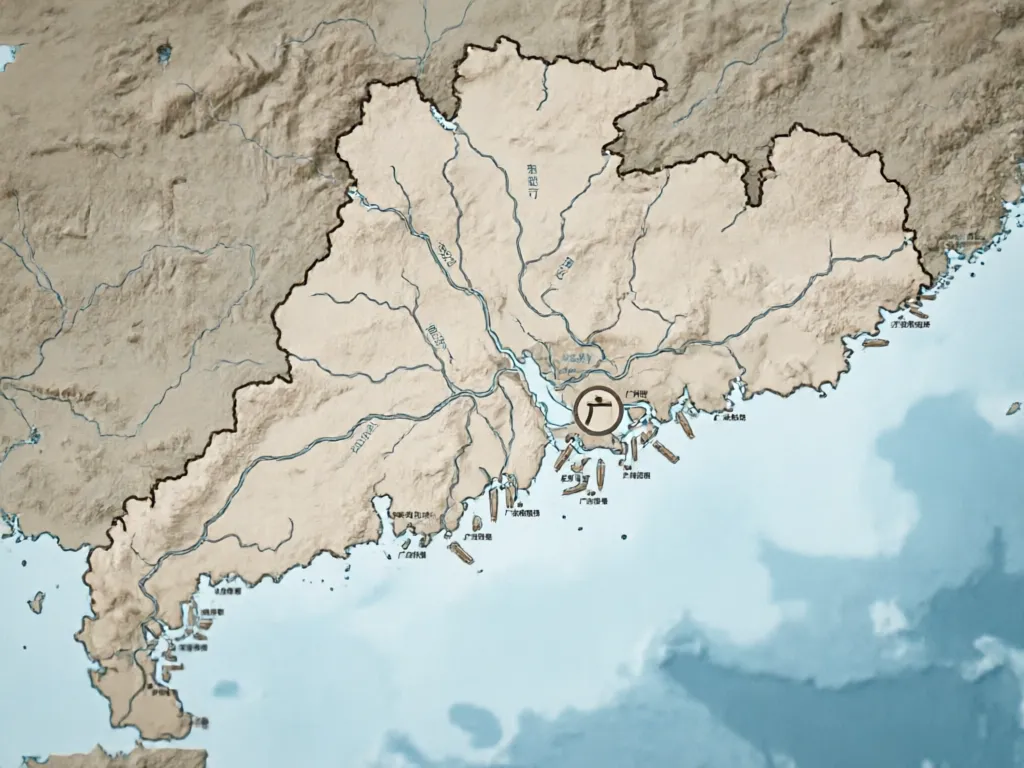
Guangzhou City Overview: Size, Population, and Urban Fabric
Guangzhou city overview reveals a metropolis of remarkable scale and complexity—China’s third-largest city by urban population and the provincial capital of Guangdong. Covering 7,434 square kilometers (2,870 sq mi), Guangzhou spans a diverse geography: from the Pearl River Delta’s fertile alluvial plains to low-lying hills in the north and extensive riverine networks weaving through its core. Administratively, it comprises 11 districts—Yuexiu (the historic heart), Liwan (home to Shamian Island and Cantonese heritage), Tianhe (the modern CBD with Zhujiang New Town), Haizhu (a rapidly developing island district anchored by Canton Tower), Baiyun (housing Guangzhou Baiyun International Airport and mountainous green belts), Huangpu (a major industrial and innovation hub, including the Guangzhou Development District), Panyu (a key education and logistics center with growing residential clusters),南沙 (Nansha)—a strategic free trade zone and southern gateway to the Greater Bay Area), Huadu, Conghua, and Zengcheng—each contributing distinct economic, cultural, and ecological functions to the Guangzhou introduction. As of 2023, Guangzhou’s permanent resident population stands at 18.8 million, with over 15.3 million living in the urbanized area—a density reflecting decades of sustained growth fueled by manufacturing, foreign trade, and digital services. This layered urban fabric reflects Guangzhou’s dual identity: deeply rooted in over 2,200 years of history—the history of Guangzhou China begins with its founding as Panyu in 214 BCE—and dynamically forward-looking, evidenced by seamless metro expansion (22 lines serving 600+ stations), integrated high-speed rail links to Shenzhen, Hong Kong, and beyond, and smart-city infrastructure across districts like Tianhe and Nansha. For the Guangzhou China travel guide reader, understanding this structure is essential: Yuexiu offers what to see in Guangzhou’s imperial relics (Zhenhai Tower, South China Temple) and colonial-era streets; Liwan delivers authentic Guangzhou culture and economy via Chen Clan Ancestral Hall and Xiguan traditions; while Tianhe and Zhujiang New Town showcase cutting-edge commerce, design, and nightlife. Green space is woven deliberately into the urban grain—Baiyun Mountain (30 km²), the 10-km-long Pearl River waterfront promenade, and over 400 parks ensure ecological balance amid intense development. Crucially, Guangzhou’s administrative cohesion—unlike many megacities fragmented across provinces—enables coordinated planning, from flood-resilient infrastructure along the Pearl River to unified public transport fares and bilingual signage across districts. Whether you’re exploring Lingnan architecture in Liwan, attending the Canton Fair in Pazhou (Haizhu), or sampling dim sum in a century-old teahouse near Beijing Road, the Guangzhou city overview underscores how geography, governance, and lived experience converge to make this one of Asia’s most navigable, historically resonant, and economically vital cities.What to See in Guangzhou: Iconic Landmarks and Hidden Gems
Guangzhou introduction begins with its skyline—dominated by the 604-meter Canton Tower, a spiraling marvel of modern engineering and the tallest TV tower in China. More than just an observation deck, it’s a cultural hub: ascend to the ‘Sky Drop’ for vertigo-inducing thrills, stroll the glass-bottomed ‘Cloud Walk,’ or catch a live performance at its integrated theater—offering a dynamic lens into Guangzhou city overview as both a technological leader and creative capital. Just 30 minutes away lies Shamian Island, a serene, tree-shaded enclave that tells a quieter but equally vital chapter in the history of Guangzhou China. Built in the 19th century as a foreign concession, its neoclassical facades, wrought-iron balconies, and centuries-old banyans evoke colonial-era diplomacy—and today, it’s where locals sip artisanal coffee under jacaranda canopies, embodying Guangzhou culture and economy’s seamless blend of heritage and reinvention. For deeper historical resonance, head to the Chen Clan Ancestral Hall, a UNESCO-recognized masterpiece of Qing-dynasty architecture. Completed in 1894, this former academy for clan scholars dazzles with over 200 carved wood panels, 1,100 stone sculptures, and intricate ceramic-glazed rooftops—all narrating Confucian values, regional craftsmanship, and the scholarly traditions that shaped southern China’s intellectual life. Now housing the Guangdong Folk Art Museum, it’s an essential stop for any Guangzhou China travel guide seeking authenticity beyond postcard views. Nature lovers shouldn’t miss Baiyun Mountain—the ‘White Cloud Mountain’ that has inspired poets since the Tang Dynasty. Its 30+ peaks, mist-wrapped trails, ancient temples like the 1,400-year-old Zhengguo Temple, and lotus-filled ponds offer not just respite from urban energy but a living archive of spiritual practice and ecological stewardship. Hike the Mo Yuan Trail at dawn to watch sunrise gild the limestone cliffs, then descend to nearby Yuntai Garden for sculpted horticulture and Ming-era rockeries. What to see in Guangzhou extends beyond these icons: explore the historic Beijing Road Pedestrian Street, where glass panels reveal Song-dynasty pavement beneath your feet; wander the vibrant Liwan District’s waterways and qilou (arcaded) buildings; or join a weekend tea ceremony at a centuries-old teahouse in Shangxiajiu—where dim sum carts glide past calligraphy shops and Cantonese opera snippets drift from open windows. This layered landscape reflects Guangzhou’s dual identity: a global manufacturing and trade powerhouse (home to the world’s largest auto cluster and the Canton Fair), yet fiercely protective of its Lingnan roots—from Yue opera to salted fish–infused cuisine. Whether you’re drawn by innovation, antiquity, or everyday vibrancy, Guangzhou rewards curiosity with texture, contrast, and continuity. Learn more: Semester Chinese Program | 18-36 Week Mandarin Courses in Beihai.Guangzhou Culture and Economy: Tradition Meets Innovation
Guangzhou culture and economy embody a dynamic fusion where centuries-old Lingnan traditions coexist—and actively energize—a forward-looking global hub. As a cornerstone of any Guangzhou introduction, this duality defines the city’s unique appeal: it’s not merely a place where old meets new, but where heritage fuels innovation. Cantonese opera—recognized by UNESCO as Intangible Cultural Heritage—thrives in historic venues like the Red Cotton Theatre and newly revitalized spaces along the Pearl River, its intricate melodies and stylized movements echoing alongside AI research labs in Nansha. Dim sum isn’t just breakfast fare; it’s a living ritual, served from 5 a.m. at century-old institutions like Tao Tao Ju and modernist tea houses in Zhujiang New Town, where chefs experiment with molecular techniques while preserving century-old dumpling folds. Folk arts—including Guangdong embroidery, woodblock printing, and dragon boat craftsmanship—are taught in community centers across Liwan and Haizhu districts, their motifs now digitized for NFT collaborations and smart-fabric applications developed in local tech incubators. This cultural resilience underpins Guangzhou’s economic vitality. As a Guangzhou city overview reveals, the city ranks among China’s top three export centers, anchored by the Canton Fair—the world’s oldest and largest trade fair—held biannually at the Pazhou Complex. Over 26,000 exhibitors from 210+ countries showcase everything from smart home devices to sustainable textiles, many designed in Guangzhou’s burgeoning design districts like Beijing Road Creative Park. Meanwhile, Guangzhou Science City in Huangpu District hosts over 1,800 high-tech enterprises, including leaders in electric vehicle battery R&D, biomedical engineering, and 5G infrastructure—fields increasingly informed by traditional Chinese medicine research conducted at Sun Yat-sen University’s Guangzhou campuses. For the discerning traveler, this interplay makes Guangzhou a standout in any Guangzhou China travel guide. What to see in Guangzhou extends beyond landmarks: join a Cantonese opera workshop at the Guangdong Provincial Museum, then tour an automated textile factory in Foshan (a 30-minute metro ride away); sample hand-folded har gow at a 1920s teahouse in Shangxiajiu, then explore the immersive digital art installations at the Guangzhou Library’s Innovation Lab. The history of Guangzhou China—spanning over 2,200 years as a maritime Silk Road port—lends depth to today’s ambition: the city is now piloting China’s first cross-border data exchange platform and leading national green manufacturing standards. Whether you’re studying Lingnan architecture at Chen Clan Ancestral Hall or negotiating supply chains at the Guangzhou International Business Center, Guangzhou culture and economy remain inseparable—one breathes life into the other. Learn more: About RPL | Red Panda Language School History & Story.Cuisine Capital: The Soul of Guangzhou Food Culture
Guangzhou introduction wouldn’t be complete without spotlighting its undisputed status as the Cuisine Capital—the living heart of Cantonese cuisine and a cornerstone of Guangzhou culture and economy. As the birthplace of China’s most globally influential culinary tradition, Guangzhou’s food philosophy rests on three pillars: freshness above all, subtle seasoning to honor natural flavors, and meticulous technique honed over centuries. This isn’t just cooking—it’s a reflection of the city’s pragmatic ingenuity, maritime openness, and deep-rooted respect for seasonal harmony—values woven into the history of Guangzhou China since its days as a Silk Road port and Qing-era trading hub. A Guangzhou city overview reveals that food is infrastructure: from dawn until late night, steam rises from alleyway woks, clay-pot rice simmers in century-old kitchens, and bamboo steamers overflow with translucent har gow (shrimp dumplings) and golden char siu bao (barbecued pork buns). For any Guangzhou China travel guide, dim sum isn’t a meal—it’s a ritual. Begin at Lianxiang Lou or the historic Panxi Restaurant, where trolleys glide through bustling halls and elders sip chrysanthemum tea beside students sketching calligraphy on napkins. Then venture deeper: what to see in Guangzhou includes the legendary Qingping Market—a sensory symphony of dried abalone stacked like amber bricks, live geoduck gasping in icy pools, fragrant goji berries spilling from burlap sacks, and aged Shaoxing wine barrels lined up like sentinels. Here, chefs bargain for snakehead fish caught that morning in the Pearl River, while grandmothers select lotus seeds for double-boiled soups believed to nourish qi. Don’t miss Chaozhou-style oyster omelets sizzling on street-corner griddles near Beijing Lu, or the smoky perfume of roasted goose drifting from Xiguan’s family-run smokehouses—techniques passed down since the Ming dynasty. Beyond taste, Guangzhou’s food economy powers innovation: modern incubators like the Guangzhou Food Tech Park support AI-driven fermentation labs and sustainable aquaculture startups, proving that tradition and progress coexist seamlessly. Whether you’re sampling century-old salted duck eggs at Huangsha Market or joining a hands-on wok-tossing class in a Liwan district courtyard, every bite tells a story of resilience, exchange, and joy. To truly understand Guangzhou culture and economy—or indeed, the soul of southern China—you must eat here, slowly, attentively, and with gratitude.Practical Tips for Visitors: Guangzhou China Travel Guide
Navigating Guangzhou is intuitive and efficient—especially with its world-class metro system, which covers over 600 km across 16 lines and reaches nearly every major attraction. For first-time visitors, download the official ‘Guangzhou Metro’ app (available in English) or use WeChat’s built-in metro map and QR code payment—no physical card needed. Trains run from 6:00 a.m. to 11:30 p.m., with peak-hour intervals under 2 minutes on core routes like Line 3 (connecting Tianhe CBD, Beijing Road, and Pazhou). For intercity travel, Guangzhou South Railway Station serves as a high-speed rail hub linking you to Shenzhen (25 mins), Hong Kong West Kowloon (under 50 mins), and even Beijing (8 hours)—book tickets via 12306.cn or the Trip.com app using your passport. While taxis and Didi (China’s Uber equivalent) are widely available, avoid rush hour (7:30–9:30 a.m. and 5:00–7:30 p.m.) when traffic congestion spikes near Zhujiang New Town and Shamian Island.Language-wise, Mandarin is universally understood in transport hubs and hotels—but Cantonese remains the heart language of local life. A friendly ‘Neih hou’ (hello) or ‘M̀h’gōi’ (thank you) goes far, especially in older neighborhoods like Liwan or Xiguan. Most signage in metro stations, major malls, and tourist sites is bilingual (Chinese/English), though street vendors and family-run eateries may rely solely on Cantonese or gestures—carry a translation app like Pleco or Google Translate with offline Cantonese pack installed.
The best time to visit Guangzhou aligns with its subtropical climate: October–December offers warm (20–28°C), low-humidity days ideal for exploring outdoor highlights—from the historic Chen Clan Ancestral Hall (a masterpiece of Qing-dynasty architecture reflecting the city’s deep history of Guangzhou China) to the futuristic Canton Tower and Pearl River night cruises. Avoid June–August, when heat, humidity, and typhoon risk can dampen sightseeing; March–April brings blooming kapok trees but also occasional heavy rain.
Etiquette matters deeply in this cosmopolitan yet tradition-rooted city. When visiting temples or ancestral halls—key stops in any Guangzhou introduction—dress modestly, remove hats, and avoid pointing feet at altars. At dim sum restaurants (a cornerstone of Guangzhou culture and economy), don’t flip fish whole on the table—it symbolizes bad luck; instead, politely ask staff to ‘turn the fish’ or serve from the other side. Tipping isn’t expected—and may even cause confusion—so express appreciation through respectful tone and eye contact. Also note: Guangzhou city overview reveals a blend of ancient merchant roots and cutting-edge industry; be mindful that business districts like Zhujiang New Town reflect its role as China’s third-largest economy, while neighborhoods like Beijing Road preserve 2,200 years of layered history of Guangzhou China. Whether sampling century-old roast goose in Shangxiajiu or touring the Guangdong Museum’s exhibits on Lingnan art and trade, remember: curiosity paired with quiet observation unlocks what to see in Guangzhou most meaningfully.
Quick Facts at a Glance
| Feature | Detail |
|---|---|
| Location | Capital of Guangdong Province, Southern China |
| Economy | Major hub for trade, manufacturing, and the Canton Fair |
| Culture | Cantonese language, dim sum, Lingnan architecture, and vibrant festivals |
| Transport | Guangzhou South Railway Station & Baiyun International Airport |
FAQ
What makes Guangzhou a 'vibrant gateway' to Southern China?
Guangzhou serves as the economic, transportation, and cultural hub of the Greater Bay Area and southern China—hosting the Canton Fair (China’s largest trade fair), a world-class metro system, and seamless connections to Hong Kong, Shenzhen, and Macau via high-speed rail and ferry.
Is Guangzhou known for its food culture—and what are must-try local dishes?
Yes—Guangzhou is the birthplace of Cantonese cuisine. Must-try dishes include dim sum (e.g., har gow and siu mai), roasted char siu, wonton noodles, and double-skin milk, all reflecting the region’s emphasis on freshness, subtle seasoning, and delicate technique.
How accessible is Guangzhou for international visitors in terms of language and infrastructure?
Major transportation hubs, tourist sites, and hotels offer English signage and staff assistance; the Guangzhou Metro features bilingual (Chinese/English) announcements and maps; and the city’s 144-hour visa-free transit policy applies to nationals from 53 countries.
What historical landmarks highlight Guangzhou’s role in global trade?
Key landmarks include the 1,300-year-old Temple of the Six Banyan Trees, the historic Shamian Island with colonial-era architecture, and the Maritime Silk Road Museum—underscoring Guangzhou’s legacy as one of the world’s oldest continuous ports.
Are there seasonal considerations for visiting Guangzhou?
Optimal times are October–December (mild temperatures, low humidity) and March–April (spring blooms). Avoid July–September due to high heat, humidity, and typhoon risk—though the city’s extensive air-conditioned infrastructure helps mitigate discomfort.