China Weather & Climate: Seasonal Patterns and Regional Climate Zones
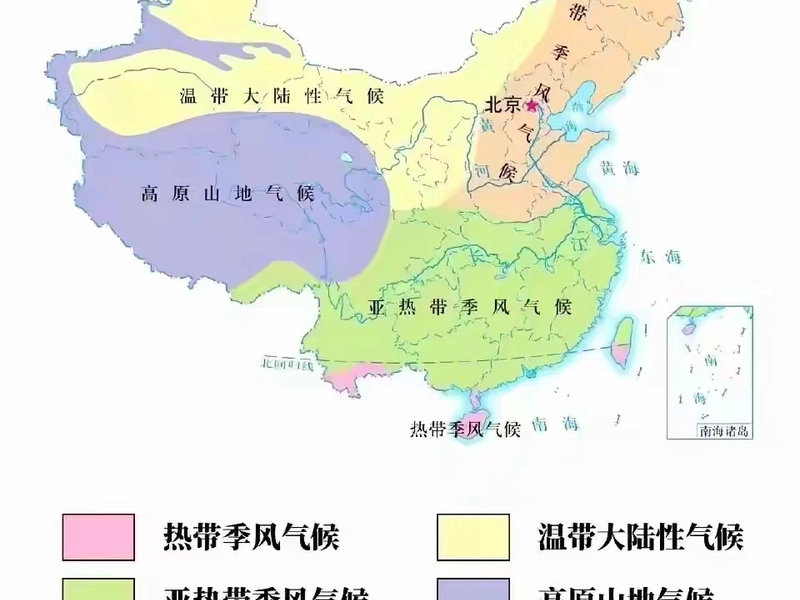
China is vast, stretching from north to south and east to west, with significant differences in geographical environments, resulting in a rich diversity of China climate types. Northern China has long, cold winters, while the south is generally warm and humid; the western regions are dry with little rainfall, and the eastern coastal areas are often windy and rainy. These distinct north-south climate differences make "China weather" a broad and fascinating topic for travelers and researchers alike.
In daily life, the weather is not only a common conversation starter but also directly affects clothing, food, housing, and transportation. People often say: "How’s the weather today?", "It’s so cold!", or "It’s going to rain, remember to take an umbrella." Understanding China seasonal weather patterns can help tourists and learners better prepare for life in different regions.
This article introduces the major Chinese climate zones, common weather phenomena, and relevant daily expressions to help readers better understand the weather characteristics across the country, while providing useful language materials for those learning about China climate.
2. Climate Regions of China
China’s vast territory features diverse climates. Based on geographical location and climate characteristics, it can be roughly divided into four major regions: northern, southern, western, and eastern coastal areas. Winter in these regions generally lasts from December to February. Climate differences not only affect temperature and precipitation but also deeply shape local lifestyles, dietary habits, and tourism. This overview serves as a China climate guide for both travelers and students of Chinese culture.
Northern Climate
The northern region includes most provinces in Northeast and North China, such as Heilongjiang, Jilin, Liaoning, Beijing, Tianjin, Hebei, Shanxi, and eastern Inner Mongolia, with representative cities like Harbin, Changchun, Shenyang, Beijing, Tianjin, and Hohhot.
Winters are long and cold, usually from December to February, sometimes extending to March. Temperatures range from -30℃ to 0℃, with the northeast being especially harsh, dry, and accompanied by heavy snow and piercing north winds. Winter is ideal for experiencing ice and snow culture, such as the Harbin Ice Festival, and enjoying hot lamb hotpot to stay warm.
Spring (March to May) sees temperatures rising to 5℃–20℃, with strong and dry winds, and occasional sandstorms. This is a good time for spring outings and flower viewing, but people should protect against wind, dryness, and cold. China seasonal weather patterns during spring are ideal for tourists who enjoy outdoor activities in mild climates.
Summer (June to August) is short and hot, with temperatures between 25℃–35℃ and concentrated rainfall, mostly thunderstorms. Visiting the Inner Mongolia grasslands to escape the heat is an ideal choice.
Autumn (September to November) is cool and dry, with large temperature differences between day and night, suitable for outdoor activities like hiking and leaf viewing. Northern residents rely on centralized heating during winter, and seasonal climate differences influence diet and lifestyle, making the four seasons distinct. This region is an example of China continental climate.
Southern Climate
Southern China mainly includes Shanghai, southern Jiangsu, Zhejiang, southern Anhui, Jiangxi, Fujian, Guangdong, Guangxi, Hainan, Hunan, eastern Guizhou, and southern Yunnan, with cities like Guangzhou, Shanghai, Hangzhou, Xiamen, and Fuzhou.
Winter (December to February) is generally 5℃–12℃, humid and damp, giving a "cold and penetrating" feeling. It’s a good time to visit Hainan, Guangxi, or southern Yunnan for warmer weather or enjoy hot springs and indoor leisure activities. Residents pay attention to moisture control in winter.
Spring (March to May) sees temperatures of 15℃–25℃, rainy and humid, with flourishing plants, ideal for flower viewing, though moisture protection is needed.
Summer (June to August) is long and hot, 28℃–38℃, sometimes exceeding 40℃, with high humidity and frequent plum rains and thunderstorms. People often stay indoors to escape the heat or enjoy seaside vacations. Locals drink herbal tea or mung bean soup to cool down. This region is a typical example of China monsoon climate.
Autumn (September to November) is cool and dry, but coastal areas may still be affected by typhoons, making it suitable for hiking, outings, and autumn seaside activities.
The southern climate shapes diverse natural landscapes and significantly affects lifestyle and dietary habits, giving the region four distinct seasons.
Western Climate
Western China includes Xinjiang, Gansu, Ningxia, Qinghai, western Shaanxi, western Sichuan, and Tibet, with cities like Urumqi, Turpan, Lanzhou, Yinchuan, Xining, and Lhasa.
Winters (December to February) are cold and dry, usually -30℃ to 0℃, even lower in highlands. Winter is good for skiing and highland photography, though nights are very cold. Day-night temperature differences are large; summer daytime temperatures reach 30–40℃, dropping to 10–20℃ at night. Rainfall is low, with arid or semi-arid conditions, thin air, and strong UV exposure. This is an example of China desert climate and high-altitude climate.
Spring (March to May) has comfortable daytime temperatures but cold nights. Flower viewing is enjoyable, but warm clothing is necessary.
Summer (June to August) has strong sunlight and high temperatures, with little rainfall. It’s suitable for desert exploration or highland trekking, but sun protection, hydration, and dryness prevention are crucial.
Autumn (September to November) sees decreasing temperatures and dry air, with large day-night differences, making it ideal for photography, hiking, and fruit picking.
Residents’ diets rely on beef, mutton, and dairy, with fruits abundant in summer. Travelers should take precautions against sun exposure, dryness, and high-altitude effects.
Eastern Coastal Climate
Eastern coastal regions include Shandong, eastern Jiangsu, Zhejiang, Fujian, coastal Guangdong, and Hainan, with cities like Qingdao, Yantai, Ningbo, Shanghai, Xiamen, Fuzhou, Shenzhen, and Haikou.
Winters (December to February) are mild and humid, 5℃–12℃, suitable for indoor food tours and winter seafood festivals.
Spring (March to May) is 10℃–20℃, humid and foggy, good for flower viewing and outings, though rain protection is needed.
Summer (June to August) is hot and rainy, 26℃–35℃, with typhoons occasionally affecting the coast. Sea breezes help relieve heat. This is ideal for seaside vacations like Qingdao, Xiamen, and Sanya, but typhoon warnings and precautions must be followed.
Autumn (September to November) is cool with less rain, though typhoon remnants may still affect the coast, suitable for seaside tourism, photography, and outdoor activities.
Coastal diets focus on seafood. Attention to typhoon and moisture safety is crucial in summer and autumn. After typhoons, clear skies and bright sunshine are excellent for photography, making the four seasons rich and diverse.
Weather and Lifestyle in China
China’s vast territory and climate differences deeply influence residents’ habits, food culture, and travel patterns. Understanding Chinese climate regions helps tourists plan activities and learn about local life.
In the south, long hot summers with high humidity lead residents to drink herbal tea, mung bean soup, or porridge to cool down and remove dampness. Wet clothes make indoor ventilation and drying important. Winters are mild but damp, so heating and moisture control indoors are emphasized.
In the north, long cold winters rely on centralized heating. Hot noodles, lamb hotpot, and stews are essential for staying warm. Summer is short and hot with concentrated rainfall, and people often escape to grasslands or lakes for coolness.
Western highlands have large temperature variations and dry climates. Diets are rich in beef, mutton, and dairy, with fruits abundant in summer. Visitors and locals must be mindful of sun protection, dryness, and high-altitude effects.
Eastern coastal areas have ocean-moderated mild winters and hot rainy summers. Residents eat seafood, and typhoon precautions are important. Sea breezes moderate the heat, influencing lifestyles such as seaside vacations, seafood festivals, and storm preparedness.
Overall, diverse climates shape natural landscapes and lifestyles, making weather and climate in China key to understanding Chinese society and culture.
Special Weather Phenomena
- Sandstorm (shā chén bào) – mainly in northern spring, especially North China and Northeast China. Sandstorms bring strong winds and dust, affecting transport, health, and outdoor activities. Residents usually close windows, wear masks, and limit outdoor activities.
- Typhoon (tái fēng) – affects coastal cities in summer and autumn, such as Fujian, Guangdong, Hainan, and Zhejiang. Typhoons bring heavy rain, strong winds, and storm surges, threatening transportation and buildings. Residents reinforce homes, stock supplies, and monitor typhoon alerts.
- Plum Rain season (méi yǔ jì) – occurs in the middle and lower Yangtze River region (e.g., Shanghai, Nanjing, Wuhan), usually in June–July. Continuous rainy days lead to high humidity and slow-drying clothes, requiring moisture and mildew prevention and careful planning of outdoor activities.
Conclusion
China has a vast territory and diverse climates, from cold and dry north to hot and humid south, from arid western plateaus to mild eastern coasts, each with unique weather features.
These climate differences shape landscapes and profoundly influence lifestyles, food habits, and cultural activities. Understanding China seasonal weather aids in daily planning, travel, and provides practical cultural and language context for learners of Chinese. Whether it’s snowy northern winters or typhoon-prone coastal summers, China’s weather presents a unique and colorful panorama, making this a comprehensive China climate guide.
Related Vocabulary
| Chinese Term | Pinyin | English |
|---|---|---|
| 气候 | qì hòu | climate |
| 天气 | tiān qì | weather |
| 四季 | sì jì | four seasons |
| 北方 | běi fāng | northern region |
| 南方 | nán fāng | southern region |
| 高原 | gāo yuán | plateau |
| 沙尘暴 | shā chén bào | sandstorm |
| 台风 | tái fēng | typhoon |
| 梅雨季 | méi yǔ jì | plum rain season |
| 暴雨 | bào yǔ | heavy rain |
| 温差 | wēn chā | temperature difference |
| 潮湿 | cháo shī | humid |
| 干燥 | gān zào | dry |
FAQ – China Climate & Weather
- What is the climate like in China?
China has a diverse climate, ranging from cold and dry northern regions to hot and humid southern areas, from arid western plateaus to mild eastern coastal zones. Understanding China seasonal weather patterns helps travelers prepare for regional differences. - When is the best time to visit China?
The best time to visit China depends on regional climates. Spring (March to May) and autumn (September to November) are generally ideal. Coastal areas may experience typhoons, northern regions may have snow, and western highlands are best visited in summer. - What are the main climate zones in China?
China can be divided into four major climate zones in China: northern, southern, western, and eastern coastal areas. Each zone has unique China weather patterns, precipitation, and temperature characteristics. - How do seasonal weather patterns affect daily life in China?
China seasonal weather affects clothing, food, housing, and travel. Northern residents rely on centralized heating in winter, while southern residents adapt to hot and humid weather with cooling drinks and indoor ventilation. - What are some special weather phenomena in China?
Special events include sandstorms in northern spring, typhoons along the coast in summer and autumn, and the Plum Rain season (梅雨季) in the Yangtze River region. Knowledge of Chinese climate regions helps plan safe travel. - How does China’s climate influence tourism?
Tourists should consider China climate guide and China weather forecast when planning trips. Spring is ideal for flower viewing in southern areas, winter for northern ice festivals, and summer for trekking in western plateaus. Understanding China monsoon climate and China desert climate helps travelers choose the right destinations. - Where can I find reliable China weather forecasts?
Check official meteorological websites, weather apps, or local news for up-to-date China weather forecasts. Accurate China climate information ensures safe travel during extreme weather events, like typhoons, sandstorms, or heavy rain. - What types of climate exist in China?
China features multiple Chinese climate types, including continental climate, subtropical climate, monsoon climate, and desert climate. Each type affects regional lifestyle, agriculture, and tourism. - How can travelers learn about China climate before visiting?
Visitors can use a China climate guide or online resources to understand China seasonal weather patterns, Chinese climate regions, and China weather information. This helps plan suitable clothing, travel gear, and activities.