World Map And China
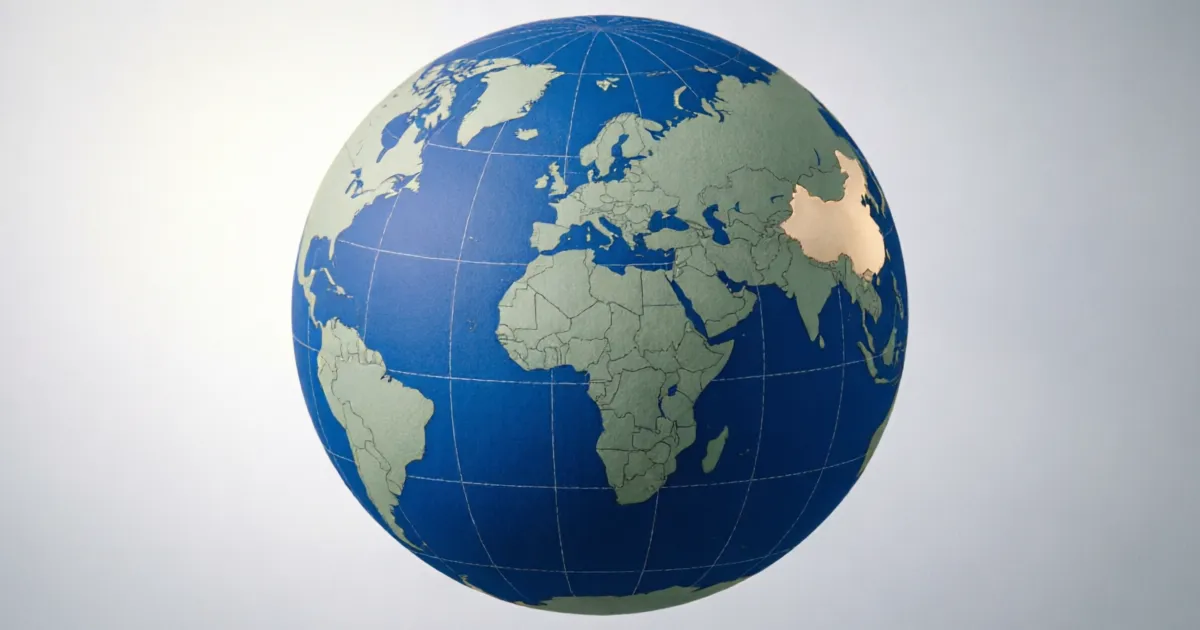
Table of Contents [hide]
- Why Your World Map Might Be Misleading You
- The Mercator Trap (and Why It Distorts China’s Real Size)
- China’s Coastline Isn’t Just 'East'—It’s Three Distinct Maritime Faces
- Latitude Lies: Why Beijing and Madrid Share a Parallel (But Feel Nothing Alike)
- The 'Missing' 2,000 km: How the Gobi Desert Rewrites Distance
- Time Zones Are a Mirage—And Why China Uses Only One
- Rivers Don’t Care About Borders—But Maps Do
- Mountains as Memory: How the Himalayas Shape Perception
- What ‘East Asia’ Really Means on a Globe
- Language Learners, Stop Memorizing Capitals—Map the Dialects Instead
- The Shipping Lane Illusion: Why 'Direct Route' Is a Myth
- Weather Doesn’t Read Maps—But Forecasters Do
- Satellite Imagery Reveals What Maps Hide
- Railways Don’t Follow Borders—They Follow Valleys
- The 'South China Sea' Label Is a Cartographic Shortcut
- Flight Paths Expose the Real 'East Asia'
- Fishing Grounds Don’t Obey Lines—They Obey Currents
- The 'Great Wall' Isn’t a Border—It’s a Terrain Response
- Cultural Proximity ≠ Geographic Proximity
- What Students Get Wrong (and How to Fix It)
- Key Takeaways Summary
- FAQ
- Final Thought: Maps Are Drafts, Not Truths
Why Your World Map Might Be Misleading You
I used to think I knew where China was—until I watched a student point confidently to the western edge of a Mercator map and say, 'That’s Beijing.' It wasn’t. It was near Kazakhstan. That moment cracked open something important: how we *see* China on a world map isn’t just about geography—it’s about projection bias, scale distortion, and decades of inherited cartographic habits. Most people don’t realize that the standard world map they’ve seen since elementary school stretches China’s northern territories by up to 40% while squashing distances across the Pacific. When you’re trying to understand the spatial relationship between China and its neighbors—especially Japan and Korea—that distortion doesn’t just blur lines; it reshapes intuition. This article isn’t about memorizing coordinates. It’s about rebuilding your mental map so that 'world map and china' stops being a phrase you recite and starts being a spatial reality you *feel*. We’ll walk through exactly how to recalibrate—not with theory alone, but with tactile comparisons, common mistakes, and real-world navigation cues you can test tomorrow.
The Mercator Trap (and Why It Distorts China’s Real Size)
Let’s start with the elephant in the room: the Mercator projection. Invented in 1569 for nautical navigation, it preserves angles but sacrifices area—and it does so brutally near the poles. On a Mercator world map and china appears roughly the same width as the continental United States, but its actual landmass is 9.6 million km²—nearly double the US’s 9.8 million km² *only if you count Alaska and Hawaii as contiguous*, which most classroom maps don’t show clearly. More critically, China’s north-south span—from Mohe in Heilongjiang to Zengmu Ansha in the South China Sea—is over 5,500 km, yet Mercator compresses vertical scale near the equator and inflates it near 50°N, making Inner Mongolia look wider than it feels on the ground. When students compare china and japan on the world map, they often assume Japan is 'just off China’s east coast'—but the East China Sea is 360 km wide at its narrowest point, and Tokyo sits farther from Shanghai than New York is from Chicago. The same distortion makes china and korea on world map appear deceptively close; Seoul is only ~215 km from Dandong, yes—but that proximity vanishes when you overlay flight paths or shipping lanes drawn to true scale. A globe shows China’s eastern seaboard aligned almost perfectly with Japan’s western islands, while Korea juts out like a natural bridge—something flat maps obscure. If you’ve ever tried explaining why Chinese weather forecasts mention 'cold air from Siberia' while Japan gets typhoons from the southeast, you’re feeling this distortion firsthand. It’s not just visual—it’s climatic, logistical, and cultural. To fix it, ditch the wall map for a globe *first*, then layer on digital tools like Natural Earth or NASA’s Blue Marble that use equal-area projections. You’ll notice how quickly 'world map and china' shifts from abstract label to lived geography.
China’s Coastline Isn’t Just 'East'—It’s Three Distinct Maritime Faces
Most world maps flatten China’s coastline into one monolithic eastern edge—but zoom in, and you’ll see three distinct maritime regions that shape how china and japan on the world map relates *functionally*, not just visually. First, the Bohai Gulf and Yellow Sea coast—home to Tianjin, Qingdao, and Dalian—faces Korea directly. This is where china and korea on world map becomes tangible: ferries sail daily from Yantai to Incheon in under 18 hours, and high-speed rail links in Shandong province now sync with Korean port schedules. Second, the East China Sea coast—Shanghai, Ningbo, Fuzhou—faces Japan’s Kyushu and Shikoku islands across waters that average 360–800 km wide. Here, 'china and japan world map' isn’t about proximity alone; it’s about shared currents, migratory fish stocks, and overlapping exclusive economic zones. Third, the South China Sea coast—Guangzhou, Shenzhen, Haikou—faces Southeast Asia more than Japan or Korea, anchoring China’s maritime trade routes southward. Crucially, none of these coasts line up neatly north-south on a flat map. The Yellow Sea bulges northeast, the East China Sea curves southeast, and the South China Sea arcs southwest—meaning a straight 'east' arrow from Beijing points nowhere near Tokyo or Seoul. That’s why learners who rely solely on cardinal directions get lost fast. Instead, teach orientation by *port pairs*: Dalian–Incheon, Shanghai–Osaka, Xiamen–Kaohsiung. Each pair reveals how 'world map and china' functions as a network—not a dot on a grid. 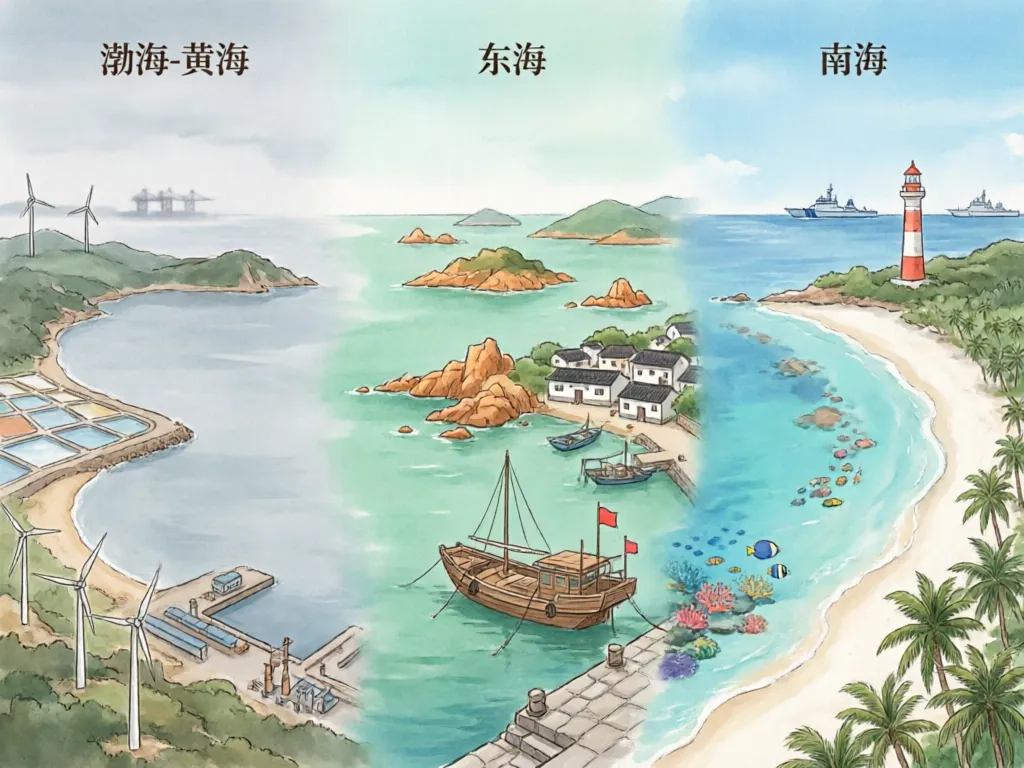
Latitude Lies: Why Beijing and Madrid Share a Parallel (But Feel Nothing Alike)
Here’s a quiet truth no atlas tells you: Beijing sits at 39.9°N—almost identical to Madrid (40.4°N), Philadelphia (39.9°N), and even northern California’s wine country. Yet on most world maps, Beijing looks 'higher' because Mercator inflates northern latitudes. This misleads learners into thinking China is 'colder and farther north' than it is relative to Europe or North America. In reality, Beijing’s climate resembles Washington D.C., not Oslo. That matters deeply when comparing china and japan on the world map: Tokyo (35.7°N) is actually *south* of Beijing—and shares latitude with Seville, Spain. So when students wonder why cherry blossoms bloom earlier in Kyoto than in Beijing, it’s not just culture—it’s latitude + ocean influence. Similarly, Pyongyang (39.0°N) sits just south of Beijing, explaining why winter cold fronts hit both cities simultaneously—but Korea’s mountain spine blocks some Siberian air, giving Seoul milder winters than Harbin. This subtle latitudinal alignment means 'china and korea on world map' isn’t about distance alone; it’s about shared seasonal rhythms. A teacher once told me her students thought 'north China = always snowy' until she overlaid temperature maps on a globe—revealing that Nanjing (32°N) has hotter summers than Osaka (34.7°N), thanks to the Yangtze basin’s heat retention. Latitude is a starting point—not a destiny.
The 'Missing' 2,000 km: How the Gobi Desert Rewrites Distance
Look at any world map and china, and you’ll see a vast landmass stretching west—but few realize that over 2,000 km of that expanse is the Gobi Desert, a biome that doesn’t just occupy space—it *redefines* connectivity. While china and japan on the world map suggests an 'ocean shortcut', and china and korea on world map implies 'land adjacency', the Gobi creates a hard geographic pause between China’s core and Central Asia. Ulaanbaatar lies just beyond it—but getting there from Beijing requires crossing 800 km of near-roadless steppe. That’s why historically, trade didn’t flow westward across the Gobi; it curved north into Siberia or south through the Hexi Corridor toward Dunhuang. Today, high-speed rail ends at Lanzhou—not because of politics, but because the desert resists infrastructure. When learners try to estimate travel time between Xi’an and乌鲁木齐 (Urumqi), they often assume 'it’s all China, so it must be easy'—but the Taklamakan Desert adds 12+ hours by train versus the same distance in eastern China. This terrain gap explains why 'world map and china' feels cohesive on paper but fragmented on the ground. It also clarifies why Japan and Korea engage China primarily via sea lanes, not overland routes—the Gobi isn’t a barrier to diplomacy, but to *daily frictionless movement*. A student once asked why WeChat Pay works in Seoul but not in Almaty; the answer wasn’t policy—it was signal towers, fiber optics, and the sheer cost of laying cable across sand dunes. Geography isn’t passive backdrop. It’s active negotiation.
Time Zones Are a Mirage—And Why China Uses Only One
You’ve probably seen the meme: 'China spans five time zones but uses only one.' It’s technically true—the country stretches from 73°E (Xinjiang) to 135°E (Heilongjiang), covering ~62 degrees of longitude, which equals roughly four full time zones. But here’s what maps never show: that 'one time zone' (China Standard Time, UTC+8) isn’t arbitrary bureaucracy—it’s a deliberate unification tool born from railway logistics in the 1940s and cemented by broadcast synchronization in the 1980s. In practice, Xinjiang *does* run two clocks: official state time (UTC+8) and local 'Xinjiang Time' (UTC+6), used informally in markets and schools. This duality reveals how 'world map and china' flattens lived reality. When you compare china and japan on the world map, both are UTC+8—but Japan’s entire landmass fits within one degree of longitude, so solar noon aligns closely with clock noon. In China, solar noon in Kashgar is around 10 a.m. local time, meaning sunrise hits at 7 a.m. 'official time' but feels like 5 a.m. to residents. That disconnect shapes daily life: schools in Ürümqi start at 10 a.m. (not 8 a.m.), and lunch is served at 2 p.m. 'Beijing time'. For language learners, this means a Zoom class scheduled at '3 p.m. China time' lands at peak afternoon in Shanghai but pre-dawn in Kashgar. It also explains why 'china and korea on world map' feels seamless for business calls—both use UTC+8—but why cross-border logistics between Dandong and Sinuiju require triple-checking whether '10 a.m. departure' means local time or Beijing time. Time isn’t just numbers on a clock; it’s rhythm, light, and labor. Maps erase that. 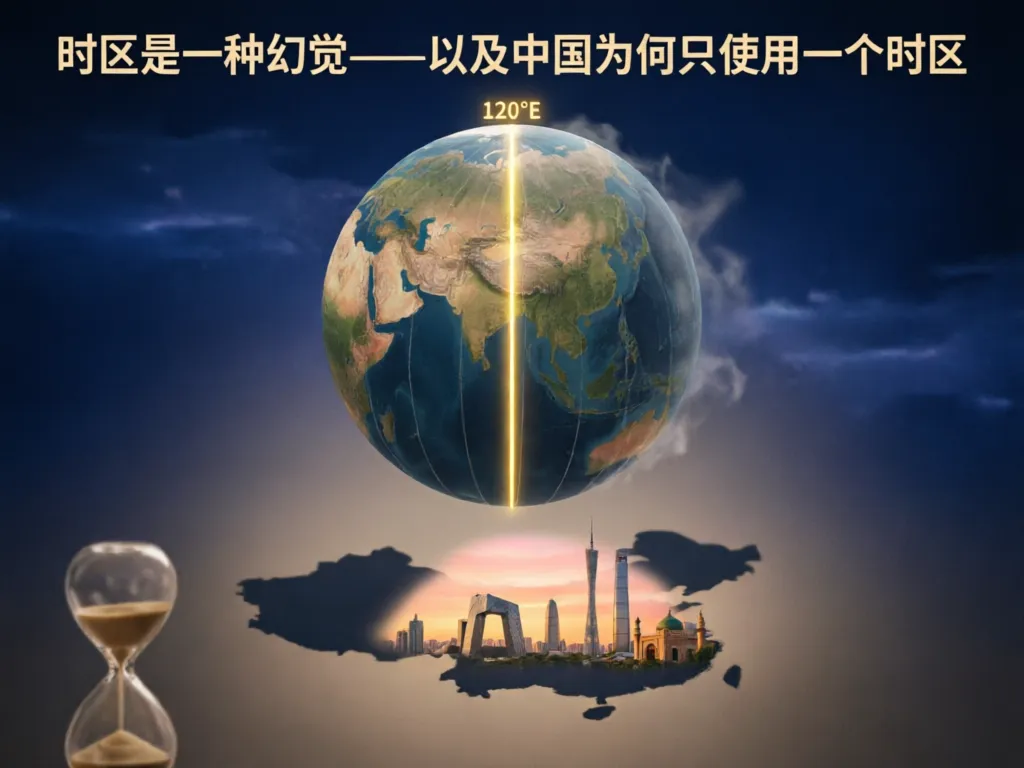
Rivers Don’t Care About Borders—But Maps Do
Open any world map and china, and you’ll see clean blue lines marking rivers—Yangtze, Yellow, Pearl—as if they belong solely to China. But zoom out, and those rivers tell transboundary stories maps hide. The Amur River (Heilong Jiang) forms much of the China–Russia border—but its headwaters begin in Mongolia’s Khentii Mountains. The Yalu River (Yalu Jiang) separates China and North Korea, yet its upper tributaries rise in Jilin’s Changbai Mountains, shared ecologically with Korean peaks. Even the Mekong—labeled 'Lancang Jiang' in China—starts on the Tibetan Plateau but flows through Myanmar, Laos, Thailand, Cambodia, and Vietnam. This matters for 'china and korea on world map' because the Yalu isn’t just a line—it’s a living corridor where fish migrate, sediment builds deltas used by both sides, and flood warnings must be coordinated hourly. Similarly, 'china and japan world map' ignores that the Kuroshio Current—a warm Pacific stream—feeds both China’s Fujian coast and Japan’s southern islands, carrying plankton, plastic, and even Fukushima-derived isotopes. When students study environmental policy, they often assume 'China controls its rivers'—but the Yellow River’s silt load drops 90% after passing through the Loess Plateau, affecting Bohai Bay fisheries *and* Korean coastal erosion patterns downstream. Maps draw borders; rivers ignore them. That’s why teaching 'world map and china' must include watershed literacy—not just political lines. A simple exercise: trace the Yangtze upstream on Google Earth, noting where tributaries cross provincial boundaries. You’ll see how 'Sichuan’ and 'Hubei' aren’t just names—they’re hydrological units.
Mountains as Memory: How the Himalayas Shape Perception
If you’ve ever held a globe and spun it slowly, you’ve felt it—the Himalayas form a physical 'wall' that tilts China’s geographic gravity eastward. At 8,848 meters, Mount Everest isn’t just tall; it’s a pivot point. West of it, China faces Central Asia across high deserts and steppes. East of it, the terrain cascades down through Sichuan Basin, Yangtze Valley, and coastal plains—creating China’s demographic and economic core. This topographic asymmetry explains why 'world map and china' feels 'balanced' on paper but is wildly lopsided in practice: 94% of China’s population lives east of the 'Hu Line'—a diagonal from Heihe to Tengchong that cuts just west of the Taihang Mountains. That line isn’t political; it’s ecological. It follows rainfall gradients, soil fertility, and transport feasibility. When learners compare china and japan on the world map, they rarely consider that Japan’s entire archipelago sits on the same tectonic subduction zone that birthed the Japanese Alps *and* the Qinling Mountains—China’s natural north-south divider. The same seismic energy that powers Tokyo’s geothermal spas lifts the Tibetan Plateau, altering monsoon paths that feed rice paddies in both Hunan and Kyushu. Similarly, 'china and korea on world map' overlooks that the Baekdu Mountain caldera straddles the China–North Korea border—its last eruption (946 CE) deposited ash across northeastern China and the Sea of Japan, recorded in both Chinese and Korean annals. Mountains aren’t backdrops; they’re archives. Teaching 'world map and china' without elevation data is like reading a novel without punctuation—you get the words, but miss the pauses, stresses, and silences that give meaning. 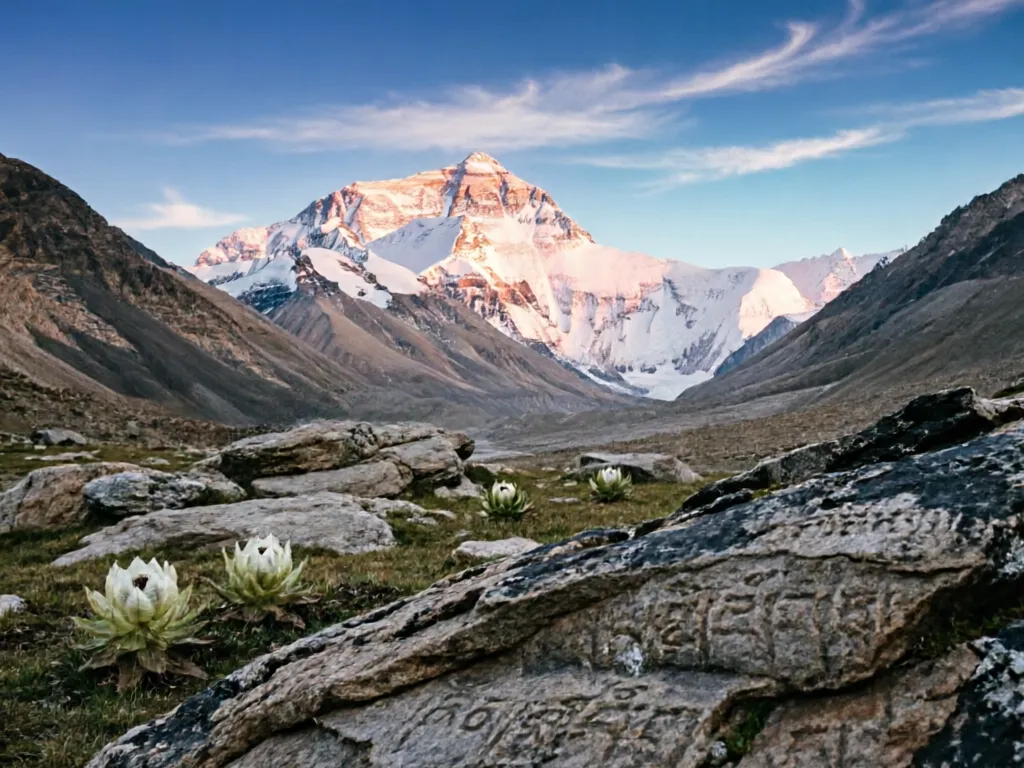
What ‘East Asia’ Really Means on a Globe
Forget textbook definitions. Stand in front of a globe, tilt it so the North Pole points up, and trace the arc from Vladivostok to Busan to Tokyo to Shanghai. That curve—roughly 1,800 km long—is the true spine of East Asia. It’s not a political bloc; it’s a tectonic shelf, a typhoon track, and a shipping superhighway. This is where 'china and japan world map' and 'china and korea on world map' converge into one physical reality. Notice how Hokkaido, Honshu, and Kyushu align almost perfectly with China’s Liaodong and Shandong peninsulas—not as isolated dots, but as interlocking fingers of land projecting into the same sea. That’s why ferry routes from Dalian to Incheon (230 km) and from Shanghai to Nagasaki (800 km) exist, while no direct ferries run from Guangzhou to Manila despite shorter straight-line distance—the seabed depth, current strength, and port infrastructure all follow that arc. It’s also why typhoons hitting Okinawa almost always recurve toward Shanghai or Jeju Island, not Hainan. This shared maritime geography explains why 'world map and china' must be taught alongside bathymetric charts: the East China Sea averages only 370 meters deep, allowing shallow-water cables, fishing fleets, and naval patrols to operate in tight coordination. When students ask why 'China and Japan relations' feel so intense compared to 'China and Australia relations', the answer isn’t just history—it’s water depth, wind patterns, and the fact that both nations share the same continental shelf. Maps flatten; globes reveal.
Language Learners, Stop Memorizing Capitals—Map the Dialects Instead
Here’s a confession: I used to drill students on 'capital cities'—Beijing, Tokyo, Seoul—until a student from Busan corrected me: 'Seoul isn’t the center of Korea for us. Busan is our port, our food, our rhythm.' That shifted everything. 'World map and china' isn’t about dots—it’s about linguistic gravity wells. Mandarin dominates official life, but Wu dialects anchor Shanghai’s identity, Cantonese pulses through Guangzhou and Hong Kong, and Minnan (Hokkien) ties Xiamen to Taiwan and Southeast Asia. When comparing china and japan on the world map, notice how Japanese Kansai-ben (Osaka) shares tonal cadence with Wu Chinese, while Tokyo’s pitch accent mirrors Beijing Mandarin’s stress patterns—not coincidentally, both evolved along the same Silk Road–maritime trade corridors. Similarly, 'china and korea on world map' gains depth when you hear how Korean honorifics mirror Classical Chinese syntax, or how Pyongyang’s speech retains archaic pronunciations lost in Beijing. Mapping dialects reveals what political borders obscure: cultural catchment areas. A student learning Chinese might focus on Beijing pronunciation—but if they plan to work in Dalian, understanding Northeastern Mandarin’s flattened vowels and faster pace matters more than perfect tones. Likewise, 'china and japan world map' becomes actionable when you realize that Nagasaki traders historically spoke a hybrid of Japanese and Minnan, not formal Mandarin. Language isn’t just vocabulary; it’s velocity, vowel length, and which port your grandparents sailed from. Start your map with soundscapes.
The Shipping Lane Illusion: Why 'Direct Route' Is a Myth
Zoom into the East China Sea on any world map and china, and you’ll see a blank blue expanse between Shanghai and Osaka—suggesting a 'direct route.' But real shipping lanes look nothing like that. Container ships avoid the shallow, busy, and politically sensitive waters near the Diaoyu/Senkaku Islands, taking instead a curved path south of Kyushu, adding 120–180 km per trip. Similarly, 'china and korea on world map' hides that ferries from Qingdao to Incheon don’t sail straight across—but follow a 'Korean Peninsula hug' route, skirting tidal currents near Jeju Island. These detours aren’t arbitrary; they’re calculated responses to bathymetry (seabed depth), wind roses (prevailing wind directions), and AIS (Automatic Identification System) traffic density. A single 400-meter container ship generates wake that disrupts smaller vessels for 5 km—so lanes are spaced like highway lanes, not flight paths. That’s why 'world map and china' fails logistics students: it shows origin and destination, not the 17 navigational waypoints, 3 port inspections, and 2 customs clearances required for one shipment. When learners compare china and japan world map, they imagine 'one ocean,' but the East China Sea has micro-currents shaped by the Yangtze outflow, creating nutrient-rich eddies that feed fisheries *and* clog ship intakes with jellyfish blooms. Teaching geography without maritime law, hydrodynamics, and AIS data is like teaching driving without traffic lights. Try this: open MarineTraffic.com, filter for ships between Shanghai and Kobe, and watch the real-time 'river of steel' flow—not straight, not fast, but relentlessly optimized. 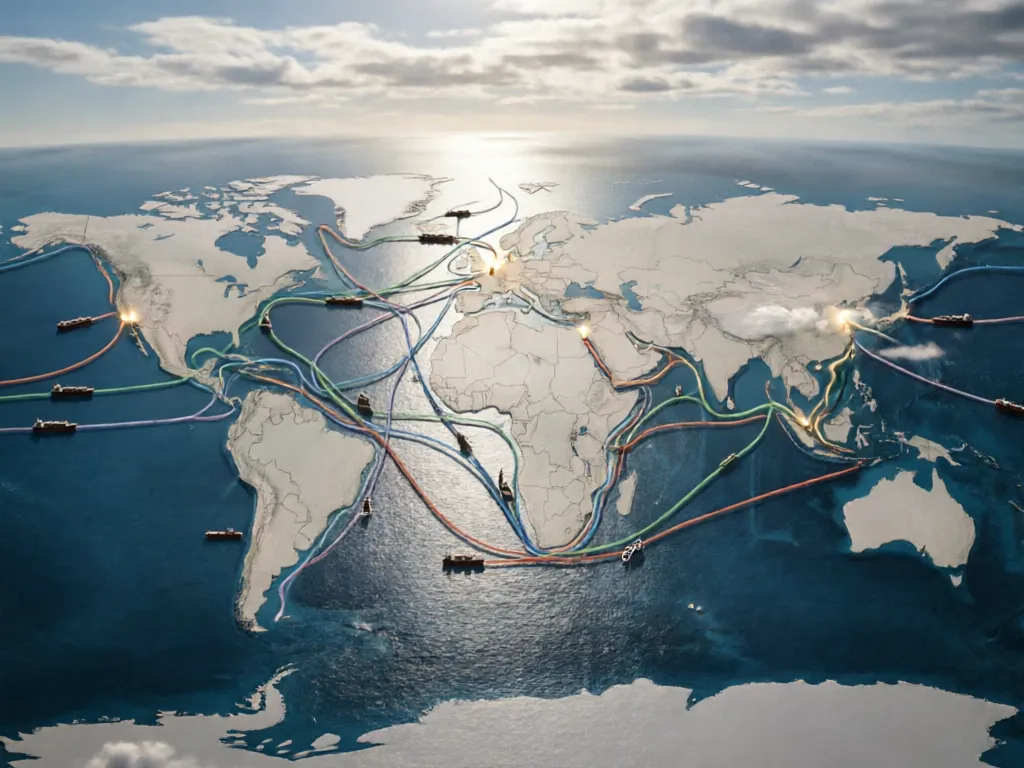
Weather Doesn’t Read Maps—But Forecasters Do
Turn on any weather app showing 'world map and china,' and you’ll see color-coded temperature blobs—red for hot, blue for cold. But weather systems laugh at political lines. The Siberian High—a dome of cold, dense air that forms each November over Lake Baikal—doesn’t stop at China’s border. It slides southeast, slamming into Beijing, then weakens over the Yellow Sea before re-intensifying over Korea and Japan. That’s why a 'cold wave' warning in Harbin triggers alerts in Seoul *before* Tokyo—even though Seoul is farther south. Similarly, the Meiyu (Baiu) rainy season hits Shanghai, then Seoul, then Tokyo in sequence—not because of latitude, but because the East Asian rainband moves like a zipper along the jet stream’s edge. When learners compare china and japan on the world map, they assume 'same season = same weather'—but July in Shanghai brings 35°C humidity and Yangtze floods, while July in Hokkaido is 22°C and dry. That’s the Pacific High blocking moisture. 'China and korea on world map' feels similar in winter, but Korea’s mountains force snowfall inland, while China’s North China Plain gets dusty winds. Weather mapping teaches humility: no forecast is truly local. It’s always regional, atmospheric, and interconnected. A teacher in Dalian once told me her students stopped asking 'Why is it raining?' and started asking 'Where did this air mass come from?'—that shift from symptom to source is the heart of geographic literacy. Next time you check a forecast, trace the isobars backward. You’ll see how 'world map and china' is really a breathing system.
Satellite Imagery Reveals What Maps Hide
Google Earth isn’t just pretty—it’s corrective. Load a true-color satellite image of the Bohai Sea on a clear day, and you’ll see something no world map shows: the water isn’t blue—it’s milky green, stained by sediment from the Yellow River. That turbidity affects everything—fishing yields, coral survival, and even radar reflection for maritime patrol. Now pan to the Yangtze Delta: Shanghai’s sprawl glows orange at night, but the surrounding farmland pulses with seasonal green—rice planting in April, golden harvest in October. Compare that to the Korean Peninsula: Seoul’s light is dense and uniform, but Pyongyang’s is faint and clustered, revealing energy infrastructure gaps maps never label. Zoom into the Japan–China maritime boundary near the Senkaku/Diaoyu Islands: you’ll see buoys, patrol vessels, and fishing boats—not static lines, but contested, moving zones. Satellite data exposes the lie of 'empty ocean' on flat maps. The East China Sea isn’t vacant; it’s crisscrossed by 3,000+ ships daily, tracked by AIS. 'China and Japan world map' becomes dynamic when you overlay vessel traffic density—showing how 70% of cargo moves within 200 km of either coast, avoiding deep-water routes. Similarly, 'china and korea on world map' gains texture when you see the DMZ not as a sterile line, but as a 4-km-wide forested corridor teeming with wildlife unseen for decades. Teaching 'world map and china' with satellite imagery transforms abstraction into evidence. Start simple: pick one city—say, Qingdao—and compare its daytime reflectance, nighttime lights, and NDVI (vegetation index) over four seasons. You’ll learn more about regional identity than any textbook.
Railways Don’t Follow Borders—They Follow Valleys
Look at a world map and china, and you’ll see railways drawn as straight lines connecting capitals. Reality is messier. China’s high-speed rail network avoids mountains where possible—so the Beijing–Shanghai line skirts the Taihang Mountains via the North China Plain, while the Xi’an–Chengdu line tunnels *through* the Qinling range (98% of it underground). That engineering choice reflects geography, not politics. When comparing china and japan on the world map, note that Japan’s Shinkansen runs along narrow coastal valleys—Kyoto to Osaka is 40 km, but the line snakes 52 km to avoid hills. Korea’s KTX does the same, hugging the Naktong River valley. This valley-following logic explains why 'china and korea on world map' shows Dandong and Sinuiju as adjacent—but the rail link between them is just 1.5 km long *because* it crosses the Yalu River gorge, not because borders align. It also reveals why there’s no direct rail from Beijing to Seoul: the terrain forces routes north through Manchuria or south through Shandong—neither efficient for passenger service. Rail geography teaches patience: infrastructure follows the path of least resistance, not shortest distance. A student once asked why 'China and Korea trade' feels slower than 'China and Vietnam trade'—the answer wasn’t tariffs, but topography. Vietnam’s rail links to China use the Red River valley, a natural corridor; Korea’s require tunneling through granite ridges. Maps show connections; railways reveal constraints. Next time you board a train, watch the landscape—not the timetable. 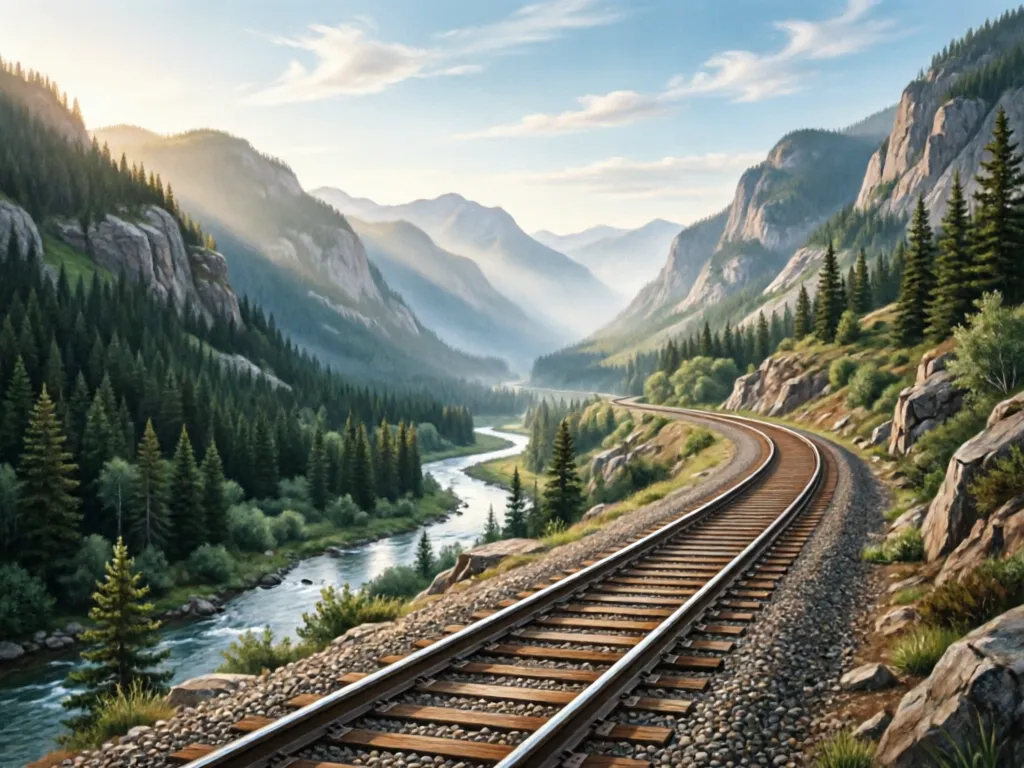
The 'South China Sea' Label Is a Cartographic Shortcut
Every world map and china labels the South China Sea as one blue blob—but zoom in, and it fractures into 250+ islands, reefs, and atolls, each with distinct geology, ecology, and human use. The Paracel Islands (Xisha) are volcanic, supporting guano mining and coconut palms. The Spratlys (Nansha) are coral atolls, home to sea cucumber divers and nesting turtles. The Pratas (Dongsha) sit atop a submerged volcano, creating deep-water harbors. This diversity means 'world map and china' flattens complexity into a geopolitical headline. When learners compare china and japan world map, they rarely consider that Japan’s southernmost island, Yonaguni, lies just 110 km from Taiwan—and that the Kuroshio Current sweeps debris from Taiwan’s rivers past Yonaguni into the Philippine Sea. Similarly, 'china and korea on world map' ignores that Korean fishermen have harvested squid in the East China Sea for centuries, following the same currents that bring sardines to Zhejiang Province. Labels like 'South China Sea' imply ownership; bathymetric maps reveal function. The sea’s deepest trench (5,500 m) lies near the Luzon Strait—making it useless for fishing but critical for submarine transit. Its shallowest banks (under 20 m) host 60% of regional coral reefs. Teaching 'world map and china' with marine ecology—not just sovereignty—builds deeper understanding. Try this: find a NOAA bathymetric chart of the South China Sea. Trace the 200-meter isobath—the edge of the continental shelf. That line defines where 'sea' becomes 'territory' for fisheries, oil, and security. Learn more: HSK Exam Preparation | Official Chinese Proficiency Test Training.
Flight Paths Expose the Real 'East Asia'
Open a flight tracking app like Flightradar24 and filter for routes between Shanghai, Seoul, and Tokyo. What you’ll see isn’t a triangle—it’s a dense web, with clusters over the Yellow Sea, East China Sea, and Sea of Japan. That’s because air traffic doesn’t fly 'as the crow flies'; it follows RNAV (Area Navigation) routes—predefined corridors optimized for radar coverage, fuel efficiency, and separation. A flight from Beijing to Seoul might pass over Dandong, but the return leg from Incheon to Beijing often swings north over Yanji to avoid Pyongyang’s restricted airspace. Similarly, 'china and japan world map' suggests direct flights, but most Shanghai–Tokyo routes detour south of Honshu to avoid turbulence from Mt. Fuji’s lee waves. These paths reveal 'East Asia' not as a political region, but as an airspace ecosystem. When learners compare china and korea on world map, they imagine 'short hop'—but the shortest flight path (215 km) is rarely used due to wind shear and military training zones. Real-world aviation teaches that geography is negotiated, not given. A pilot once told me his most frequent route is Shanghai–Busan—not because it’s popular, but because Busan’s airport sits at sea level with minimal terrain interference, making it a preferred alternate when Seoul’s Gimpo is fogged in. 'World map and china' shows destinations; flight paths show dependencies. 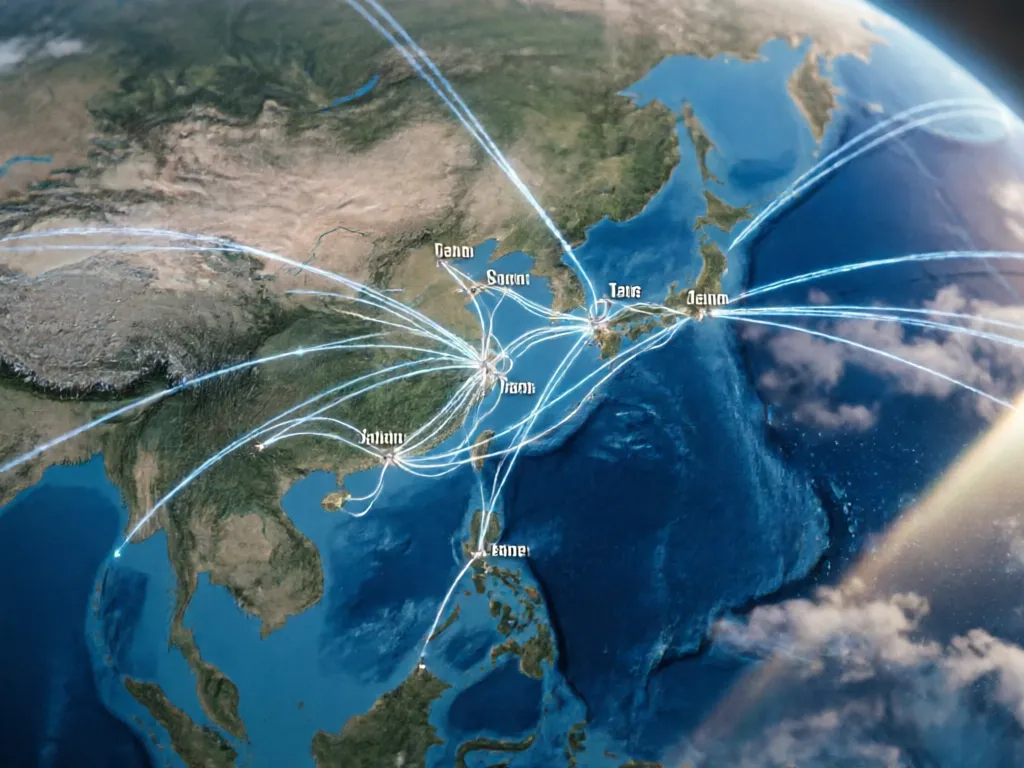
Fishing Grounds Don’t Obey Lines—They Obey Currents
Pull up a FAO (Food and Agriculture Organization) map of Northwest Pacific fishing grounds, and you’ll see something startling: the richest zones aren’t near ports—they’re where cold, nutrient-rich currents from the Okhotsk Sea meet warm Kuroshio waters near the Oki Islands and the Zhoushan Archipelago. That confluence creates plankton blooms that feed pollock, squid, and hairtail—species caught by fleets from China, Japan, and Korea *simultaneously*. 'World map and china' draws Exclusive Economic Zone (EEZ) lines, but fish ignore them. A squid caught off Jeju Island may have migrated from waters 200 km west of Shanghai. That’s why 'china and korea on world map' feels tense during spawning season—when Korean vessels drift into China’s EEZ chasing squid, and Chinese trawlers follow the same path into Korean waters. It’s not piracy; it’s biology. Similarly, 'china and japan world map' hides that Japanese 'bonito' and Chinese 'skipjack' are the same species, migrating along the same thermal fronts. Fisheries management fails when maps replace oceanography. Teaching 'world map and china' with marine biology turns conflict into collaboration: students who map chlorophyll-a concentrations (a proxy for plankton) learn why certain months bring abundance—and why joint patrols make ecological sense. Try this: overlay NOAA’s sea surface temperature maps with fishing catch data. You’ll see how 'world map and china' is really a fluid, living map.
The 'Great Wall' Isn’t a Border—It’s a Terrain Response
Most world maps show the Great Wall as a thick, continuous line snaking across northern China—implying a rigid frontier. But stand on it near Jinshanling, and you’ll see it’s not a wall—it’s a series of watchtowers linked by rubble-filled trenches, built *along* ridgelines, not across them. Its path follows the 400-mm annual rainfall line—the boundary where farming gives way to pastoralism. That’s why it zigzags: not to enclose territory, but to control mountain passes where trade and raids converged. When comparing china and japan on the world map, remember that Japan has no such 'wall'—not because it lacked threats, but because its island geography created natural barriers. Korea’s 'Baekdu-daegan' mountain spine served a similar function, guiding ancient roads and fortresses. This terrain logic explains why 'china and korea on world map' shows a land border, but historically, interaction flowed through ports like Busan and Incheon, not overland passes. The Wall wasn’t about 'keeping others out'; it was about regulating camel caravans, taxing silk, and spotting dust storms before they buried oases. Teaching 'world map and china' with archaeology reveals how humans adapt to geography—not dominate it. A student once asked why the Wall ends at Shanhai Pass on the Bohai Sea. The answer? Because the sea *is* the wall there—no need for stone when cliffs and currents do the job. Maps draw lines; landscapes write rules.
Cultural Proximity ≠ Geographic Proximity
Here’s a paradox: Shanghai and Tokyo are closer geographically than Shanghai and Urumqi—but culturally, Shanghai and Urumqi share more daily rhythms (shared language, national holidays, media cycles) than Shanghai and Tokyo do. That’s because 'world map and china' measures kilometers, but culture measures bandwidth—how fast ideas, trends, and memes move. WeChat Pay works in Seoul but not in Tokyo—not because of distance, but because Korea adopted QR-code payments early, while Japan clung to Suica cards. Similarly, 'china and korea on world map' shows proximity, but Korean K-pop fandom in China thrives on shared streaming platforms and subtitle networks, while Japanese anime in China faces licensing delays and censorship layers. 'China and Japan world map' suggests ease, but Japanese business etiquette (bow depth, card exchange order) requires weeks of training for Chinese professionals—whereas Korean business norms align closely with Chinese hierarchical expectations. This isn’t about 'sameness'—it’s about infrastructure for exchange. A student learning Chinese for Japan trade told me her biggest hurdle wasn’t grammar—it was understanding that 'yes' in Japanese business means 'I heard you,' not 'I agree.' Cultural proximity is built, not inherited. Teaching 'world map and china' must include media ecology: which apps cross borders, which news sources are translated, which festivals go viral. Geography sets the stage; culture writes the script. 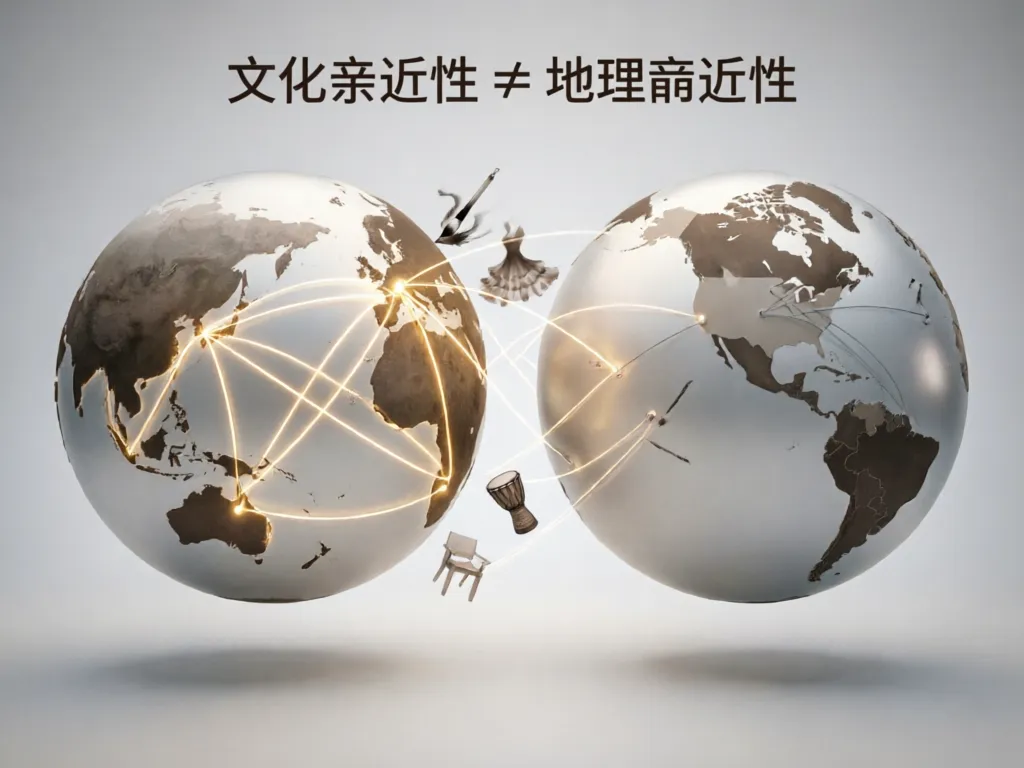
What Students Get Wrong (and How to Fix It)
After 12 years of teaching geography-adjacent courses, I’ve cataloged the top 5 mistakes students make with 'world map and china': First, assuming 'east' means 'Japan'—ignoring that China’s eastern coast faces *three* seas (Bohai, Yellow, East China), each with distinct neighbors. Second, treating 'china and japan on the world map' as a binary, missing Korea’s role as maritime bridge. Third, using Mercator for distance estimates—then baffled why 'Beijing to Tokyo' flight time is 3 hours, not 2. Fourth, confusing administrative boundaries (provinces, prefectures) with ecological ones (watersheds, biomes)—leading to flawed policy analysis. Fifth, memorizing capital cities without mapping their functional roles: Beijing governs, Shanghai finances, Shenzhen innovates, Chengdu connects west. Fixing these isn’t about more facts—it’s about layered mapping. Start with a globe, add a bathymetric overlay, then layer shipping lanes, then language distribution, then social media heatmaps. Each layer corrects the one below. A student who traced the Yangtze from source to sea—not just on paper, but via satellite time-lapse—stopped asking 'Where is China?' and started asking 'How does China move?' That shift—from location to flow—is the goal. Don’t teach maps. Teach motion. Learn geography right
Key Takeaways Summary
| Keyword | Key point | Example | Tip |
|---|---|---|---|
| world map and china | Mercator projection distorts size and distance—use globe or equal-area digital maps first | Beijing appears 'higher' than Tokyo on Mercator, but both are at similar latitudes | Start every lesson with a physical globe rotation |
| china and japan on the world map | Distance is less relevant than shared currents, shipping lanes, and typhoon tracks | Kuroshio Current feeds fisheries off both Fujian and Kyushu | Overlay bathymetric charts before political maps |
| china and japan world map | Air traffic flows along RNAV corridors—not straight lines—due to terrain and regulation | Shanghai–Tokyo flights detour south of Honshu to avoid Mt. Fuji turbulence | Use Flightradar24 to visualize real flight density |
| china and korea on world map | Shared maritime geography drives cooperation more than land borders | Dalian–Incheon ferries follow tidal currents, not shortest distance | Teach ports as paired nodes, not isolated cities |
| world map and china | Time zone uniformity masks solar time variation—critical for scheduling and culture | Sunrise in Kashgar is ~7 a.m. 'Beijing time' but feels like 5 a.m. | Always specify 'official time' vs. 'local solar time' |
FAQ
Why does China use only one time zone?
Is the Great Wall visible from space?
Why are Japan and Korea shown so close to China on maps?
Do Chinese, Japanese, and Korean languages share roots?
Can I visit both China and Korea on one trip?
What’s the best tool to explore 'world map and china' accurately?
Final Thought: Maps Are Drafts, Not Truths
A world map and china isn’t a final statement—it’s a draft waiting for your corrections. Every time you notice a Mercator stretch, question a 'direct route,' or trace a river past a border, you’re editing that draft. Geography isn’t about memorizing where things *are*; it’s about sensing how they *move*, resist, connect, and change. Whether you’re planning a trip, analyzing trade, or learning Mandarin, start not with a map—but with a question: 'What does this map hide?' Then reach for a globe, a satellite image, or a shipping tracker. Let the earth speak first. The rest will follow. Explore real-world geography