China on the World Map: Major Cities You Should Know
Table of Contents [hide]
- Why These Cities Matter Beyond Geography
- Beijing: The Political and Cultural Heartbeat
- Shanghai: Where Global Finance Meets Local Grit
- Hong Kong, Chongqing, and the Geography of Scale
- Guangzhou and Shenzhen: Twin Engines of Manufacturing and Innovation
- Beihai: The Coastal Connector You Overlook
- City Comparison Snapshot
- FAQ
Why These Cities Matter Beyond Geography
When we talk about 'China on the world map', we’re not merely identifying coordinates or placing pins on a digital cartographic interface — we’re engaging with a dynamic, historically layered, and strategically orchestrated urban ecosystem that functions as the central nervous system of one of the most consequential economies and civilizations in human history. These eight cities — Beijing, Shanghai, Hong Kong, Chongqing, Guangzhou, Shenzhen, Beihai, and (implicitly through their interconnections) the broader Greater Bay Area — are neither random nor interchangeable. Each has evolved over centuries — some for over two millennia — under distinct geographic constraints, administrative mandates, economic incentives, and cultural currents, resulting in highly specialized, complementary, and deeply interdependent roles within China’s national architecture and its outward-facing global posture. Beijing is not just the capital; it is the symbolic, institutional, and ideological keystone — where imperial cosmology, socialist statecraft, Confucian scholarly tradition, and contemporary AI governance converge in real time. Shanghai does more than host banks and shipping lines; it serves as China’s primary interface for international financial protocols, maritime law enforcement, multilateral trade arbitration, and cross-cultural brand diplomacy — a city whose bilingual metro announcements, ISO-compliant port documentation systems, and globally benchmarked regulatory sandboxes reflect an unparalleled capacity to translate between Chinese policy imperatives and Western commercial expectations. Hong Kong, operating under the constitutional framework of ‘One Country, Two Systems’, is far more than a financial hub — it is a living laboratory of legal hybridity, where English common law principles coexist with PRC civil code applications, where offshore renminbi clearing occurs alongside onshore bond issuance, and where foreign law firms maintain offices licensed to advise on mainland M&A while navigating jurisdictional boundaries that shift subtly with every State Council white paper. Chongqing, often mischaracterized as merely ‘inland China’, is in fact the largest subnational administrative unit on Earth by land area — larger than Austria, Portugal, or the U.S. state of South Carolina — and functions as the logistical, industrial, and demographic pivot of China’s ‘Go West’ strategy, anchoring over 40% of the China-Europe Railway Express volume, hosting more than 350 Fortune 500 manufacturing facilities, and serving as the epicenter of China’s domestic semiconductor packaging and testing industry. Guangzhou sustains the world’s longest continuously operating international trade fair — the Canton Fair — now in its 135th session, attracting over 200,000 buyers from 215 countries annually, generating $30+ billion in export orders per edition, and functioning as the de facto global barometer for consumer electronics pricing, textile sourcing trends, and small-to-midsize enterprise (SME) competitiveness across emerging markets. Shenzhen, born from a fishing village into a metropolis of 17.5 million in under four decades, is not simply ‘China’s Silicon Valley’ — it is the world’s most concentrated hardware innovation corridor, responsible for over 60% of all global smartphone production, 85% of drone components, and 92% of the world’s LED lighting modules, with R&D investment exceeding 5.5% of GDP — higher than South Korea or Germany — and governed by a municipal-level innovation statute that permits patent filings in 72 hours and fast-tracks regulatory approval for AI-driven medical devices. Beihai, though modest in population (just over 1.8 million), occupies a geoeconomic chokepoint of extraordinary significance: it is the southernmost node of China’s New International Land-Sea Trade Corridor (NILSTC), a $12 billion integrated infrastructure initiative linking Chongqing and Chengdu to Singapore and Bangkok via rail-sea multimodal transit; its deep-water port handles over 30 million tons of cargo annually, specializing in time-critical, high-value shipments — including Vietnam-sourced pangasius fillets arriving in under 48 hours for distribution across Guangdong province, rare earth concentrates bound for Japanese magnet manufacturers, and temperature-controlled pharmaceutical imports cleared under ASEAN-China Free Trade Area (ACFTA) preferential tariffs. Collectively, these cities form what scholars increasingly refer to as China’s ‘Strategic Urban Archipelago’ — a non-hierarchical, functionally distributed network wherein no single node can be substituted without cascading disruption across global supply chains, diplomatic channels, technological diffusion pathways, and cultural soft power transmission. Understanding them means moving beyond static snapshots or tourist brochures to grasp how sovereignty, infrastructure, language policy, regulatory design, and historical memory operate in concert — how a customs officer in Beihai interprets the same WTO Annex VII clause differently than her counterpart in Hong Kong, how a Shenzhen startup founder negotiates a joint venture agreement using Mandarin idioms rooted in Shenzhen’s migrant ethos rather than Beijing bureaucratic phrasing, or how Chongqing’s mountainous topography shapes everything from public transport signage vocabulary to emergency response protocols. This is not geography as location — it is geography as grammar: the underlying syntax through which China reads, writes, and acts upon the world.  Learn Mandarin online
Beijing: The Political and Cultural Heartbeat
Beijing stands as the undisputed political, administrative, diplomatic, and cultural nucleus of the People’s Republic of China — a role it has fulfilled continuously for over 800 years, first as the capital of the Yuan Dynasty under Kublai Khan, then the Ming and Qing empires, the Republic of China, and finally the PRC since 1949. Its physical landscape is a palimpsest of imperial grandeur, revolutionary symbolism, socialist modernization, and 21st-century technocratic ambition — all compressed into a metropolitan area spanning 16,410 square kilometers and home to approximately 21.9 million permanent residents (with over 30 million including floating population). At its ceremonial core lies Tian’anmen Square — the world’s largest public plaza at 440,000 square meters — flanked by the Forbidden City (a UNESCO World Heritage Site housing nearly 1.9 million artifacts), the Great Hall of the People (where the National People’s Congress convenes), and the Monument to the People’s Heroes. Just west of the square, Zhongnanhai — a walled compound of lakes, pavilions, and historic courtyards — remains the secretive seat of the Communist Party of China Central Committee and the State Council, functioning as both a working government complex and a powerful symbol of centralized authority. Yet Beijing’s significance extends far beyond its monumental architecture: it is the nation’s intellectual engine room. Peking University and Tsinghua University — ranked among the top 20 universities globally in engineering, AI, and quantum physics — anchor a dense innovation ecosystem stretching into Haidian District, where Zhongguancun Science Park, often dubbed ‘China’s Silicon Valley,’ hosts over 12,000 high-tech enterprises, including Baidu, Xiaomi, and ByteDance’s foundational R&D labs. Here, researchers develop quantum encryption algorithms tested on the Mozi satellite, train large language models on proprietary Chinese-language corpora, and pioneer brain-computer interfaces approved for clinical trials under China’s NMPA ‘green channel.’ Crucially, Beijing Mandarin — codified in the 1950s as Putonghua — is not merely a dialect but the legally mandated standard for education, broadcasting, judiciary proceedings, and official documentation nationwide. Its phonetic norms, lexical choices, and syntactic conventions form the basis of the HSK (Hanyu Shuiping Kaoshi) proficiency exams administered to over 2 million test-takers annually across 130 countries. For language learners, Beijing offers unparalleled immersion grounded in functional authenticity: negotiating lease agreements in Dongcheng’s hutong revitalization zones, interpreting technical specifications during factory audits in Chaoyang’s CBD, participating in bilingual press briefings at the Ministry of Foreign Affairs’ media center, or analyzing policy white papers published by the Development Research Center of the State Council. Public transportation alone tells a story of integration — the Beijing Subway, carrying over 12 million passengers daily across 27 lines and 513 stations, seamlessly connects centuries-old courtyard residences with diplomatic compounds like Sanlitun, tech incubators in Zhongguancun, and the futuristic Beijing Daxing International Airport — itself a marvel of infrastructure engineering designed to handle 100 million passengers annually and serve as the primary aviation gateway for the Jing-Jin-Ji (Beijing-Tianjin-Hebei) megaregion. Our semester-long immersive programs go beyond textbook Mandarin: students live with host families in traditional siheyuan homes restored under municipal heritage preservation grants; attend lectures by retired ambassadors and current NPC deputies; shadow interpreters at the United Nations Information Centre; and participate in field research documenting linguistic shifts among Gen-Z Beijingers — such as the rise of internet slang like ‘yóu yì sī’ (‘has a certain flavor’) used to critique bureaucratic euphemisms or the localized pronunciation of loanwords like ‘kǎfēi’ (coffee) versus ‘jiāfēi’. This layered, multi-temporal, and institutionally rich environment makes Beijing not just a place to learn Chinese — but the definitive place to understand how language, power, memory, and modernity coalesce in real time. 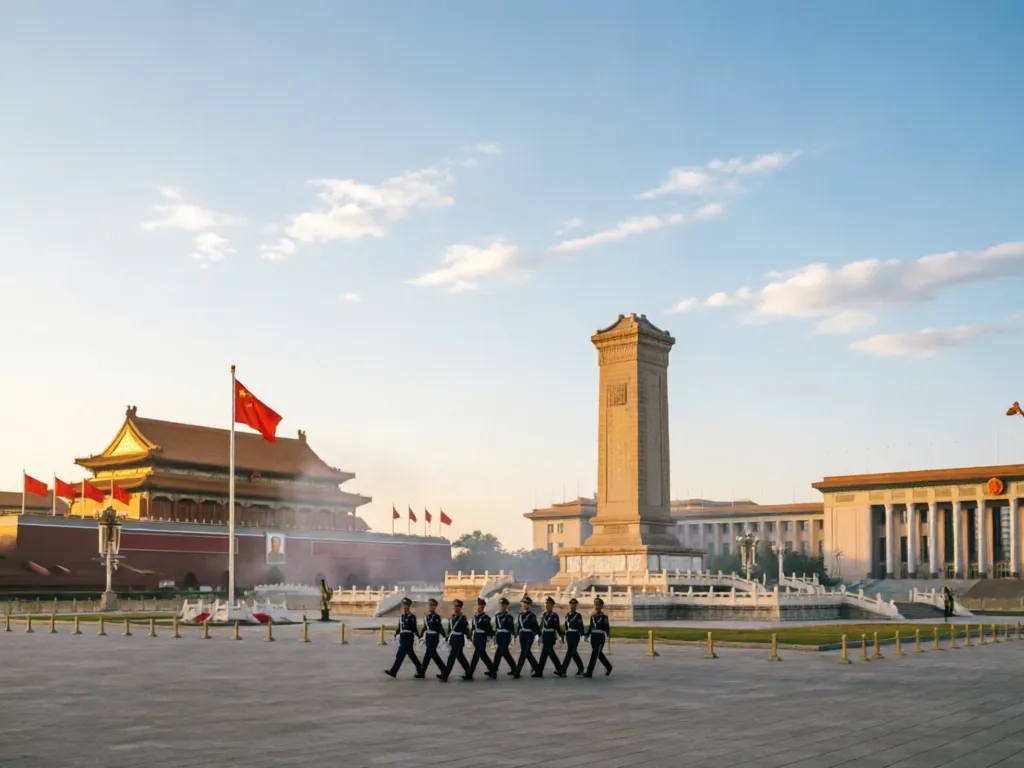 HSK prep courses
Shanghai: Where Global Finance Meets Local Grit
Shanghai is far more than China’s largest city by urban agglomeration (24.9 million residents) or its most cosmopolitan metropolis — it is the operational command center for China’s integration into global capitalism, a city engineered to absorb, process, and reconfigure international flows of capital, data, commodities, and talent with unmatched precision and scale. Its identity is forged along the Huangpu River, where the colonial-era Bund — lined with neoclassical banking halls built by HSBC, Standard Chartered, and the former Russo-Asian Bank — faces the futuristic Lujiazui Financial District, crowned by the 632-meter Shanghai Tower (the world’s second-tallest building), the Shanghai World Financial Center, and the Jin Mao Tower. This skyline is not mere spectacle; it houses the Shanghai Stock Exchange (SSE), China’s largest equity market with over 2,200 listed companies and a total market capitalization exceeding $7 trillion; the China Foreign Exchange Trade System (CFETS), which sets the daily central parity rate for the renminbi against 24 currencies; and the Shanghai Clearing House, which clears over $15 trillion in interbank transactions annually. As the home of the world’s busiest container port — the Port of Shanghai, handling 47.03 million TEUs in 2023 (more than Los Angeles, Long Beach, and New York/New Jersey combined), Shanghai doesn’t just move goods — it governs global logistics standards. Its automated Yangshan Deep Water Port, connected to the mainland by the 32.5-kilometer Donghai Bridge, operates with 98% robotic crane utilization and processes customs declarations via blockchain-enabled platforms compliant with the WTO Trade Facilitation Agreement. Yet Shanghai’s true strength lies in its granular, human-scale texture — the ‘local grit’ that transforms systemic capability into lived experience. In the pre-dawn hours of the Nanshi Old Town, vendors steam shengjian bao (pan-fried pork buns) using century-old cast-iron pans while delivery riders navigate alleyways on electric scooters synced to Alibaba’s Cainiao logistics AI. In Zhangjiang Hi-Tech Park — Asia’s largest biotech cluster — scientists from Fudan University and the Chinese Academy of Sciences collaborate with Merck and Roche on mRNA vaccine platforms, drafting protocols in Mandarin infused with English acronyms like ‘CRISPR-Cas9’ and ‘mRNA-LNP’. In Jing’an Temple’s surrounding district, boutique coffee roasters source Ethiopian Yirgacheffe beans, roast them on-site, and serve them in ceramic cups branded with calligraphic interpretations of ‘third wave’ — a fusion of global trend and local aesthetic sensibility. For Mandarin learners, Shanghai provides the richest, most functionally diverse immersion environment in China: ordering bespoke qipao from designers who digitize embroidery patterns using generative AI; interpreting safety compliance manuals for German automotive suppliers in Anting’s auto valley; negotiating freight forwarder contracts at the Waigaoqiao Free Trade Zone; or transcribing investor presentations delivered by Shenzhen-based startups pitching at the Shanghai Futures Exchange’s Innovation Pavilion. Crucially, Shanghai Mandarin — while adhering strictly to Putonghua phonology and grammar — incorporates distinctive pragmatic features: greater use of sentence-final particles like ‘na’ (‘well then’) in business negotiation, subtle tonal shifts in honorifics when addressing foreign executives, and a lexicon enriched by Shanghainese loanwords like ‘xiao fan’ (‘little meal’, meaning snack) adopted into colloquial professional speech. Our advanced immersion curriculum includes modules on financial Mandarin (covering SSE listing requirements, margin trading rules, and QFII regulations), maritime terminology (container types, bill of lading clauses, ISPS Code compliance), and design-sector discourse (user experience wireframing, sustainability certification frameworks, and IP licensing negotiations). Students don’t just study the language — they learn to speak the language of global systems as they actually operate in China’s most internationally fluent city. 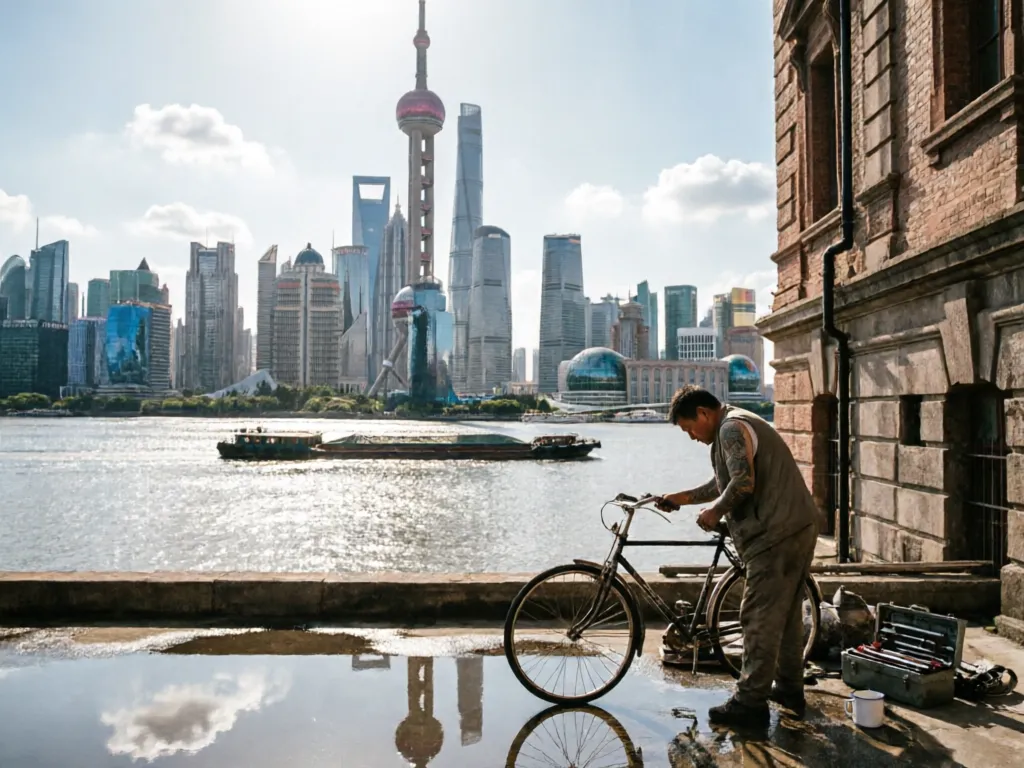 Learn more: One-on-One Chinese Lessons | Personalized Mandarin Tutoring in Beihai. One-on-one tutoring
Hong Kong, Chongqing, and the Geography of Scale
Hong Kong and Chongqing represent two diametrically opposed yet equally indispensable expressions of China’s strategic urban logic — one defined by legal architecture, financial abstraction, and maritime connectivity; the other by geological scale, infrastructural audacity, and continental integration. Their contrast illuminates how China manages complexity not through uniformity, but through deliberate, calibrated differentiation. Hong Kong, a Special Administrative Region (SAR) of 7.5 million people occupying just 1,113 square kilometers, operates under the constitutional principle of ‘One Country, Two Systems’ — a framework enshrined in the Sino-British Joint Declaration and the Basic Law. This grants it unique attributes unavailable anywhere else in China: an independent judiciary applying English common law; full autonomy over monetary policy (issuing its own HKD currency pegged to the USD); unrestricted capital account convertibility; and status as a World Trade Organization (WTO) member in its own right. As a result, Hong Kong functions as China’s irreplaceable global financial interface: over 70% of all mainland Chinese companies’ overseas IPOs are listed on the Hong Kong Stock Exchange (HKEX); 75% of China’s outbound foreign direct investment (OFDI) flows through Hong Kong-based holding companies; and 90% of all renminbi-denominated bonds issued outside mainland China are cleared through the Hong Kong Monetary Authority’s (HKMA) CNH settlement system. Its legal ecosystem is equally sophisticated — the Hong Kong International Arbitration Centre (HKIAC) handled over 650 international disputes in 2023, with 72% involving parties from mainland China and ASEAN nations, applying UNCITRAL Model Law provisions interpreted through Hong Kong’s common law lens. Meanwhile, Chongqing — officially designated a municipality directly under the central government — is a geopolitical entity of staggering proportions: covering 82,400 square kilometers (larger than Austria and nearly the size of Maine), with a registered population of 32.1 million — making it the most populous urban administrative unit on Earth. Its terrain is defined by the dramatic karst landscapes of the Yunnan-Guizhou Plateau, carved by the Yangtze and Jialing Rivers, creating natural barriers that historically isolated it from coastal development. Today, Chongqing’s identity is forged through infrastructural conquest: it boasts over 20,000 bridges (more than any city on Earth), including the 1,280-meter Wushan Yangtze River Bridge, and a metro system featuring the world’s longest continuous underground escalator (160 meters) in the Lianglukou Station. It serves as the western terminus of the China-Europe Railway Express, with over 12,000 trains departing annually — transporting electronics from Chongqing’s Foxconn and HP factories to Duisburg, Germany, and returning with German automobiles and Polish dairy products. Economically, Chongqing anchors China’s ‘dual circulation’ strategy: its inland free trade zone hosts over 400 multinational R&D centers focused on automotive electronics, lithium battery systems, and smart home appliances, while its bonded logistics parks enable tariff-deferred assembly of export-bound goods using components sourced from Shanghai, Shenzhen, and Vietnam. Linguistically, Chongqing Mandarin exhibits distinctive phonological features — notably the merger of retroflex and alveolar consonants (e.g., ‘sh’ and ‘s’ pronounced identically), and lexical innovations like ‘ge le’ (‘got it’) used ubiquitously in factory-floor communication. For language learners, understanding this duality is essential: Hong Kong requires mastery of formal legal and financial register — contract drafting, arbitration procedure vocabulary, and regulatory compliance terminology — while Chongqing demands fluency in technical Mandarin for heavy industry, logistics coordination, and cross-regional policy implementation. Neither city fits conventional urban typologies; instead, they exemplify China’s ‘scale-sensitive governance’: Hong Kong leverages micro-scale legal precision to manage macro-scale capital flows, while Chongqing deploys macro-scale infrastructure to overcome micro-scale geographic fragmentation. Together, they form the twin pillars of China’s dual-track globalization — Hong Kong connecting outward to London, New York, and Singapore; Chongqing connecting inward to Lanzhou, Urumqi, and Khorgos, ensuring no region is left outside the circuit of national development. Learn more: Our Teachers | Experienced Mandarin Chinese Tutors. Contact our advisors
Guangzhou and Shenzhen: Twin Engines of Manufacturing and Innovation
Guangzhou and Shenzhen constitute the most tightly integrated, functionally symbiotic urban pair in China — a relationship rooted in shared geography, linguistic heritage, and economic complementarity, yet defined by starkly divergent evolutionary paths and institutional logics. Located just 120 kilometers apart in Guangdong Province’s Pearl River Delta, they form the southern core of the Greater Bay Area (GBA) — a mega-region projected to generate $4.6 trillion in GDP by 2030, rivaling Tokyo and New York. Historically, Guangzhou — known for over 2,200 years as Canton — served as China’s principal maritime gateway, documented in Han Dynasty records as a hub for the Maritime Silk Road trading porcelain, silk, and tea for spices, ivory, and precious stones. Today, this legacy manifests in the Canton Fair (China Import and Export Fair), the world’s oldest and largest trade exhibition, held biannually since 1957. Spanning 1.1 million square meters across three phases and four exhibition districts, the Canton Fair attracts over 200,000 international buyers from 215 countries annually, facilitating $30–40 billion in export orders per session. Its influence permeates global retail: decisions made in Guangzhou’s wholesale markets — such as the Baogang Textile Market or the Huadu Leather Goods Hub — determine inventory planning for Walmart, Carrefour, and Mercado Libre across Latin America, Africa, and Southeast Asia. The fair’s digital transformation — launched in 2020 as the ‘Canton Fair Online’ platform — now hosts over 30,000 verified exhibitors and employs AI-powered matchmaking algorithms that connect Vietnamese garment factories with Dutch fashion brands based on fabric certifications, MOQ requirements, and ESG compliance scores. By contrast, Shenzhen — established as China’s first Special Economic Zone (SEZ) in 1980 — was deliberately designed as a laboratory for market-oriented reform. From a population of 30,000 fishermen and farmers in 1979, it exploded to 17.5 million residents today, with over 70% being migrants from other provinces. Its economic DNA is hardware-centric innovation: Shenzhen produces over 50% of the world’s smartphones (including Apple’s iPhone assembly), 85% of consumer drones (DJI’s global HQ is here), and 92% of LED lighting modules. Its innovation ecosystem thrives on ‘shanzhai’ — a term originally denoting counterfeit electronics but now rebranded as ‘rapid prototyping culture’ — where maker spaces like HAX Accelerator and Seeed Studio enable startups to iterate hardware designs in days, not months, leveraging Shenzhen’s unparalleled supply chain density: over 10,000 component suppliers operate within a 5-kilometer radius of Huaqiangbei Electronics Market, offering everything from custom PCB fabrication to FCC-certified RF testing in under 48 hours. Linguistically, the divergence is profound: while both cities share Yue (Cantonese) linguistic roots, Guangzhou maintains robust colloquial Cantonese usage in wholesale markets, street food stalls, and family-run workshops — where phrases like ‘maa laa’ (‘spicy hot’) or ‘jyu gaa’ (‘your price’) carry nuanced bargaining weight. Shenzhen, however, operates almost exclusively in Putonghua, reflecting its hyper-migrant character and corporate culture; even native Cantonese speakers switch to Mandarin in office settings, and government services are provided solely in standard Mandarin. This duality creates distinct language learning imperatives: Guangzhou demands mastery of trade negotiation Mandarin — including precise quantification terms (‘per carton’, ‘FOB Shenzhen’, ‘CIF Rotterdam’), quality inspection vocabulary (‘AQL sampling’, ‘drop test failure’), and cultural pragmatics like indirect refusal strategies used in supplier meetings. Shenzhen requires technical Mandarin for engineering teams — covering semiconductor fabrication jargon (‘photolithography’, ‘wafer probing’), IoT protocol terminology (‘MQTT’, ‘LoRaWAN’), and agile development discourse (‘sprint retrospectives’, ‘CI/CD pipelines’). Our industry-specific immersion programs leverage this synergy: students spend Week 1–2 in Guangzhou mastering procurement Mandarin at the Canton Fair’s Buyer Service Center, then Week 3–4 in Shenzhen applying those skills in Shenzhen’s Nanshan District, shadowing procurement managers at Huawei or BYD as they negotiate component supply contracts with Taiwanese foundries. This integrated approach reveals how China’s global manufacturing dominance isn’t accidental — it’s architecturally engineered through the deliberate, complementary specialization of twin engines driving the world’s most consequential industrial corridor.
Beihai: The Coastal Connector You Overlook
Beihai — a coastal city of just 1.8 million residents nestled on the Gulf of Tonkin in Guangxi Zhuang Autonomous Region — is routinely omitted from mainstream narratives of China’s global engagement, yet its strategic importance is disproportionate to its size and warrants inclusion on any functional, logistics-aware world map of China’s international integration. With origins traceable to Han Dynasty maritime trade records (206 BCE–220 CE), Beihai served as a critical node on the ancient Maritime Silk Road, exporting ceramics and lacquerware to Southeast Asia and importing cloves, nutmeg, and sandalwood from the Indonesian archipelago. Today, its relevance has been dramatically amplified by China’s New International Land-Sea Trade Corridor (NILSTC), a $12 billion, multi-modal infrastructure initiative launched in 2017 to link China’s landlocked southwestern provinces — particularly Guangxi, Yunnan, and Guizhou — with ASEAN markets via short-sea shipping routes optimized for speed and flexibility rather than sheer volume. Unlike mega-ports such as Shanghai or Ningbo-Zhoushan, which prioritize container throughput, Beihai specializes in high-value, time-sensitive, and temperature-controlled cargo requiring rapid customs clearance and minimal handling: frozen seafood exports (notably Vietnam-sourced pangasius fillets shipped to Guangdong’s processing plants in under 48 hours), rare earth concentrates bound for Japanese magnet manufacturers, agricultural imports (Thai rice, Vietnamese coffee beans), and pharmaceutical intermediates cleared under the ASEAN-China Free Trade Area (ACFTA) preferential tariff regime. Its port infrastructure reflects this specialization: the Beihai Port Free Trade Zone features bonded cold storage facilities certified to WHO Good Distribution Practice (GDP) standards, automated customs inspection lanes using AI-powered X-ray scanners trained on 50,000+ commodity images, and a dedicated NILSTC logistics control center that synchronizes rail schedules from Chongqing with vessel departures to Ho Chi Minh City and Singapore. Architecturally, Beihai embodies layered history — its historic Old Town preserves French colonial-era buildings from the late 19th century (when it served as a treaty port), while adjacent zones house modern bonded logistics parks with LEED-certified warehouses and EV-charging hubs for last-mile delivery fleets. For Mandarin learners, Beihai offers a uniquely valuable, underutilized immersion context: it provides authentic, high-stakes exposure to trade-specific language rarely covered in standard curricula — customs declaration vocabulary (‘harmonized system codes’, ‘origin certificates’, ‘bonded warehouse release procedures’), warehousing operations terminology (‘cross-docking’, ‘inventory cycle counting’, ‘cold chain validation’), and export compliance discourse (‘sanctions screening’, ‘end-use verification’, ‘dual-use goods classification’). Unlike Shanghai’s finance-focused Mandarin or Shenzhen’s tech lexicon, Beihai’s linguistic ecosystem centers on logistics pragmatics: how to negotiate demurrage fees with shipping agents, interpret phytosanitary certificates issued by Vietnam’s Ministry of Agriculture, or explain Incoterms® 2020 clauses to trucking contractors unfamiliar with ‘DAP’ (Delivered At Place) versus ‘DDP’ (Delivered Duty Paid). Our Beihai-focused language programs partner with local logistics associations and customs brokers, placing students in real-world scenarios: transcribing port authority notices, drafting bilingual packing lists for ASEAN-bound shipments, or role-playing dispute resolution between Vietnamese exporters and Chinese importers. This targeted, sector-specific immersion transforms abstract grammar points into actionable professional competence — proving that mastery of Chinese isn’t just about conversational fluency, but about speaking the precise, context-embedded language of global trade as it operates at the critical margins of China’s economic geography. Explore all courses
City Comparison Snapshot
| City | Key Role | Population (approx.) | Notable Trait |
|---|---|---|---|
| Beijing | Political & cultural center; national standard-bearer for Mandarin (Putonghua) | 21.9 million | Home to Zhongnanhai (CPC Central Committee), Peking University, and the Forbidden City; HSK exam standard-setting authority |
| Shanghai | Financial & shipping hub; global interface for capital, commodities, and technology | 24.9 million | World’s busiest container port (47M+ TEUs/year); hosts Shanghai Stock Exchange and CFETS; Lujiazui Financial District |
| Hong Kong | International finance gateway; legal and regulatory bridge to global markets | 7.5 million | Common law jurisdiction; free port status; HKEX IPO hub; HKIAC arbitration center; world’s largest offshore RMB center |
| Chongqing | Inland logistics & manufacturing core; Belt and Road land corridor anchor | 32.1 million | Largest municipality by area (82,400 km²); western terminus of China-Europe Railway Express; over 20,000 bridges |
| Guangzhou | Historic trade & wholesale hub; Canton Fair global sourcing nexus | 18.7 million | Hosts world’s largest trade fair (Canton Fair); 2,200+ years as maritime gateway; major textile/electronics wholesale markets |
| Shenzhen | Hardware innovation & tech entrepreneurship engine | 17.5 million | First Special Economic Zone (1980); produces >50% of world’s smartphones; home to Huawei, Tencent, DJI; Huaqiangbei electronics market |
| Beihai | Coastal logistics connector; NILSTC southern terminus for ASEAN integration | 1.8 million | Ancient Maritime Silk Road port; specializes in time-sensitive cargo (seafood, rare earths); bonded cold-chain logistics hub |