The Meaning and Usage of the Chinese Character “嗨” (hāi / hài)
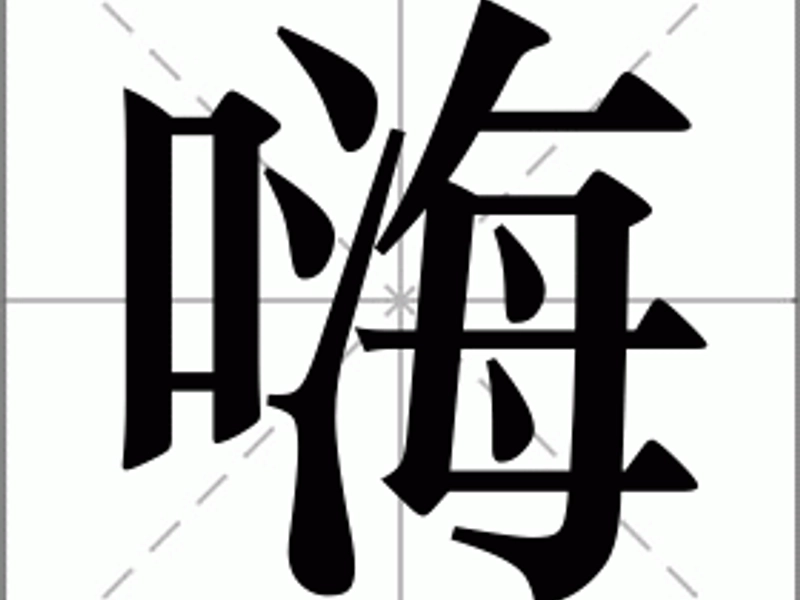
Simplified: 嗨
Pinyin: hāi / hài
Meaning: hi / hey / (exclamation expressing emotion or energy)
Basic Meaning of “嗨”
“嗨” is a modern colloquial interjection, mainly used in spoken Chinese to express greeting, surprise, or emotion. It’s often seen in informal contexts, influenced by English “Hi” but already fully integrated into Chinese daily communication.
Two Main Pronunciations
- hāi — cheerful tone, meaning “hi / hey / hello.”
→ Used to greet or call someone’s attention.
Example: “嗨,你来了!” (Hāi, nǐ lái le!) — “Hey, you’re here!” - hài — emotional or expressive tone, meaning “alas / oh dear / sigh.”
→ Used to express regret, sadness, or frustration.
Example: “嗨,我早就知道会这样。” (Hài, wǒ zǎo jiù zhī dào huì zhè yàng.) — “Alas, I knew this would happen.”
Common Usages
| Expression | Pinyin | English Meaning | Note |
|---|---|---|---|
| 嗨,你好 | hāi, nǐ hǎo | Hi, hello | Common greeting |
| 嗨起来 | hāi qǐ lái | Get hyped up! / Let’s party! | Internet slang, energetic tone |
| 嗨歌 | hāi gē | Party song / upbeat song | Popular in pop culture |
| 嗨翻天 | hāi fān tiān | Super excited / wild fun | Slang expression |
| 嗨呀 | hài yā | Oh no / sigh | Emotional or regretful tone |
Cultural and Linguistic Notes
- “嗨 (hāi)” entered Chinese in the 20th century, influenced by Western pop culture.
- It’s now used in spoken Mandarin, internet slang, and pop songs.
- The emotional “嗨 (hài)” has existed earlier, found in classical and modern literature as a sigh word.
Example Sentences
- 嗨,我们好久不见了!
Hāi, wǒ men hǎo jiǔ bú jiàn le!
“Hey, long time no see!” - 嗨,这件事我真的很后悔。
Hài, zhè jiàn shì wǒ zhēn de hěn hòu huǐ.
“Alas, I really regret this matter.” - 大家嗨起来吧!今晚不醉不归!
Dà jiā hāi qǐ lái ba! Jīn wǎn bú zuì bú guī!
“Let’s get hyped! No going home until we’re drunk tonight!”
FAQ: Common Questions About “嗨”
Q1: Is “嗨” an English loanword?
A: The cheerful “hāi” indeed came from English “Hi,” but it has become a fully naturalized Chinese expression.
Q2: What’s the difference between “嗨 (hāi)” and “嗨 (hài)”?
A: “hāi” = greeting or excitement; “hài” = sigh or regret.
Q3: Can “嗨” be used in formal writing?
A: Not usually. It’s used in speech, chat, or entertainment—avoid it in academic or business settings.
Q4: Why do pop songs and ads love the word “嗨”?
A: Because it sounds energetic, easy to pronounce, and instantly conveys enthusiasm or fun.