The Meaning and Cultural Significance of the Chinese Character “西” (West / Western)
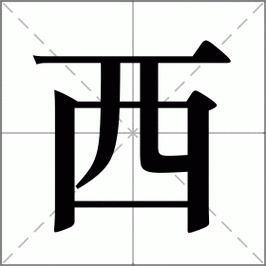
Simplified: 西
Pinyin: xī
Meaning: west / Western / (used in some transliterations)
The Chinese character "西" (xī) is a fundamental character representing the direction west, as well as concepts related to the Western world. Its simple form belies its importance in daily communication, geography, and cultural contexts.
Basic Meaning of "西"
The character "西" originally depicted a bird resting on its nest, reflecting the idea of sunset in the west when birds return home. This evolved into its current meaning of "west" as one of the four cardinal directions. Beyond geographical direction, it also refers to Western countries and cultures in contrast to Eastern ones.
Common Combinations with "西"
- 西方 (xī fāng, the West): Refers to Western countries or the western direction
- 西瓜 (xī guā, watermelon): Literally "western melon"
- 西餐 (xī cān, Western food): Western-style cuisine
- 西服 (xī fú, Western-style clothing): Business suit or Western attire
- 西边 (xī biān, west side): The western side or direction
- 陕西 (Shǎn xī, Shaanxi): A province in northwestern China
- 西班牙 (Xī bān yá, Spain): Literally "Western class teeth" - the Chinese name for Spain
Extended Meanings of "西"
Beyond its literal meanings, 西 has several extended uses:
- Geographical Direction: Represents the western direction in navigation and location
- Cultural Reference: Denotes Western culture, products, or styles (e.g., 西洋 - Western ocean, referring to the West)
- Transliteration: Used in transliterating foreign words, particularly from Western languages
- Symbolic Meaning: In traditional Chinese thought, west is associated with autumn, the metal element, and the white tiger
Cultural and Symbolic Significance
In Chinese culture, "西" carries both practical and symbolic importance:
- Directional Significance: As one of the four cardinal directions, it plays a crucial role in feng shui, architecture, and traditional cosmology
- Cultural Contrast: Often used to distinguish Western concepts from Chinese ones (e.g., 西医 vs 中医 - Western medicine vs Chinese medicine)
- Historical Context: The term "西洋" (Western Ocean) historically referred to regions west of China, particularly Europe
- Modern Usage: In contemporary context, it frequently appears in discussions about cultural exchange and globalization
Example Sentences
- 太阳从东方升起,从西方落下。
(The sun rises in the east and sets in the west.) - 我喜欢吃西瓜,尤其是在夏天。
(I like eating watermelon, especially in summer.) - 他今天穿西服去参加面试。
(He wore a suit to the interview today.) - 西安是中国西边的一个古老城市。
(Xi'an is an ancient city in western China.)
Related Vocabulary
| 中文 | Pinyin | English |
|---|---|---|
| 西 | xī | west / Western |
| 西方 | xī fāng | the West / western direction |
| 西瓜 | xī guā | watermelon |
| 西餐 | xī cān | Western food |
| 西服 | xī fú | Western-style clothing / suit |
| 西班牙 | Xī bān yá | Spain |
| 陕西 | Shǎn xī | Shaanxi province |
FAQ: Common Questions About the Chinese Character "西"
Q1: Why is watermelon called "西瓜" (western melon)?
A: Watermelon is believed to have been introduced to China from Central Asia via the Western Regions during ancient times, hence the name "western melon."
Q2: How is "西" different from other direction characters?
A: "西" specifically means west, while other directional characters are: 东 (east), 南 (south), 北 (north). Together they form the four cardinal directions.
Q3: Can "西" be used as a surname?
A: Yes, 西 can be used as a Chinese surname, though it's relatively uncommon compared to other surnames.
Q4: How can learners remember "西"?
A: Associate it with the setting sun in the west. The character's shape can be imagined as a sun descending below a line (the horizon) in the western sky.