The Meaning and Cultural Significance of the Chinese Character “累” (Tired / To Bother / To Involve)
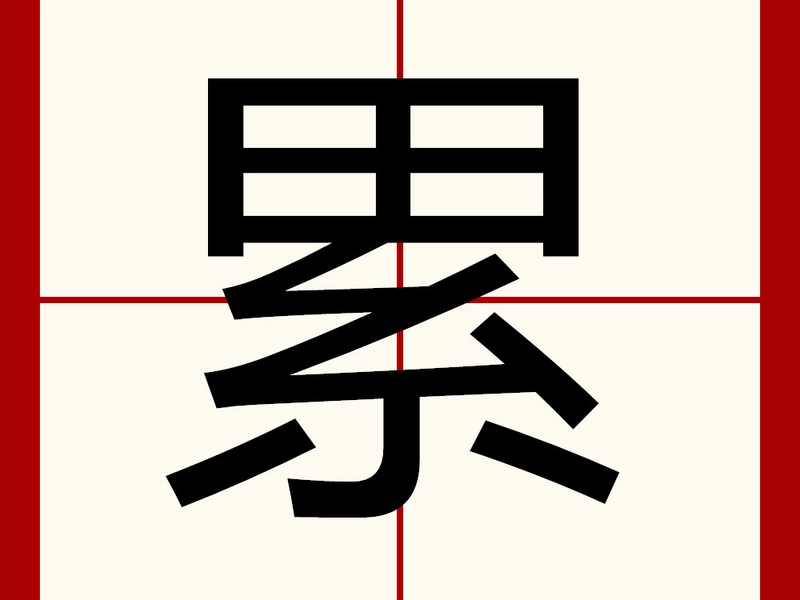
Simplified: 累
Pinyin: lèi / lěi / léi
Meaning: tired / to bother / to accumulate
The Chinese character “累” (lèi / lěi / léi) carries layered meanings connected to fatigue, accumulation, and involvement. It reflects both physical exhaustion and emotional or relational weight — a vivid word that appears across modern life, idioms, and literature.
Basic Meaning of “累”
“累” originally depicted threads entangled together, symbolizing connection, repetition, and buildup. Over time, it evolved into meanings such as “tired,” “burdened,” and “accumulated.” In daily usage, it often expresses fatigue or the result of continuous effort.
Common Combinations with “累”
- 疲累 (pí lèi, tired / weary): Describes both physical and mental exhaustion.
- 累积 (lěi jī, to accumulate): Means to gather or build up over time.
- 劳累 (láo lèi, hardworking / fatigued): Refers to being tired from work or effort.
- 连累 (lián lěi, to implicate / to involve): Means to drag someone into trouble.
- 累人 (lèi rén, tiring / exhausting): Describes something that makes people tired.
These expressions show that “累” links both physical weariness and emotional or relational burdens — from feeling tired to being entangled in others’ affairs.
Pronunciation and Usage Notes
- lèi – Most common pronunciation, meaning tired or weary.
→ e.g., 我今天很累。
(Wǒ jīn tiān hěn lèi.)
I’m very tired today. - lěi – Means to accumulate or to involve (as in 累积, 连累).
- léi – A rare pronunciation, historically used in classical texts to indicate “involvement” or “connection.”
Learning Tip: Think of threads piling up — “累” means both accumulation (物质的、心理的) and exhaustion (精神的、身体的).
Extended Meanings of “累”
- Fatigue and rest: Reflecting human emotion and physical states.
- Accumulation: Symbolizing process, persistence, and time.
- Involvement: Expressing being entangled in events or relationships.
- Emotional burden: Common in idioms and literary expressions about weariness or connection.
Cultural and Symbolic Significance
- Persistence and effort: “累” often implies that exhaustion comes from dedication — a virtue in Chinese culture.
- Emotional connection: Its thread-based imagery suggests human relationships and mutual involvement.
- Work and balance: “累” expresses modern life's rhythm — the balance between effort and rest.
Example Sentences
- 我今天工作太多,有点累了。
(Wǒ jīn tiān gōng zuò tài duō, yǒu diǎn lèi le.)
I worked too much today and feel a bit tired. - 时间久了,灰尘会慢慢累积。
(Shí jiān jiǔ le, huī chén huì màn màn lěi jī.)
Over time, dust will gradually accumulate. - 这件事真累人。
(Zhè jiàn shì zhēn lèi rén.)
This matter is really exhausting. - 他不想连累朋友。
(Tā bù xiǎng lián lěi péng yǒu.)
He doesn’t want to get his friends involved.
Related Vocabulary
| 中文 | Pinyin | English |
|---|---|---|
| 累 | lèi / lěi / léi | tired / to involve / to accumulate |
| 疲累 | pí lèi | tired / weary |
| 累积 | lěi jī | to accumulate |
| 劳累 | láo lèi | fatigued / hardworking |
| 连累 | lián lěi | to implicate / to involve |
| 累人 | lèi rén | tiring / exhausting |
FAQ: Common Questions About the Chinese Character “累”
Q1: Why does “累” have multiple pronunciations?
Because it evolved from meanings of entangled threads (accumulation) to emotional states (fatigue). Each tone reflects a semantic branch:
● lèi: tired
● lěi: accumulate
● léi: classical form
Q2: What is the cultural attitude toward “累” in Chinese thought?
“累” reflects both hardship and perseverance — a sign of effort and endurance rather than weakness.
Q3: What idioms use “累”?
Common ones include:
● 疲劳过度 (pí láo guò dù) — overworked
● 劳而不累 (láo ér bù lèi) — working without fatigue
● 连累无辜 (lián lěi wú gū) — involve the innocent
Q4: How can learners remember the meaning of “累”?
Visualize threads piling up — the image of effort, connection, and eventual fatigue. This helps recall both meanings: accumulation and tiredness.
Q5: Is “累” used in emotional expressions?
Yes. Phrases like 心累 (xīn lèi, emotionally tired) are widely used in modern Chinese to describe mental exhaustion.