The Meaning and Cultural Significance of the Chinese Character “海” (Sea / Ocean)
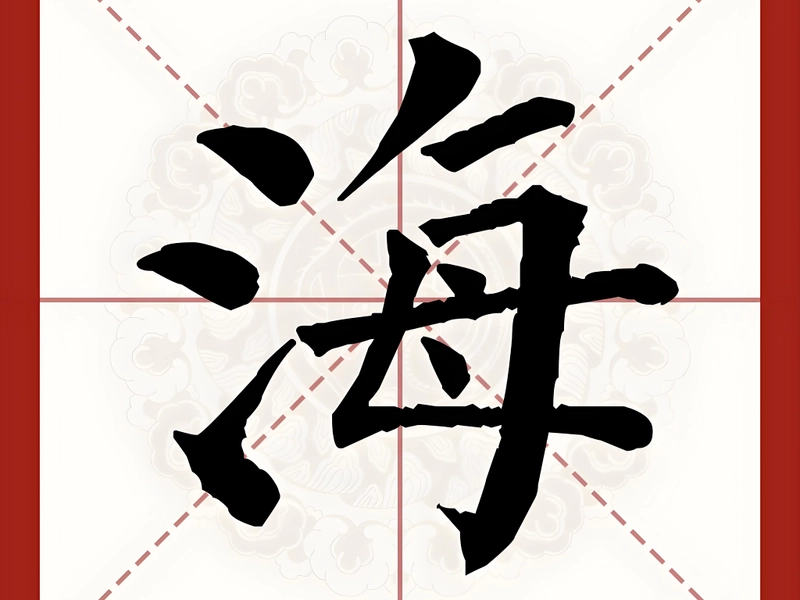
Simplified: 海
Pinyin: hǎi
Meaning: sea / ocean / maritime / vastness
The Chinese character “海” (hǎi) represents the sea, ocean, and vast waters. Understanding this character helps learners explore Chinese language, culture, geography, and expressions related to nature, travel, maritime activities, and metaphorical vastness.
Basic Meaning of “海”
Originally, “海” combines 氵 (water radical) and 每 (phonetic component), symbolizing a large body of water. As a fundamental Chinese character, 海 reflects nature, vastness, exploration, and connection with maritime life. It appears in geography, literature, idiomatic expressions, and cultural symbolism.
Common Combinations with “海”
- 大海 (dà hǎi, sea / ocean): Refers to the vast ocean.
- 海洋 (hǎi yáng, ocean / marine environment): Refers to global oceans or marine studies.
- 海边 (hǎi biān, seaside / coast): Refers to the coastal area.
- 海鲜 (hǎi xiān, seafood): Refers to edible marine products.
- 海港 (hǎi gǎng, seaport / harbor): Refers to ports or harbors for ships.
These combinations show how 海 extends from literal oceanic bodies to food, travel, and geographic locations.
Extended Meanings of “海”
Beyond its literal meaning, 海 has several symbolic uses:
- Geography: Oceans, seas, and coastal areas
- Abundance and vastness: Symbolizes something large, boundless, or limitless
- Travel and trade: Maritime navigation, seaports, and cultural exchange
- Literature and art: Represents freedom, exploration, or emotional depth
Cultural and Symbolic Significance
In Chinese culture, “海” carries rich symbolic meanings:
- Nature and geography: Central in Chinese maritime culture and coastal life
- Abundance and generosity: Often used metaphorically for boundless emotions or resources
- Exploration and trade: Reflects historical significance in seafaring, trade, and cultural exchange
- Literature and poetry: Oceans symbolize freedom, mystery, and adventure
Example Sentences
- 我们暑假去海边度假。
(We are going to the seaside for vacation during summer.) - 中国有丰富的海鲜资源。
(China has abundant seafood resources.) - 海洋覆盖了地球的大部分表面。
(Oceans cover most of the Earth’s surface.) - 船只安全抵达海港。
(The ship safely arrived at the seaport.)
Related Vocabulary
| 中文 | Pinyin | English |
|---|---|---|
| 海 | hǎi | sea / ocean / maritime |
| 大海 | dà hǎi | sea / vast ocean |
| 海洋 | hǎi yáng | ocean / marine environment |
| 海边 | hǎi biān | seaside / coast |
| 海鲜 | hǎi xiān | seafood |
| 海港 | hǎi gǎng | seaport / harbor |
| 海滩 | hǎi tān | beach |
| 海风 | hǎi fēng | sea breeze |
FAQ: Common Questions About the Chinese Character “海”
Q1: Can 海 refer to both literal and metaphorical meanings?
A: Yes. 海 can refer to literal seas and oceans (大海, 海洋) or metaphorical vastness, abundance, or emotional depth.
Q2: How is 海 used in daily life?
A: It appears in geography, travel, seafood cuisine, maritime trade, and literature.
Q3: Is 海 important in Chinese culture?
A: Very much so. 海 reflects maritime culture, coastal livelihoods, trade, abundance, and literary inspiration, which are significant in Chinese history and society.
Q4: How can learners remember 海?
A: Focus on the water radical 氵 → 海 represents oceans, seas, and boundless waters.