The Meaning and Cultural Significance of the Chinese Character “已” (Already / To Stop)
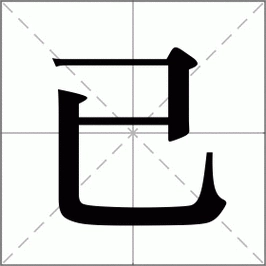
Simplified: 已
Pinyin: yǐ
Meaning: already / to stop / to cease / to end
The Chinese character "已" (yǐ) is a crucial character for expressing the concept of completion and cessation. Its primary function in modern Chinese is as an adverb meaning "already," marking an action as finished or a state as achieved. Understanding "已" is essential for grasping temporal relationships in sentences and for appreciating its nuanced classical usage, which carries philosophical depth.
Basic Meaning of "已"
The character "已" is believed to originate from the same root as "巳" (sì, the 6th Earthly Branch), which itself may have been a pictograph of a fetus. The core idea is that of something being completed, finalized, or brought to an end. This fundamental sense naturally gave rise to its two main groups of meanings:
- As an Adverb: "Already," indicating that an action has been completed or a state has been reached.
- As a Verb: "To stop," "to cease," or "to end," a usage more common in classical Chinese but preserved in modern idioms and formal writing.
It is critically important to distinguish "已" (yǐ) from the visually similar "己" (jǐ, self) and "巳" (sì, Earthly Branch).
Common Combinations with "已"
- 已经 (yǐ jīng, already): The most common and versatile word for "already," used to indicate that an action is completed.
- 已然 (yǐ rán, already so / an accomplished fact): A more literary term for a situation that has already become reality.
- 不已 (bù yǐ, endlessly / incessantly): Literally "not stopping," used to emphasize a continuous or intense action or feeling.
- 早已 (zǎo yǐ, long ago): Indicates that something happened or was completed a long time ago.
- 已知 (yǐ zhī, known): Describes something that is already known or understood.
- 死而后已 (sǐ ér hòu yǐ, until one's dying day): A famous idiom meaning "until death puts an end to it," describing unwavering commitment.
These combinations show how 已 is central to expressing completion, cessation, and the state of being settled.
Extended Meanings of "已"
Beyond its core meanings, 已 has specific philosophical and formal uses:
- Finality and Completion: Represents the point in time when a process is concluded or a limit is reached.
- Cessation in Moral Contexts: In classical texts, it was used to mean "to put an end to" certain behaviors, as in Confucius's injunction to "stop" upon realizing one's error.
- Emphasis on Continuation: When used in the negative form "不已" (not stopping), it highlights the ongoing and boundless nature of an action or emotion.
Cultural and Symbolic Significance
In Chinese culture and language, "已" carries subtle but important significance:
- Temporal Precision: The use of "已经" allows for clear and concise expression of the completion of actions, which is fundamental to narrative and descriptive discourse.
- Philosophical Restraint: The classical meaning of "to stop" (已) aligns with the Daoist virtue of knowing when to halt, avoiding excess, and the Confucian idea of correcting oneself upon realizing a mistake. The Dao De Jing says: "知止可以不殆" (Knowing when to stop can avert danger).
- Expression of Intensity: The structure "不已" is a powerful literary device to express limitless and profound feelings, such as "赞叹不已" (unable to stop praising) or "感慨不已" (endlessly moved with emotion).
- A Mark of Distinction: The need to correctly distinguish "已," "己," and "巳" is a classic hurdle in Chinese literacy, serving as a marker of careful reading and writing.
Example Sentences
- As an adverb:
- 他已经回家了。
(He has already gone home.) - 电影已经开始了十分钟。
(The movie has already been on for ten minutes.)
- 他已经回家了。
- As a verb / In idioms:
- 他对工作鞠躬尽瘁,死而后已。
(He dedicated all his energy to his work, until his dying day.) - 听到这个好消息,她激动不已。
(Hearing this good news, she was incredibly excited.)
- 他对工作鞠躬尽瘁,死而后已。
Related Vocabulary
| Chinese | Pinyin | English |
|---|---|---|
| 已 | yǐ | already / to stop |
| 已经 | yǐ jīng | already |
| 不已 | bù yǐ | endlessly / incessantly |
| 早已 | zǎo yǐ | long ago |
| 已知 | yǐ zhī | known |
| 死而后已 | sǐ ér hòu yǐ | until one's dying day |
| 已然 | yǐ rán | an accomplished fact |
FAQ: Common Questions About the Chinese Character "已"
Q1: What is the difference between "已" (yǐ) and "己" (jǐ)?
A: This is a very common point of confusion.
- 已 (yǐ): Means "already" or "to stop." Its top is open.
- 己 (jǐ): Means "self" (as in 自己, zì jǐ). Its top is closed.
A common mnemonic is: "已(yǐ)开己(jǐ)不开" (Yǐ is open, Jǐ is closed).
Q2: Can "已" be used alone to mean "stop" in modern Chinese?
A: Rarely in spoken language. The standalone verb meaning "to stop" is almost entirely classical or used in fixed idioms like "不已" (not stopping) and "死而后已" (until death stops one). In modern speech, use "停" (tíng) for "stop."
Q3: Is there a difference between "已经" (yǐjīng) and "已" (yǐ) alone?
A: "已经" is much more common and colloquial. Using "已" alone as an adverb is more formal and concise, often seen in written news, reports, or formal announcements (e.g., "会议已结束" - The meeting has concluded).
Q4: How can learners remember "已"?
A: Focus on its primary role as the word for "already." Associate the open top of the character with an open container where the action is "already" done and complete. Remember the key distinction from "己" (self) by the mnemonic about the open vs. closed top.