The Meaning and Cultural Significance of the Chinese Character “己” (Self / Oneself)
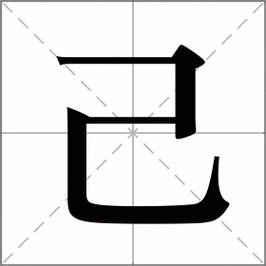
Simplified: 己
Pinyin: jǐ
Meaning: self / oneself / personal
The Chinese character "己" (jǐ) represents the concept of the self, the individual, or the personal sphere. It is a fundamental character for constructing words related to personal identity, introspection, and the relationship between the individual and the collective. Understanding "己" is crucial for exploring Chinese philosophy, ethics, and the nuanced ways in which selfhood is expressed in the language.
Basic Meaning of "己"
The character "己" is one of the Ten Heavenly Stems (天干, Tiān Gān), historically used for sequencing and calendrical purposes. However, its primary and most significant meaning in modern Chinese is "self" or "oneself." It denotes the individual as a distinct entity, encompassing one's own person, interests, and perspective. It is essential to distinguish "己" (jǐ, self) from the visually similar "已" (yǐ, already) and "巳" (sì, the 6th Earthly Branch).
Common Combinations with "己"
- 自己 (zì jǐ, oneself / self): The most common word for "self," used reflexively and emphatically.
- 知己 (zhī jǐ, close friend / soulmate): Literally "to know oneself," meaning someone who understands you as well as you know yourself.
- 克己 (kè jǐ, self-restraint): To restrain or deny oneself, a key Confucian virtue.
- 异己 (yì jǐ, dissident / outsider): Refers to those who hold different views or belong to a different group, literally "different self."
- 己见 (jǐ jiàn, one's own opinion): A personal view or perspective.
- 己任 (jǐ rèn, one's own duty): A responsibility that one takes upon oneself.
- 利己 (lì jǐ, self-benefiting): Benefitting oneself, often used in contrast to benefiting others.
These combinations show how 己 forms the core of words related to self-identity, self-discipline, and interpersonal relationships.
Extended Meanings of "己"
Beyond its literal meaning, 己 has profound philosophical and ethical uses:
- The Ethical Self: In Confucianism, "己" is the self that is to be cultivated, disciplined, and harmonized with social relationships.
- The Subject of Introspection: Represents the object of self-reflection and self-knowledge.
- The Personal Realm: Denotes that which is private, individual, or separate from others.
- A Unit of Measurement: In ancient times, it was used symbolically to represent the "sixth" position due to its place in the Heavenly Stems.
Cultural and Symbolic Significance
In Chinese culture, particularly within Confucian thought, "己" carries immense ethical weight:
- The Core of Confucian Ethics: The concept of "克己复礼" (kè jǐ fù lǐ, to restrain oneself and return to propriety) is a central tenet of Confucianism. The ideal society begins with the moral cultivation of the individual self (己).
- The Self in Relation to Others: The value of "己" is often defined through its interaction with others. The Confucian golden rule, "己所不欲,勿施于人" (What you do not wish for yourself, do not impose on others), directly uses "己" as the benchmark for empathy and ethical behavior.
- The Ideal Friendship: "知己" (a soulmate) represents one of the highest forms of relationship, where the boundary between self and other blurs through deep mutual understanding.
- A Balanced Self-Interest: While "利己" (self-interest) can have a negative connotation, the culture also acknowledges a healthy sense of self, as seen in the idiom "洁身自好" (jié shēn zì hào), which means to maintain one's own integrity.
Example Sentences
- 你要学会自己完成任务。
(You need to learn to complete tasks by yourself.) - 他是我的知己,我们无话不谈。
(He is my close friend; we talk about everything.) - 己所不欲,勿施于人是重要的做人原则。
("What you do not wish for yourself, do not impose on others" is an important principle for conducting oneself.) - 他有着很强的克己能力。
(He has a strong ability for self-restraint.)
Related Vocabulary
| Chinese | Pinyin | English |
|---|---|---|
| 己 | jǐ | self / oneself |
| 自己 | zì jǐ | oneself / self |
| 知己 | zhī jǐ | close friend / soulmate |
| 克己 | kè jǐ | self-restraint |
| 异己 | yì jǐ | dissident / outsider |
| 己见 | jǐ jiàn | one's own opinion |
| 利己 | lì jǐ | self-benefiting |
FAQ: Common Questions About the Chinese Character "己"
Q1: What is the difference between "己" (jǐ) and "已" (yǐ)?
A: This is a critical distinction.
- 己 (jǐ): Means "self." Its top is closed or hooked inwards.
- 已 (yǐ): Means "already." Its top is open.
A common mnemonic is: "已(yǐ)开己(jǐ)不开" (Yǐ is open, Jǐ is closed). Think of "己" as the "self" that is closed off and internal.
Q2: How is "自己" (zìjǐ) used in a sentence?
A: "自己" is extremely versatile.
- As a reflexive pronoun: 他批评自己。 (He criticizes himself.)
- As an emphatic pronoun: 我自己能做。 (I can do it myself.)
- To mean "one's own": 这是自己的选择。 (This is one's own choice.)
Q3: What is the cultural importance of the phrase "己所不欲,勿施于人"?
A: It is arguably the most famous ethical rule in Chinese culture, often called the "Confucian silver rule." It establishes a foundation for morality based on empathy and reciprocity, using one's own self (己) as the starting point for judging how to treat others.
Q4: How can learners remember "己"?
A: Associate the closed top of the character with the internal, private nature of the "self." Your "self" (己) is contained within you. Remember the mnemonic to distinguish it from "已" (already), and link it to the powerful Confucian saying that begins with "己."