The Meaning and Cultural Significance of the Chinese Character “它” (It)
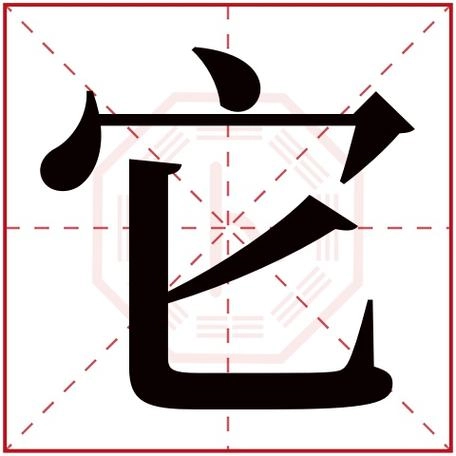
Simplified: 它
Pinyin: tā
Meaning: it
The Chinese character "它" (tā) is the third-person singular pronoun used to refer to non-human entities, such as objects, animals, or abstract concepts. Its existence and usage allow for clear distinction between people and things in speech and writing, refining the precision of the Chinese language. Understanding "它" is essential for constructing grammatically correct sentences and for grasping the conceptual categorization between the human and non-human world in Chinese.
Basic Meaning of "它"
The character "它" originated from a pictograph of a snake, which is reflected in its ancient form. In oracle bone script, it clearly depicted a snake with a head and body. This original meaning is preserved in the modern character 蛇 (shé, snake). In ancient times, snakes were a common threat, so the word "它" was used to refer to "another thing" or "an harmful other." Over time, this meaning of "other" evolved and specialized into the neutral, inanimate third-person pronoun "it" that we use today. Its primary function is as a pronoun, referring to animals (when not personified), objects, places, ideas, or events.
Common Combinations with "它"
- 它们 (tā men, they / them): The plural form, used to refer to multiple non-human entities.
- 它的 (tā de, its): The possessive form.
- 它们的 (tā men de, their): The plural possessive form (for non-human entities).
- 其它 (qí tā, other): A variant of "其他," also meaning "other," but traditionally and more precisely used for non-human things. In modern usage, "其他" can be used for both people and things.
- 它处 (tā chù, another place): A formal term meaning "elsewhere."
- 无它 (wú tā, no other reason / it's nothing): A classical expression meaning "there is nothing else" or "no other reason."
These combinations show how 它 is used to refer to, attribute possession to, and discuss a wide range of non-human subjects.
Extended Meanings of "它"
Beyond its core pronominal use, 它 functions in specific contexts:
- Abstract Reference: Used to refer to abstract concepts, situations, or phenomena (e.g., 这个问题很难,我们得解决它。 This problem is difficult; we have to solve it.)
- Neutrality and Objectivity: Imparts a sense of neutrality when referring to something, distinguishing it from the human-centric "他" or "她."
- Classical Meaning of "Other": In classical Chinese, it retained the broader meaning of "other" or "different," which is still seen in the word "其它."
Cultural and Symbolic Significance
In Chinese culture and language, the role and perception of "它" reflect logical categorization and philosophical thought:
- Conceptual Distinction: The creation and standardization of "它" in modern Chinese helped to establish a clear grammatical and conceptual boundary between humans (他/她) and the world of objects, animals, and abstractions. This reflects a move towards linguistic precision.
- The "Othering" of the Non-Human: Its evolution from a word for a specific threat (snake) to a general pronoun for non-human entities hints at an ancient worldview that categorized the external, non-human world as potentially separate or "other."
- Modern Usage and Clarity: In contemporary writing, the correct use of "它" is a mark of grammatical accuracy and clarity, preventing ambiguity about whether one is referring to a person or a thing.
- Animal Reference: While "它" is standard for animals, many Chinese speakers, especially pet owners, will personify their pets by using "他" or "她," reflecting the emotional bond and attribution of personhood.
Example Sentences
- 这本书很好,你应该读一读它。
(This book is very good; you should read it.) - 我的手机在哪儿?我看见过它的。
(Where is my phone? I saw it.) - 这些花很漂亮,它们是我妈妈种的。
(These flowers are beautiful; they were planted by my mother.) - 没有其它选择了吗?
(Are there no other options?)
Related Vocabulary
| 中文 | Pinyin | English |
|---|---|---|
| 它 | tā | it |
| 它们 | tā men | they / them (for non-human) |
| 它的 | tā de | its |
| 其它 | qí tā | other (for things) |
| 它处 | tā chù | another place |
| 他 | tā | he / him |
| 她 | tā | she / her |
FAQ: Common Questions About the Chinese Character "它"
Q1: When should I use "它" (tā) versus "他" (tā) or "她" (tā)?
A: Use "他" for males, "她" for females, and "它" for everything else that is not a human being—such as objects, animals (when not personified), places, ideas, and events.
Q2: Can "它们" be used for a group of animals?
A: Yes, "它们" is the correct plural pronoun for a group of animals or a group of objects. For example, "这些猫很可爱,它们在睡觉。" (These cats are cute; they are sleeping.)
Q3: What is the difference between "其他" and "其它"?
A: Traditionally, "其他" was used for people and things, while "其它" was reserved specifically for non-human things. However, in modern Chinese, this distinction has blurred significantly. "其他" is now universally accepted and more common for both people and things. Using "其它" is not wrong, but "其他" is simpler and covers all cases.
Q4: How can learners remember "它"?
A: Focus on its radical "宀" (mián), which represents a "roof." Think of objects and things that are found under a roof in a house (like a table, a book, a lamp)—these are all referred to with "它." This helps distinguish it from "他" (person radical 亻) and "她" (female radical 女).