The Meaning and Cultural Significance of the Chinese Character “好” (Good / Well / Excellent)
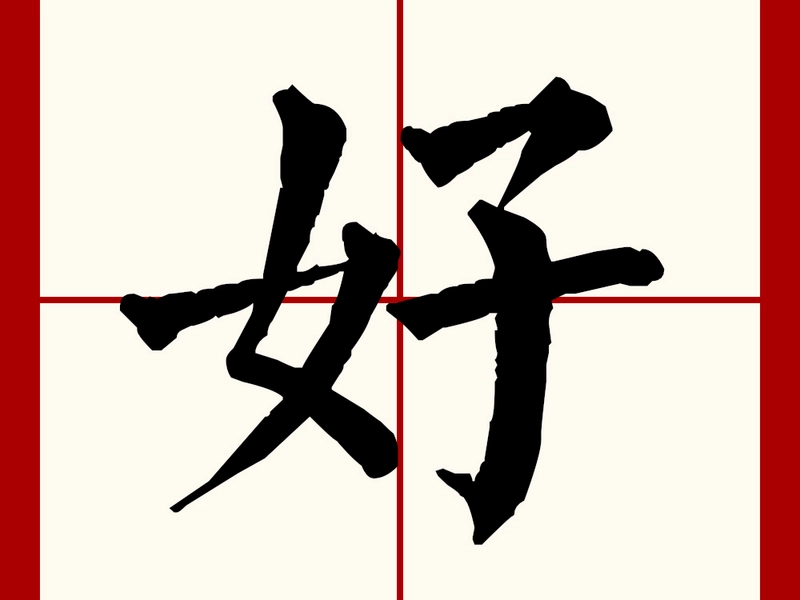
Simplified: 好
Pinyin: hǎo
Meaning: good / well / excellent / like
The Chinese character “好” (hǎo) represents goodness, positivity, and approval. Understanding this character helps learners explore Chinese language, culture, and expressions related to quality, relationships, well-being, and morality.
Basic Meaning of “好”
Originally, “好” is a combination of 女 (woman) and 子 (child), symbolizing that a woman with a child represents something good, desirable, and favorable. In modern Chinese, “好” is widely used in daily life, social interactions, and descriptive expressions.
Common Combinations with “好”
- 好人 (hǎo rén, good person): A kind or virtuous individual.
- 好事 (hǎo shì, good thing / favorable event): Something positive or fortunate.
- 友好 (yǒu hǎo, friendly / amicable): Friendly relationships or gestures.
- 好吃 (hǎo chī, delicious / tasty): Common expression for good food.
- 好看 (hǎo kàn, good-looking / attractive): Appearance or visual appeal.
- 好奇 (hào qí, curious / inquisitive): A compound word expressing a desire to learn or explore.
Extended Meanings of “好”
- Quality and excellence: Describing good quality or favorable conditions.
- Well-being and positivity: Expressing health, happiness, or satisfaction.
- Social and relational: Friendliness, kindness, and harmonious interactions.
- Desire and preference: Expressing liking or inclination toward something.
Pronunciation and Usage Notes
- hǎo – the standard and most common pronunciation, used in most contexts: 好人, 好事, 好吃, 好看.
- hào – appears in some compound words like 好奇 (hào qí, curious / inquisitive). This reflects historical phonetic variation where “好” in certain compounds evolved to hào to indicate the nuance of inclination, desire, or preference.
Usage Tip:
- “好” as hǎo generally describes quality, morality, or general approval.
- “好” as hào in compounds often expresses interest, desire, or preference.
- Recognizing the correct pronunciation in context is crucial for understanding meaning, especially in formal writing or literature.
Cultural and Symbolic Significance
- Family and prosperity: Originally connected to the joy of family and childbirth.
- Ethics and morality: Being a “good person” (好人) reflects moral values.
- Aesthetics and enjoyment: Used in describing beauty, taste, and pleasing experiences.
- Social harmony: Expresses positive relations, friendliness, and approval.
Example Sentences
- 他是一个好人,总是乐于助人。(Tā shì yí gè hǎo rén, zǒng shì lè yú zhù rén.)
He is a good person and always willing to help others. - 这道菜很好吃,大家都喜欢。(Zhè dào cài hěn hǎo chī, dà jiā dōu xǐ huān.)
This dish is delicious; everyone likes it. - 我和邻居关系友好,经常互相帮助。(Wǒ hé lín jū guān xì yǒu hǎo, jīng cháng hù xiāng bāng zhù.)
I have a friendly relationship with my neighbors and we often help each other. - 孩子们对科学非常好奇,总是问很多问题。(Hái zi men duì kē xué fēi cháng hào qí, zǒng shì wèn hěn duō wèn tí.)
The children are very curious about science and always ask many questions.
Related Vocabulary
| Chinese | Pinyin | English |
|---|---|---|
| 好 | hǎo | good / well / excellent |
| 好人 | hǎo rén | good person / kind individual |
| 好事 | hǎo shì | good thing / favorable event |
| 友好 | yǒu hǎo | friendly / amicable |
| 好吃 | hǎo chī | delicious / tasty |
| 好看 | hǎo kàn | good-looking / attractive |
| 好奇 | hào qí | curious / inquisitive |
FAQ: Common Questions About the Chinese Character “好”
Q1: Can 好 refer to both quality and relationships?
A: Yes. 好 can describe good quality, favorable conditions, and also friendliness or positive social interactions.
Q2: How is 好 used in daily life?
A: It appears in everyday expressions, describing people, food, appearance, curiosity, and favorable situations.
Q3: Is 好 important in Chinese culture?
A: Yes, 好 reflects values of virtue, positivity, friendliness, and social harmony, which are central in interpersonal relationships.
Q4: How can learners remember 好?
A: Remember that 好 combines 女 (woman) and 子 (child) → symbolizing that family, care, and nurturing are considered good → 好 represents goodness, approval, and positivity.