The Meaning and Cultural Significance of the Chinese Character “她” (She / Her)
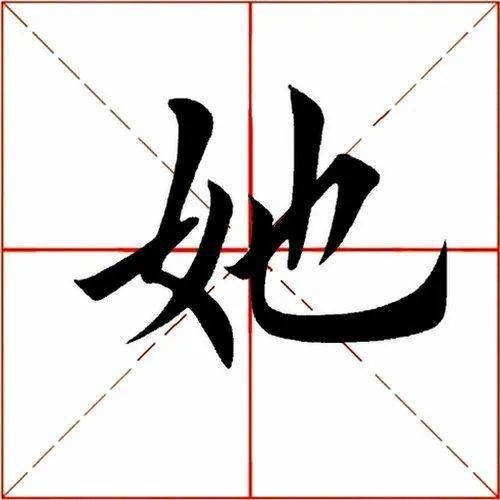
Simplified: 她
Pinyin: tā
Meaning: she / her
The Chinese character "她" (tā) is the third-person singular pronoun used exclusively to refer to a female person not present in the conversation. It is a character of significant modern cultural importance, symbolizing the linguistic recognition and visibility of women in society. Understanding "她" is essential for accurate communication and for appreciating the social and historical context of its creation and adoption.
Basic Meaning of "她"
The character "她" is composed of the radical 女 (nǚ), meaning "woman" or "female," and 也 (yě), which primarily means "also" but here functions as a phonetic component to represent the sound "tā." Its sole function is as a pronoun, referring to a female person (she/her). It is crucial to note that "她" is a modern invention. In classical Chinese, "他" was used as a generic third-person pronoun for all genders and objects. The creation of "她" in the early 20th century, during the New Culture Movement, was directly influenced by the desire to modernize the Chinese language and align it with European languages that have gendered pronouns.
Common Combinations with "她"
- 她们 (tā men, they / them): The plural form, used exclusively for a group of people that are all female.
- 她的 (tā de, her): The feminine singular possessive form.
- 她们的 (tā men de, their): The plural possessive form (for a group of females).
- 爱她 (ài tā, love her): A common verb-pronoun combination.
- 看她 (kàn tā, look at her): Another common verb-pronoun combination.
These combinations show how 她 is grammatically integrated into the language in the same way as "他" (he) and "它" (it), allowing for clear and specific reference to female individuals and groups.
Extended Meanings of "她"
Beyond its core pronominal use, 她 holds a specific symbolic meaning:
- Femininity and Female Identity: It explicitly denotes femaleness, making gender a specific and visible aspect of the reference.
- Personification: It is sometimes used to personify entities considered nurturing, beautiful, or motherly, such as nature (大自然), the motherland (祖国), or the moon, though "它" remains the standard for inanimate objects.
- A Marker of Modernity: Its usage is intrinsically linked to modern Chinese thought and feminist discourse.
Cultural and Symbolic Significance
The character "她" carries profound cultural and social significance in modern China:
- A Symbol of Women's Liberation: The creation and widespread adoption of "她" in the early 20th century was a landmark achievement of the New Culture Movement. It represented a push for gender equality and the acknowledgment of women as distinct individuals in language and society.
- The Linguistic "Feminine": It created a dedicated space for women in the written language, moving beyond the generic, often male-default, "他."
- Modern Identity: The character is now a fundamental part of contemporary Chinese identity and is used without a second thought. Its history, however, serves as a reminder of the dynamic nature of language and its power to shape social consciousness.
- Debates on Inclusivity: In recent years, with global discussions on gender-neutral language, the very existence of a gendered pronoun like "她" has sparked conversations about linguistic inclusivity, though no widely accepted neutral singular pronoun has emerged to challenge its standard usage.
Example Sentences
- 她是我的姐姐。
(She is my older sister.) - 她的声音很好听。
(Her voice is very pleasant.) - 她们都是优秀的学生。
(They are all outstanding students.) [Referring to a group of females] - 我爱我的祖国,为她感到自豪。
(I love my motherland and am proud of her.) [Personification]
Related Vocabulary
| 中文 | Pinyin | English |
|---|---|---|
| 她 | tā | she / her |
| 他 | tā | he / him |
| 它 | tā | it |
| 她们 | tā men | they / them (all female) |
| 她的 | tā de | her |
| 女人 | nǚ rén | woman |
| 女性 | nǚ xìng | female / woman |
FAQ: Common Questions About the Chinese Character "她"
Q1: How do you know whether someone is saying "他," "她," or "它" in speech?
A: You cannot distinguish them in spoken Mandarin, as they are all pronounced "tā." The intended meaning is entirely derived from context. The written form removes this ambiguity.
Q2: If a group has both males and females, which pronoun do I use, "他们" or "她们"?
A: You must use "他们" (tāmen). The rule in standard Mandarin is that for any mixed-gender group, the masculine form "他们" is used as the default. Using "她们" explicitly states that the group is composed solely of females.
Q3: When was the character "她" invented?
A: While proposals for a feminine pronoun existed earlier, "她" was popularized and standardized in the 1910s and 1920s, largely through the advocacy of linguists and writers like Liu Bannong, who famously wrote the poem "How Can I Not Miss Her?" (教我如何不想她) to promote its usage.
Q4: How can learners remember "她"?
A: The key is the 女 (nǚ) radical on the left, which means "woman." This is the defining feature that distinguishes it from "他" (person radical 亻) and "它" (roof radical 宀). When you see "女," you know the character is referring to a female "she" or "her."