The Meaning and Cultural Significance of the Chinese Character “和” (Harmony / Peace)
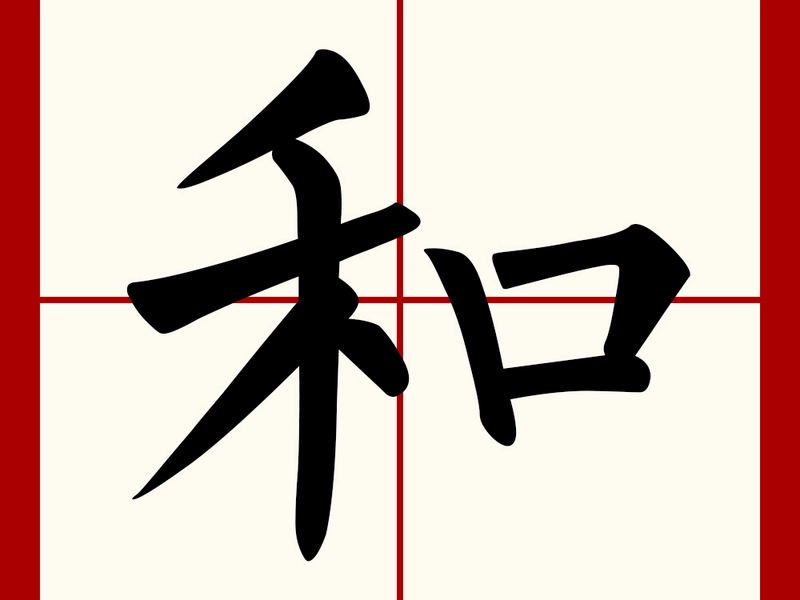
Simplified: 和
Pinyin: hé (most common reading), also hè, huó, huò, hú
Meaning: harmony / peace / calm / and / together with
The Chinese character "和" (hé) represents one of the most core and cherished values in Chinese culture: harmony. Understanding this character helps learners explore Chinese philosophy, social relations, artistic aesthetics, and the ideal of achieving balance in all aspects of life.
Basic Meaning of "和"
The character "和" is composed of two parts: the radical 禾 (hé), which signifies a grain plant, and 口 (kǒu), which means "mouth." One common interpretation is that it depicts a mouth speaking in a manner that is as harmonious and nourishing as a bountiful harvest. Originally, it conveyed the idea of musical harmony—the pleasing blending of different tones. As a fundamental Chinese character, 和 has evolved to encompass peace, gentleness, reconciliation, and the concept of "and" (connecting nouns). It appears in contexts related to social relations, personal demeanor, international affairs, and culinary arts.
Common Combinations with "和"
- 和平 (hé píng, peace): Refers to a state of peace, absence of war.
- 和谐 (hé xié, harmony): Denotes a harmonious and balanced state, widely used in social and natural contexts.
- 温和 (wēn hé, gentle / mild): Describes a person's gentle temperament or mild weather.
- 和气 (hé qi, amiable / harmonious atmosphere): Refers to friendliness and an atmosphere of good will.
- 和好 (hé hǎo, reconcile): The act of making up or restoring a friendly relationship.
- 总和 (zǒng hé, total / sum): The mathematical or conceptual sum of parts.
- 和面 (huó miàn, knead dough): A specific reading (huó) used in the context of mixing flour and water.
These combinations show how 和 extends from interpersonal relationships to global peace, from personal character to abstract concepts of unity.
Extended Meanings of "和"
Beyond its literal meaning, 和 has several profound symbolic and cultural uses:
- Social Harmony: Represents the ideal state of relationships within a family, community, and nation.
- Cultural Pluralism: Symbolizes the idea of "harmony in diversity" (和而不同, hé ér bù tóng), where different elements coexist and complement each other.
- Personal Cultivation: Indicates an inner state of calmness, balance, and non-confrontation.
- Culinary and Artistic Balance: Used to describe the perfect balance of flavors in food or the harmonious composition in art and music.
Cultural and Symbolic Significance
In Chinese culture, "和" carries immense symbolic weight:
- Confucian Ideal: Confucianism places 和 at the center of its philosophy, advocating for harmonious relationships in the family (父子和, father-son harmony) and society as the foundation of a stable state.
- Path to Social Stability: A "harmonious society" (和谐社会, hé xié shè huì) is the ultimate goal of governance.
- Philosophical Balance: It reflects the Daoist and traditional Chinese medical principle of maintaining a balance (阴阳和, yīn yáng hé) between opposing forces for health and well-being.
- Business and Relationships: Being "和气" (amiable) is considered crucial for successful business and long-lasting personal relationships.
Example Sentences
- 我们都希望世界和平。
(We all hope for world peace.) - 这个社区的居民们相处得很和谐。
(The residents in this community get along very harmoniously.) - 他的性格很温和,从不发脾气。
(He has a very gentle personality and never loses his temper.) - 他们吵架后终于和好了。
(They finally reconciled after their argument.) - 请帮我和点面,我们要包饺子。
(Please help me knead some dough; we are going to make dumplings.)
Related Vocabulary
| 中文 | Pinyin | English |
|---|---|---|
| 和 | hé | harmony / peace / and |
| 和平 | hé píng | peace |
| 和谐 | hé xié | harmony |
| 温和 | wēn hé | gentle / mild |
| 和气 | hé qi | amiable / harmonious |
| 和好 | hé hǎo | reconcile |
| 总和 | zǒng hé | total / sum |
| 和面 | huó miàn | knead dough |
FAQ: Common Questions About the Chinese Character "和"
Q1: Why does "和" have so many different pronunciations (hé, hè, huó, etc.)?
A: These different readings (音读, yīndú) change the meaning slightly. Hé is the standard "harmony" meaning. Hè means to chime in with, like in poetry or song (和诗, hè shī). Huó and Huò mean "to mix" (和面, huó miàn - knead; 和药, huò yào - mix medicine). Hú is specific to Mahjong, meaning to win.
Q2: How is "和" used as "and"? How is it different from "跟" (gēn) and "与" (yǔ)?
A: "和" (hé) is the most common way to connect nouns in modern Mandarin (e.g., 我和你, you and I). It is more colloquial than the slightly more formal "与" (yǔ) and is distinct from "跟" (gēn), which primarily means "with."
Q3: Is "和" really that important in Chinese culture?
A: Absolutely. The concept of harmony (和) is arguably the single most important social ideal in traditional Chinese thought, influencing ethics, politics, aesthetics, and daily life. It is the bedrock of Confucian society.
Q4: How can learners remember "和"?
A: Think of the components: 禾 (grain) + 口 (mouth). Harmony is when people have grain to eat and can speak peacefully with one another, leading to a stable and prosperous community.