The Meaning and Cultural Significance of the Chinese Character “内” (Inside / Internal)
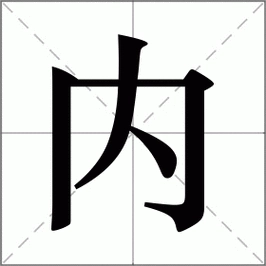
Simplified: 内
Pinyin: nèi
Meaning: inside / inner / internal / within
The Chinese character "内" (nèi) represents the concept of being inside, within, or internal. It is a fundamental character for expressing spatial relationships, organizational structures, and abstract concepts of the inner self. Understanding "内" is crucial for grasping the Chinese worldview, which often distinguishes between the internal and the external (外, wài) in social, philosophical, and personal contexts.
Basic Meaning of "内"
The character "内" is composed of two parts: the radical 冂 (jiōng), which depicts a boundary or a border, and 入 (rù), which means "to enter." The combined image is that of entering into a boundary, thus signifying the "inside" or "interior." This core meaning of being within a defined space or concept forms the basis for all its extended uses. It is the direct antonym of "外" (wài, outside).
Common Combinations with "内"
- 内容 (nèi róng, content): What is contained within something, like the content of a book or a speech.
- 内部 (nèi bù, internal / inside part): Refers to the inside of an organization, building, or object.
- 国内 (guó nèi, domestic / within the country): Inside the country, as opposed to abroad.
- 内心 (nèi xīn, heart / inner being): One's inner world, including thoughts, feelings, and conscience.
- 以内 (yǐ nèi, within / less than): Used to set a limit, e.g., "十天以内" within ten days.
- 内在 (nèi zài, intrinsic / internal): Refers to inherent qualities that are inside something, not superficial.
- 内疚 (nèi jiù, guilt / remorse): A feeling of guilt that comes from within.
These combinations show how 内 is used to describe physical space, geographical scope, psychological states, and inherent qualities.
Extended Meanings of "内"
Beyond its literal meaning, 内 has several extended and abstract uses:
- Social and Relational Sphere: Refers to the in-group or inner circle, such as family or close associates (内人, nèi rén, a classical term for "my wife").
- Inherent Nature: Denotes qualities that are innate and internal (内在美, nèi zài měi, inner beauty).
- Confidentiality and Privacy: Implies something that is not for public knowledge (内部消息, nèi bù xiāo xi, insider information).
- Anatomy and Physiology: Used in terms related to the body's internal systems (内脏, nèi zàng, internal organs).
Cultural and Symbolic Significance
In Chinese culture, the distinction between "内" (internal) and "外" (external) is a foundational concept:
- Social Hierarchy and Family: The family is the quintessential "内" unit. Roles were clearly defined as 内人 (inside person, wife) managing household affairs and 外人 (outside person, husband) dealing with the outside world. This extends to the distinction between 内亲 (internal relatives, from the father's side) and 外戚 (external relatives, from the mother's side).
- Self-Cultivation: Confucianism places great emphasis on inner moral cultivation. The concept of 内省 (nèi xǐng, introspection) is key to becoming a virtuous person. The sage is one whose inner virtue (德, dé) is fully developed.
- Governance and Strategy: The saying "外圆内方" (wài yuán nèi fāng, round outside, square inside) is a popular philosophy for conduct, advocating for flexibility and tact in external dealings (外) while maintaining firm principles internally (内). In military strategy, one must understand both the internal and external situation (知己知彼, 内外兼知).
- Traditional Medicine: In Traditional Chinese Medicine (TCM), health is seen as a balance of internal forces and their interaction with the external environment. Internal damage (内伤, nèi shāng) is a major category of illness.
Example Sentences
- 这本书的内容很有趣。
(The content of this book is very interesting.) - 这是公司内部的决定。
(This is an internal decision of the company.) - 他的内心很善良。
(His heart is very kind.) - 请在三天以内完成这项工作。
(Please finish this task within three days.) - 她因为忘了朋友的生日而感到内疚。
(She felt guilty for forgetting her friend's birthday.)
Related Vocabulary
| 中文 | Pinyin | English |
|---|---|---|
| 内 | nèi | inside / internal |
| 外 | wài | outside / external |
| 内容 | nèi róng | content |
| 内部 | nèi bù | internal / inside |
| 国内 | guó nèi | domestic |
| 内心 | nèi xīn | heart / inner being |
| 以内 | yǐ nèi | within |
| 内在 | nèi zài | intrinsic |
FAQ: Common Questions About the Chinese Character "内"
Q1: What is the difference between "内" (nèi) and "里" (lǐ)?
A: Both mean "inside," but they are used differently. "里" is more colloquial and is often used as a suffix for physical locations (房子里, in the house; 学校里, at school). "内" is more formal and abstract, often used in compound words (内容, content; 内部, internal). "内" also carries a stronger sense of being within a defined boundary or system.
Q2: Can "内" be used to indicate time?
A: Yes, when used with "以" as "以内" (yǐ nèi), it means "within" a time frame. For example, "一年以内" means "within one year."
Q3: How is "内" used in a family context?
A: Traditionally, "内人" (nèi rén) was a humble way for a man to refer to his own wife. While this usage is now dated, it reflects the historical concept of the wife's domain being "inside" the home. The concept of "内外" (inside-outside) was fundamental to traditional family structure.
Q4: How can learners remember "内"?
A: Break down the character: it shows 入 (enter) going into 冂 (a boundary). This creates the perfect visual for "inside." Constantly contrast it with its opposite, "外" (outside), to reinforce the meaning. Think of words like "内部" (internal) and "内容" (content) to remember its application.