Former Japanese Prime Minister Tomiichi Murayama Passes Away at 101
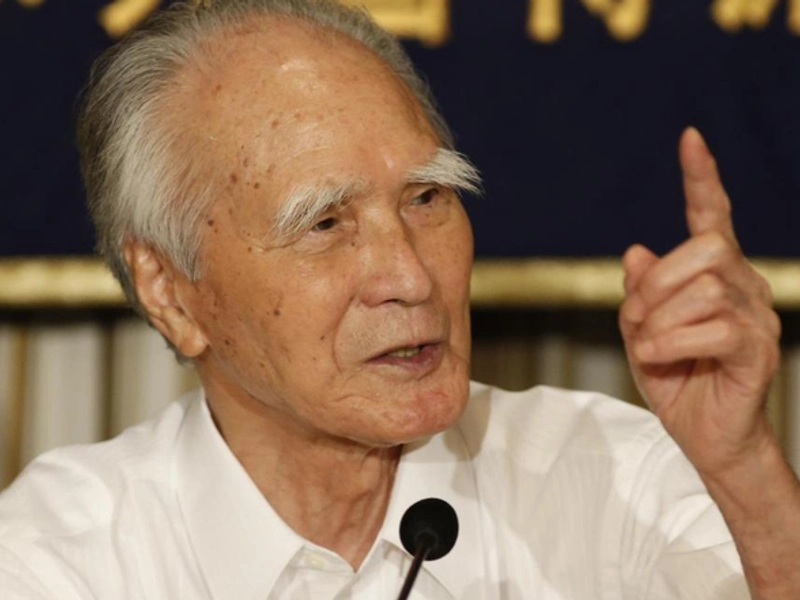
According to Japanese media reports, former Japanese Prime Minister Tomiichi Murayama passed away on October 17 local time due to old age at a hospital in his hometown of Oita City. He was 101 years old. Murayama was Japan's first post-war prime minister from the Socialist Party. On the 50th anniversary of the end of World War II, he delivered the "Murayama Statement," which, for the first time in an official document, explicitly acknowledged Japan's "colonial rule and aggression" and expressed "deep remorse and a heartfelt apology." This stance became the official benchmark for subsequent Japanese governments in handling historical issues. His passing has drawn widespread attention and mourning from Asian neighbors, including China and South Korea.
The "voice of conscience" in Japanese politics has fallen silent.
On October 17 local time, former Japanese Prime Minister Tomiichi Murayama passed away from illness in his hometown of Oita City, concluding a life that spanned a century. This politician, whose political career was most profoundly marked by the "Murayama Statement," leaves behind not just an obituary, but also symbolizes the passing of a political era in Japan that faced history squarely and sought reconciliation.
From Commoner to Prime Minister: A Century-Spanning Life
Tomiichi Murayama was born on March 3, 1924, in Oita City into an ordinary fishing family. His life trajectory witnessed Japan's modern history: he experienced war, participated in the labor movement, and eventually entered politics.
- In 1994, he became the 81st Prime Minister of Japan, leading a coalition government formed by the Liberal Democratic Party, the Socialist Party, and the New Party Sakigake.
- In 2000, he retired from politics but did not disappear from public view, often speaking out on issues of history and peace.
The "Murayama Statement": A Historical Monument That Cannot Be Bypassed
The core of Murayama's political career, and what he is most remembered for internationally, is the formal prime minister's statement he delivered on August 15, 1995—the 50th anniversary of the end of World War II.
- Core Content: In the statement, Murayama, representing the Japanese government, explicitly acknowledged for the first time:
"During a certain period in the not too distant past, Japan, following a mistaken national policy, advanced along the road to war, only to ensnare the Japanese people in a fateful crisis, and, through its colonial rule and aggression, caused tremendous damage and suffering to the people of many countries, particularly to those of Asian nations."
- Reflection and Pledge: He expressed "deep remorse" and offered a "heartfelt apology" for this, emphasizing "the importance of humbly recognizing the facts of history and conveying them correctly to the younger generations who do not know war, so that the lessons of history are never forgotten."
This statement set the tone for Japan's official stance on historical issues and has been upheld in principle by subsequent administrations.
Upholding His Legacy in Later Years: A Renewed Appeal 25 Years Later
Even in his later years, Tomiichi Murayama continued to guard this political legacy.
- On August 15, 2020, the 25th anniversary of the "Murayama Statement," he once again shared his thoughts through the media, stressing the core spirit of the statement:
"What was important at the time was to clarify the historical facts, offer an apology, and express the determination never to repeat aggression and colonial rule."
This was seen as a reminder and a stand against the political climate of Japan at the time, demonstrating his consistent view of history.
Reactions and Historical Echoes
The passing of Tomiichi Murayama is expected to draw significant attention across East Asia.
- China and South Korea: As nations that suffered greatly from Japanese aggression, their governments and publics are expected to mourn this prime minister who dared to face history squarely and acknowledge his efforts in promoting historical reconciliation.
- Within Japan: While political parties will express condolences, evaluations of his political legacy may vary significantly between conservative and progressive factions. His death will undoubtedly reignite discussions about how Japan should confront its history.
The departure of Tomiichi Murayama silences a voice from a distinct era. Against the backdrop of today's complex and changing international situation, the spirit of repentance and peace represented by the "Murayama Statement" seems particularly precious. He leaves behind not just an official document, but also a profound question concerning courage, conscience, and historical responsibility. This legacy will continue to test the wisdom and integrity of future Japanese politicians.