The Four Great Classical Novels of China
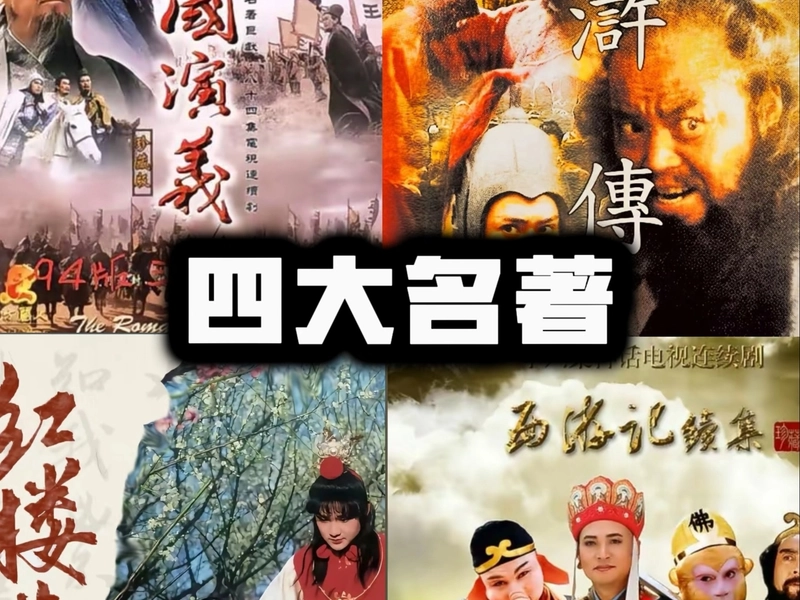
In classical Chinese literature, there are four novels renowned for their enduring legacy, collectively known as the Four Great Classical Novels. These are Romance of the Three Kingdoms (Sānguó Yǎnyì / 三国演义), Water Margin (Shuǐhǔ Zhuàn / 水浒传), Journey to the West (Xīyóu Jì / 西游记), and Dream of the Red Chamber (Hónglóu Mèng / 红楼梦). These Famous Chinese novels not only tell captivating stories but also deeply reflect the social life, character traits, and cultural values of their respective historical periods. Romance of the Three Kingdoms portrays legendary battles and strategic cunning among warlords; Water Margin depicts peasant uprisings, brotherhood, and social conflicts; Journey to the West presents fantastical adventures and spiritual cultivation in a world of gods and demons; and Dream of the Red Chamber delicately depicts family rise and decline, love entanglements, and the complexities of feudal society.
This article will systematically analyze the Four Great Classical Novels from four dimensions. First, the historical background allows us to understand the era and social context of each novel, which in turn helps interpret character behavior and story development. Second, the thematic ideas help us grasp the human nature, ethics, and social concepts explored in the works, revealing the authors’ reflections on the world. Third, the artistic techniques showcase the authors’ unique narrative methods and literary styles, highlighting the distinctiveness of each work in form and expression. Finally, modern influence demonstrates how these novels continue to evolve and resonate in contemporary literature, film, culture, and society.
By analyzing these four perspectives, we can more comprehensively understand the literary and cultural significance of the Four Great Classical Novels, appreciate their unique position in Chinese classical literature, and lay the foundation for a deeper exploration of each work’s stories, characters, and modern impact. This serves as an essential guide for anyone looking to learn Chinese classical literature or study Chinese literary masterpieces.
Overview of the Four Great Classical Novels
China’s Four Great Classical Novels—Romance of the Three Kingdoms, Water Margin, Journey to the West, and Dream of the Red Chamber—each possess distinct characteristics and vividly reflect different historical periods, social backgrounds, and human wisdom. They are not only literary works but also important carriers of Chinese culture, preserving historical memory, ethical concepts, and folk wisdom.
Romance of the Three Kingdoms, written during the late Yuan and early Ming dynasties by Luo Guanzhong, is a prime example of Chinese classical literature. The novel is set from the end of the Eastern Han Dynasty to the Three Kingdoms period and portrays heroes such as Cao Cao, Liu Bei, and Zhuge Liang, highlighting their wisdom, courage, and political strategies. The work presents complex political struggles and warfare while exploring character conflicts and psychological depth, illustrating loyalty, intelligence, and human diversity. Readers can enjoy both thrilling stories and rich historical and cultural insights. This makes it a perfect reference in any Chinese classical novel analysis or Romance of the Three Kingdoms English guide.
Water Margin, also from the late Yuan and early Ming dynasties, was written by Shi Nai’an. It tells the story of peasant uprisings during the Song Dynasty, focusing on the loyalty and bravery of the 108 heroes of Liangshan Marsh. Characters like Song Jiang, Wu Song, and Lin Chong are vivid and distinctive, embodying the tension between brotherhood and social justice. The novel’s lively, colloquial language combines realism with romantic elements, allowing readers to appreciate the narrative while understanding folk culture and everyday life. Water Margin heroes have become iconic symbols in Chinese literature study guides.
Journey to the West, written by Wu Cheng’en during the Ming Dynasty, recounts the legendary adventures of the monk Tang Sanzang and his disciples—Sun Wukong, Zhu Bajie, and Sha Wujing—on their pilgrimage to retrieve Buddhist scriptures. The work blends Daoist and Buddhist ideas with folk myths, creating a fantastical world filled with demons and magical encounters. Sun Wukong is clever and rebellious, Tang Sanzang compassionate, Zhu Bajie gluttonous yet kind, and Sha Wujing loyal and honest. The lively and imaginative story makes it excellent reading material for Chinese learners while showcasing the richness of Chinese mythology and serving as a Journey to the West story guide.
Dream of the Red Chamber, completed during the Qing Dynasty by Cao Xueqin and later continued by Gao E, centers on the Jia family, narrating the growth, love, and decline of Jia Baoyu, Lin Daiyu, and Xue Baochai. Through delicate portrayals of psychological and emotional nuances, the novel illustrates the constraints of feudal society, family fortunes, and social customs. Its exquisite language and emotional depth, enhanced by embedded poetry, songs, and literary allusions, allow readers to appreciate the beauty and philosophical depth of classical literature. This makes it an essential Dream of the Red Chamber plot summary for students of Chinese classical literature.
By reviewing the Four Great Classical Novels, we can observe their differences in themes, characters, and writing styles, while also appreciating their unique cultural value. This provides a solid foundation for further analysis of historical context, thematic ideas, artistic techniques, and modern influence, helping Chinese learners better understand Famous Chinese novels and social culture through reading.
In-Depth Analysis of Each Work
Romance of the Three Kingdoms
Romance of the Three Kingdoms (Sānguó Yǎnyì / 三国演义), written by Luo Guanzhong during the late Yuan and early Ming dynasties, is set from the end of the Eastern Han Dynasty to the Three Kingdoms period. It tells a grand story of competing warlords, political intrigue, and the growth of heroes. The novel uses a chapter-based structure, with each chapter able to stand alone yet closely connected to the overall plot, depicting historical events and interpersonal relationships to showcase a magnificent era.
The opening chapter, “Oath of the Peach Garden,” sets the emotional tone of the novel. Liu Bei, Guan Yu, and Zhang Fei swear brotherhood in the Peach Garden, pledging: “We share life and death, endure hardship together, and uphold the Han Dynasty.” By signing this blood oath, the three support each other in military training, demonstrating loyalty, righteousness, and deep fraternal affection. This chapter not only establishes the main characters’ traits—Liu Bei’s benevolence, Guan Yu’s loyalty and bravery, Zhang Fei’s fierceness—but also foreshadows the overarching heroic theme of the novel. Romance of the Three Kingdoms characters are celebrated worldwide in both Chinese literature culture and Four Great Classical Novels educational resources.
Later, Liu Bei visits Zhuge Liang three times to seek his counsel. After two unsuccessful attempts, he finally meets him on the third visit. The novel vividly portrays Liu Bei’s sincerity and persistence, and Zhuge Liang’s initial caution and eventual decision to assist: “Moved by Liu Bei’s earnestness, the sleeping dragon rose to the occasion, and with hands clasped, they spoke sincerely, which inspired respect in the dragon.” This scene not only develops character but emphasizes the classical Chinese value of respecting talent and etiquette.
In the war chapters, the Battle of Red Cliffs stands out as a thrilling climax. Cao Cao leads a massive army south to eliminate the allied forces of Sun Quan and Liu Bei. Zhou Yu and Zhuge Liang cleverly use fire attacks and the east wind to destroy Cao Cao’s fleet. The novel depicts blazing fire, sinking ships, and panicked soldiers, interweaving strategy and psychological confrontation: “Zhuge Liang orchestrated the battle from behind the scenes; with the wind just right, the fire ships sailed down the river, and in an instant, the enemy’s fleet was engulfed in flames.” This chapter captures the tension of war and the brilliance of strategy.
The “Empty Fort Strategy” episode further highlights Zhuge Liang’s wisdom. Facing Sima Yi’s army, he calmly sits atop the city walls playing the zither, projecting fearlessness and psychologically compelling the enemy to retreat: “Zhuge Liang sat calmly on the city wall, playing the zither as if unafraid; Sima Yi, seeing this, doubted and withdrew without battle.” This episode demonstrates the importance of composure and strategic thinking.
Characters in the novel are vividly drawn and multifaceted. Liu Bei is benevolent and inclusive, capable of uniting talent and laying the foundation for Shu Han; Guan Yu embodies loyalty and courage; Zhang Fei is fierce and bold; Zhuge Liang is wise and calm, adept in military and political strategy; Cao Cao is ambitious and cunning, revealing complex human nature and historical realities.
Overall, Romance of the Three Kingdoms combines historical narrative, psychological portrayal, and a tight chapter structure to weave themes of loyalty, strategy, wisdom, and valor, making it a pinnacle of Chinese classical literature and an essential part of any Chinese literature study guide.
Water Margin
Water Margin (Shuǐhǔ Zhuàn / 水浒传), written by Shi Nai’an during the late Yuan and early Ming dynasties, is set in the late Northern Song Dynasty and depicts 108 heroes of Liangshan Marsh rebelling against government oppression. The novel reflects social conflicts and the suffering of ordinary people. Through a rich array of characters and intricate plots, it explores loyalty, resistance, and justice, with each hero possessing unique traits and skills, creating dynamic narrative tension.
The story begins with “Wu Song Fights the Tiger,” immediately capturing the reader’s attention. Wu Song battles a fierce tiger barehanded on Jingyang Ridge, ultimately defeating it. The novel vividly describes his movements, strength, and mental state, portraying Wu Song’s courage, decisiveness, and hatred of injustice. This episode showcases individual heroism while reflecting the novel’s colloquial and lively narrative style, making the reader feel the realism of strength and bravery. Water Margin heroes and episodes are widely cited in Chinese classical novel teaching resources and Four Great Classical Novels English summary guides.
As the story progresses, Lin Chong is framed by Gao Qiu, losing his home and family and forced to join Liangshan. His journey from anger and helplessness to finding belonging and purpose at Liangshan intricately ties personal fate to social injustice. The brotherhood among the Liangshan heroes forms a central theme, emphasizing loyalty and camaraderie throughout the story.
The heroes’ sense of honor and rebellion is fully realized through battles and strategic maneuvers. The novel skillfully blends realism and romance: realistic depictions of social environment, governmental oppression, and warfare; romanticized episodes with legendary feats and exaggerated heroism. The language is lively, colloquial, and vivid, bringing the Jianghu world to life.
Among the heroes, Song Jiang is the core figure of benevolence and leadership, uniting the outlaws into a formidable force while struggling between loyalty and obedience. Wu Song embodies courage and righteousness; Lin Chong represents resilience and tragic fate; Lu Zhishen is bold, humorous, and strong; Li Kui is straightforward, fierce, and loyal, embodying the unrefined spirit of folk heroes.
In summary, Water Margin is not merely a heroic tale but a vibrant depiction of society and human nature. Through the Liangshan heroes’ rebellion, it explores loyalty, justice, and the link between personal fate and social reality, blending realism with folk legend to create an immersive and thought-provoking narrative. It remains a crucial Chinese literature study guide for understanding Famous Chinese novels and Chinese classical literature.
Journey to the West
Journey to the West (Xīyóu Jì / 西游记), written by Wu Cheng’en during the Ming Dynasty, is a pinnacle of fantasy in classical Chinese novels, combining mythology, Daoism, Buddhism, and rich folk beliefs. It tells the legendary story of Tang Sanzang and his disciples—Sun Wukong, Zhu Bajie, and Sha Wujing—enduring eighty-one trials to retrieve Buddhist scriptures. The novel is both an adventurous fantasy and a philosophical exploration of cultivation, enlightenment, and harmony between humans, nature, and society.
The most dramatic opening chapter is “Sun Wukong Rebels in Heaven.” Discontent with his treatment by the heavenly court, Sun Wukong defies authority, wreaking havoc in heaven and confronting celestial troops: “Sun Wukong wreaked havoc in Heaven, awe-inspiring, leaving the celestial army helpless.” Exaggerated and lively narration highlights his strength, intelligence, and rebellious spirit, blending humor and satire to contrast heaven’s authority. This chapter establishes Sun Wukong’s character and foreshadows the challenges of the pilgrimage. Journey to the West story is highly recommended for anyone who wants to learn Chinese classical literature.
The journey is fraught with dangers, including monsters, natural obstacles, and moral tests, driving the plot and deepening character development. Sun Wukong matures into a protective and discerning hero; Zhu Bajie, though lazy and gluttonous, demonstrates kindness and cleverness; Sha Wujing symbolizes loyalty and perseverance; Tang Sanzang embodies compassion, using virtue to influence others. Each character’s growth reflects themes of loyalty, courage, wisdom, and morality.
Artistically, the novel excels in imaginative richness and layered structure. Monsters and spirits are vividly described; battles are tense; moral lessons are embedded subtly. Poetic inserts, songs, and classical allusions enhance the narrative’s rhythm and depth. The combination of allegorical storytelling and humor creates enduring appeal for both children and adults. Journey to the West English version and Four Great Classical Novels analysis resources often cite it as a model of Chinese mythological literature.
Overall, Journey to the West integrates adventure, spirituality, and moral education, showcasing Chinese fantasy literature’s imagination and reflecting cultural significance of the Four Great Classical Novels. Its characters and plots remain deeply influential in literature, folklore, film, and modern education.
Dream of the Red Chamber
Dream of the Red Chamber (Hónglóu Mèng / 红楼梦), completed by Cao Xueqin in the Qing Dynasty, is considered the pinnacle of Chinese classical novels. The story focuses on the Jia family’s rise and decline, centering on Jia Baoyu, Lin Daiyu, and Xue Baochai. Through exquisite psychological and emotional portrayal, the novel explores human relationships, love, family, society, and morality, achieving a perfect balance of realism, sentiment, and literary sophistication.
The novel opens with a metaphysical prelude: “The stone left over from the creation of the world contains all feelings of the world, witnessing the rise and fall of the Jia family.” This sets the tone for the story, blending reality with philosophical reflection. Jia Baoyu’s delicate personality, Lin Daiyu’s sensitivity and intelligence, and Xue Baochai’s rationality and kindness form a triangular emotional structure, highlighting complex human emotions.
The narrative’s strength lies in its attention to detail. Daily life, social interactions, feasts, rituals, gardens, and poetry are meticulously depicted, creating a vivid and immersive world. The emotional interactions and moral dilemmas are explored subtly, enabling the reader to reflect on human nature and social ethics.
The novel’s artistic achievements include:
- Exquisite character depiction: over 400 characters, each vividly portrayed;
- Interwoven poetry and prose: integrating literature, music, and culture;
- Symbolism and allegory: using daily life to reflect philosophical thoughts.
“Dream of the Red Chamber plot” and Four Great Classical Novels themes provide rich study material for Chinese learners, literary scholars, and anyone interested in Chinese literature history. It is regarded as the most psychologically and culturally profound work among the Four Great Classical Novels, with lasting influence on literature, criticism, and education.
Even Villains: Pan Jinlian — Proverbs and Folk Expressions
Even villains like Pan Jinlian generated cautionary sayings: “Pan Jinlian harms relatives—has ulterior motives” and “Pan Jinlian toasts Wu Song—ill intent.”
These sayings condense complex human traits, social conflict, and plot drama into memorable expressions, ensuring the heroes’ spirit continues in folk culture. They keep the essence of loyalty, courage, intelligence, and rebellion alive, creating a vivid bridge between Chinese classical literature and daily life, making them valuable for Four Great Classical Novels characters list and Chinese classic novel reading guide.
Journey to the West (Xīyóu Jì) — Proverbs and Folk Expressions
Journey to the West, a fantasy-adventure masterpiece rich in folklore and wisdom, generated numerous proverbs and sayings that reflect character and plot in oral form. These sayings make the story accessible for learners of Chinese literature culture and for those seeking Four Great Classical Novels English summary.
- Sun Wukong: “Sun Wukong traverses heaven and earth—omnipotent,” “Sun Wukong’s seventy-two transformations—adaptable,” “Sun Wukong creates havoc in Heaven—imposing and mighty,” capturing his power, intelligence, and rebellious spirit.
- Zhu Bajie: “Pigsy carries his wife—lazy and gluttonous,” “Pigsy looks in the mirror—neither inside nor outside is right,” humorously highlighting his greed, laziness, and folly.
- Sha Wujing: “Sha Wujing carries luggage—loyal and honest,” reflecting diligence and steadfastness.
- Tang Sanzang: “Tang Sanzang chants the tightening spell—depends on divine power when in trouble,” showing his cautious, virtuous nature.
Other sayings stem from encounters and adventures: “Bajie eats ginseng fruit—greedy leads to trouble,” “Sun Wukong battles Thunder God and Mother of Lightning—undaunted in adversity,” “Sun Wukong picks peaches—free-spirited,” emphasizing fantastical adventures and character traits.
These sayings preserve the essence of each character and the story, transmitting cultural wisdom and humor orally across generations, aligning with Journey to the West story studies and global Chinese classical literature guides.
Dream of the Red Chamber (Hónglóu Mèng) — Proverbs and Folk Expressions
Dream of the Red Chamber depicts the rise and fall of the Jia, Shi, Wang, and Xue families. Its delicate characterizations and social depictions produced numerous folk proverbs and sayings, enhancing comprehension for learners of Chinese classical novel teaching resources and Four Great Classical Novels themes.
- Lin Daiyu: “Lin Daiyu buries flowers—sorrow arises from within,” reflecting her sensitivity and tragic fate.
- Jia Baoyu: “Baoyu burns manuscripts—indulges emotions,” “Baoyu provokes trouble—love causes misfortune,” highlighting rebelliousness and emotional depth.
- Wang Xifeng: “Wang Xifeng manipulates power—cunning and decisive,” showing intelligence and family management skills.
- Others, like Shi Xiangyun and Xue Baochai, inspired sayings depicting vivacity or prudence.
Proverbs also emerged from daily life and social customs: “Golden and jade outside—rotten inside,” “Jia family banquets—lavish and excessive,” “Secrets in the boudoir—whispered conversations,” conveying critique, social observation, and cultural insight.
These sayings condense complex psychology, family dynamics, and societal norms into vivid, memorable expressions, aiding readers’ understanding and providing rich language material for Chinese literature study guides. They allow oral transmission of literary wisdom, merging literature with folk culture and enhancing Four Great Classical Novels educational resources.
Conclusion
The Four Great Classical Novels are pinnacles of Chinese classical literature, holding irreplaceable positions in literary history and exerting lasting cultural influence. Each work demonstrates unique charm and profound life wisdom:
- Romance of the Three Kingdoms: loyalty and strategy
- Water Margin: brotherhood and rebellion
- Journey to the West: fantasy and spiritual growth
- Dream of the Red Chamber: delicate emotion and family dynamics
These works collectively construct a rich literary world and provide valuable linguistic and cultural resources for Chinese learners. In a globalized context, their dissemination and study continue to expand. Through film adaptations, digital media, online literature, and cross-cultural exchange, these classics reach a wider audience. They will continue to influence Chinese culture and attract global readers and scholars, allowing the wisdom and artistic charm of Chinese literature to transcend language and borders, maintaining their unique cultural value and relevance as Chinese classical novel reading guides.
Related Vocabulary
| Chinese | Pinyin | English | Description / Usage |
|---|---|---|---|
| 三国演义 | Sānguó Yǎnyì | Romance of the Three Kingdoms | Classic historical novel depicting the Three Kingdoms era, used for literature study and cultural learning |
| 水浒传 | Shuǐhǔ Zhuàn | Water Margin | Story of 108 heroes in rebellion, illustrating loyalty and justice; useful for character and plot analysis |
| 西游记 | Xīyóu Jì | Journey to the West | Fantasy-adventure novel with moral lessons and folklore elements; teaches Chinese culture and mythology |
| 红楼梦 | Hónglóu Mèng | Dream of the Red Chamber | Novel about aristocratic family life and emotions; used for studying social structure, psychology, and literature |
| 曹操 | Cáo Cāo | Cao Cao | Warlord and strategist in Romance of the Three Kingdoms; represents intelligence and political cunning |
| 刘备 | Liú Bèi | Liu Bei | Hero and leader; symbolizes benevolence and loyalty |
| 诸葛亮 | Zhūgě Liàng | Zhuge Liang | Strategist and adviser; represents wisdom and foresight |
| 武松 | Wǔ Sōng | Wu Song | Heroic figure known for bravery; used in folklore and literary studies |
| 孙悟空 | Sūn Wùkōng | Sun Wukong | Monkey king; symbolizes cleverness, courage, and fantasy elements |
| 猪八戒 | Zhū Bājiè | Zhu Bajie | Humorous, gluttonous character; used for moral lessons and folklore study |
| 唐僧 | Táng Sānzàng | Tang Sanzang | Monk and spiritual guide; represents morality and perseverance |
| 贾宝玉 | Jiǎ Bǎoyù | Jia Baoyu | Main character of Dream of the Red Chamber; symbolizes emotional depth and family ties |
| 林黛玉 | Lín Dàiyù | Lin Daiyu | Female protagonist; represents sensitivity and tragic beauty |
FAQ about Four Great Classical Novels
1. What are the Four Great Classical Novels of China?
The Four Great Classical Novels are Romance of the Three Kingdoms (三国演义), Water Margin (水浒传), Journey to the West (西游记), and Dream of the Red Chamber (红楼梦). They are cornerstones of Chinese classical literature and are studied for their historical, cultural, and literary significance.
2. Why is Romance of the Three Kingdoms important in Chinese literature?
Romance of the Three Kingdoms depicts historical events, military strategy, and heroic characters such as Cao Cao, Liu Bei, and Zhuge Liang. It is widely analyzed in Chinese classical literature guides and serves as an essential study resource for learning about loyalty, strategy, and historical storytelling.
3. Who are the main heroes in Water Margin, and what do they represent?
Water Margin features 108 heroes, including Song Jiang, Wu Song, and Lin Chong, representing loyalty, justice, and rebellion. The novel is a key part of Chinese literature study and cultural education, often cited in analyses of heroic and moral values in classical novels.
4. What lessons does Journey to the West teach?
Journey to the West combines fantasy, adventure, and folklore, following characters like Sun Wukong and Tang Sanzang. It teaches wisdom, teamwork, and spiritual growth and is widely used in educational guides for learning Chinese classical literature and mythology.
5. What is the cultural significance of Dream of the Red Chamber?
Dream of the Red Chamber explores aristocratic life, family dynamics, and emotional depth. It is central to Redology studies and provides insight into Qing dynasty society, making it an important resource for learning Chinese literature, character analysis, and historical culture.
6. How have the Four Great Classical Novels influenced modern media?
These novels have inspired films, TV series, animation, digital games, and cross-cultural adaptations. Romance of the Three Kingdoms, Water Margin, Journey to the West, and Dream of the Red Chamber continue to impact modern storytelling, gaming, and literature, making them vital for global learners of Chinese culture and literature.
7. Where can I find English summaries or study guides for the Four Great Classical Novels?
English resources for the Four Great Classical Novels include reading guides, character lists, plot summaries, and educational resources. These materials help international readers and students understand Chinese classical literature, cultural significance, and literary themes.