Gold and the Epic of Human Civilization
Gold is the universe's most profound gift to Earth. Its birth did not occur in the planet's own fiery forges but originated from the cataclysmic sacrifice of stars.
In the vast theater of the cosmos, the slow burning of ordinary stars can only produce common elements like iron. Only during the fleeting, dazzling explosion of a supernova—brighter than a billion suns—or in the violent merger of incredibly dense neutron stars, can the extreme conditions necessary for atomic nuclei to capture neutrons and undergo the "rapid neutron-capture process" be achieved. It is in these moments that ordinary elements like iron are forged into heavy gold.
The products of this cosmic alchemy—gold and other heavy elements—were hurled into the vast interstellar space by explosive shockwaves, becoming precious dust scattered across the cosmos. Around 4.6 billion years ago, these gold-bearing interstellar clouds and dust coalesced under gravity, forming our solar system and delivering this stellar legacy into the primordial structure of a young Earth.Subsequently, over Earth's long geological ages, under intense heat and immense pressure, these trace amounts of uniformly distributed gold were leached from rocks by hydrothermal fluids. Carried through fractures in the Earth's crust, they eventually precipitated and concentrated under suitable physicochemical conditions, forming the gold veins that humanity explores and mines today.
Thus, the gold adorning our fingers traces its origin not to the ground beneath our feet, but to a cosmic legend spanning time and space. It carries within it the final brilliance of dying stars, the dust of galactic evolution, and the immense forces of Earth's dynamism—ultimately coalescing into this enduring gleam.
The Immortal Gleam and the Coronation of Power
In the dawn of civilization, gold's primary identity was as a medium to the divine. Its sun-like radiance and imperishable nature led ancient peoples to believe it was fragments of the gods themselves, scattered upon the earth.
1. A Medium to the Heavens
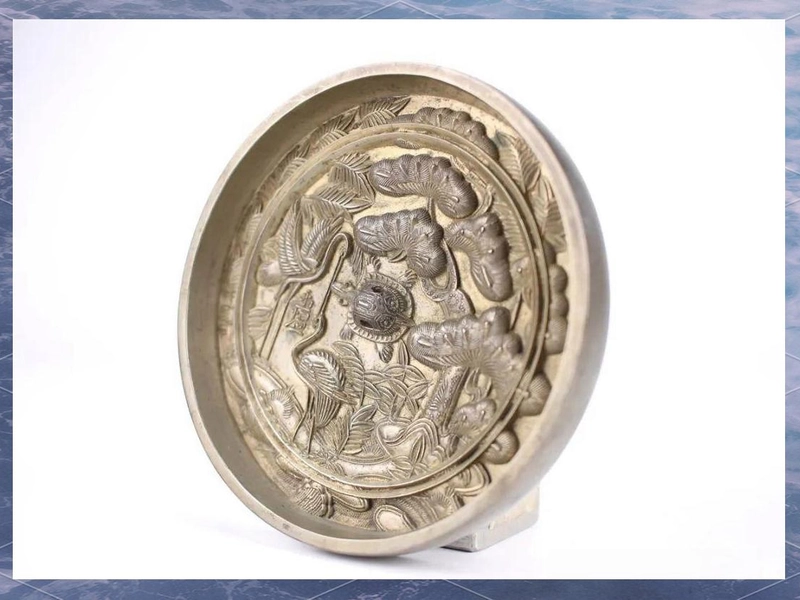
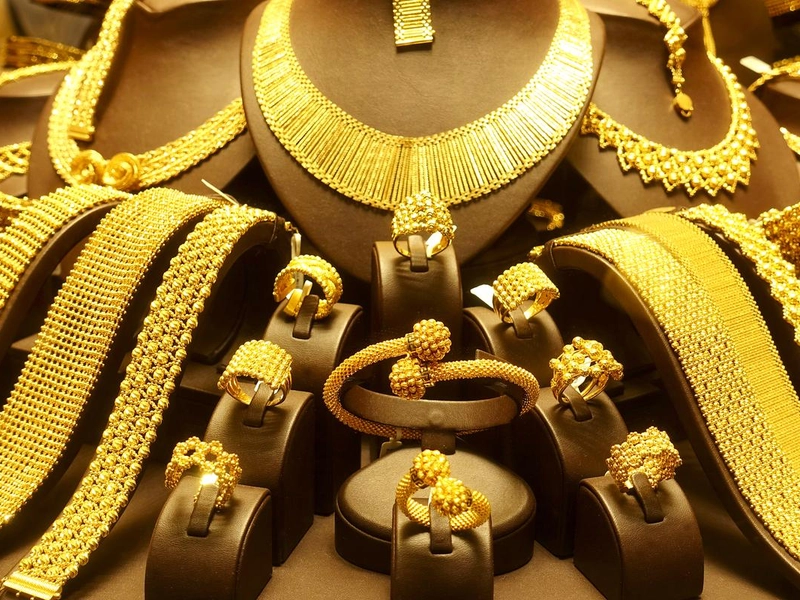
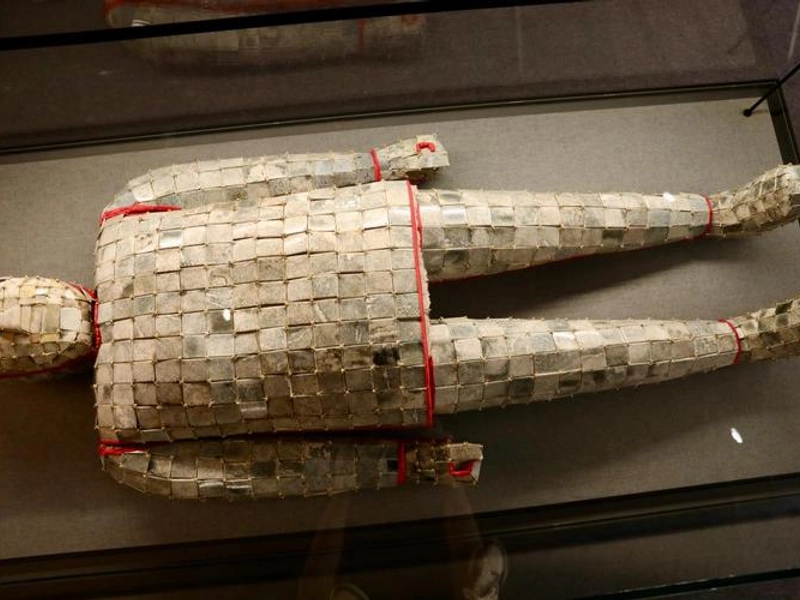
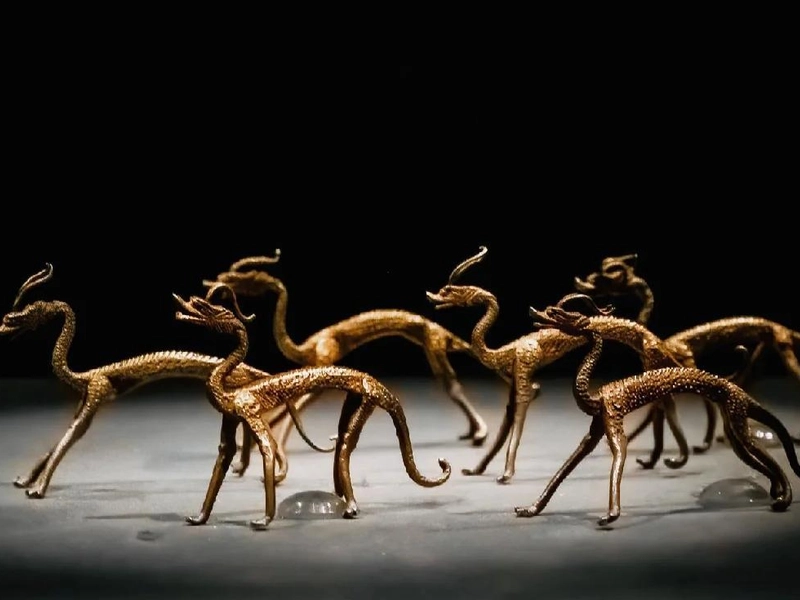
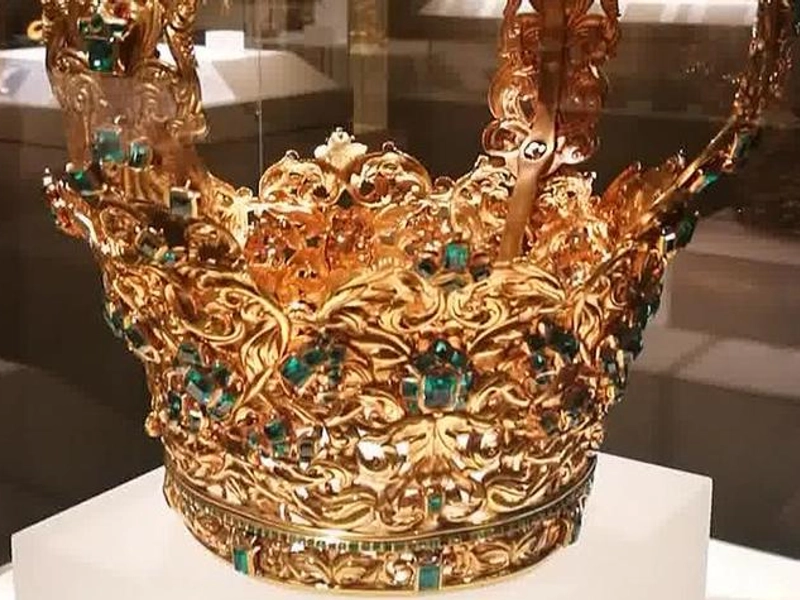
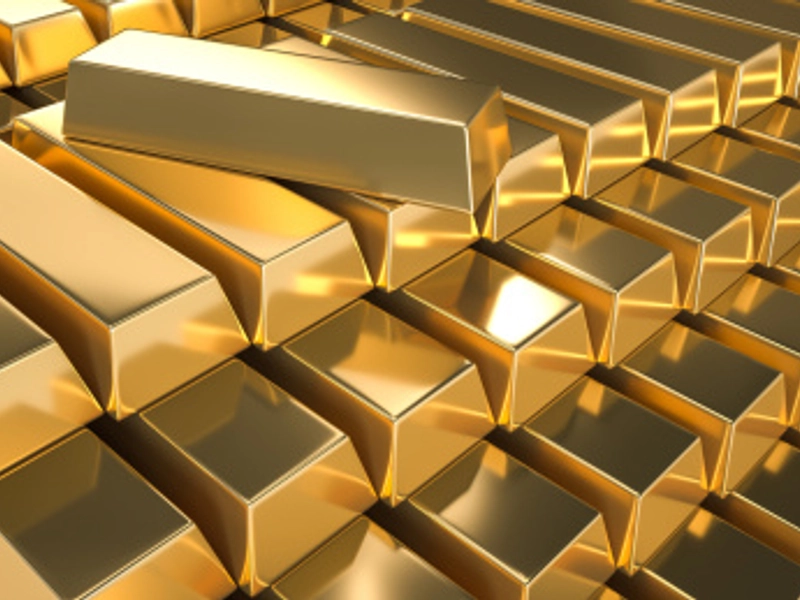
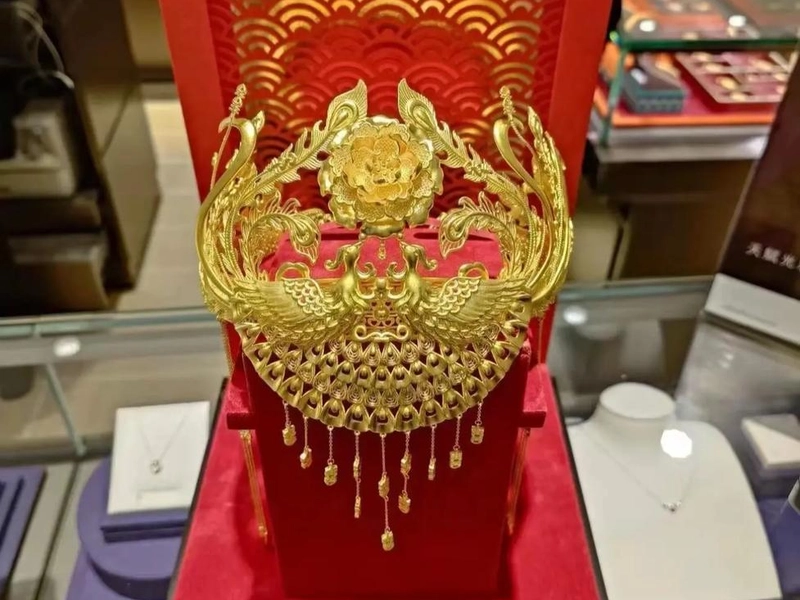
In ancient Egypt, pharaohs regarded gold as the "flesh of the gods," the only immortal material fit to build their vessels to the afterlife. Tutankhamun's exquisitely crafted gold mask did not merely cover the face of a young pharaoh; it embodied a civilization's ultimate vision and pursuit of eternity. In the distant Inca Empire, gold was revered as "the sweat of the sun." It was used lavishly to adorn temples not for ostentatious display of wealth, but primarily to function as a spiritual conductor for communication with the divine. Here, the sacred value of gold completely transcended its material worth. 2. The Seal of Power When divinity required earthly representatives, gold naturally assumed the role as the seal of authority. In China, though the legendary Imperial Seal was traditionally fashioned from jade, idioms such as "golden rules and precepts" and "golden words" transmuted gold's imperishable nature into an emblem of supreme and unchallengeable command. In medieval Europe, gold was molded into seals, crowns, and scepters, serving as the most resplendent and tangible manifestation of the "divine right of kings." Its dazzling luster was intended to instantly awe every subject who beheld it, overwhelming them with an immediate sense of the sacredness and legitimacy of sovereign power. Thus, gold cemented its foundational role in early civilization: it was both the praise offered by mortals to the gods and the authority bestowed by the gods upon monarchs. Humanity's yearning for immortality and power found its initial form and vessel in this golden radiance. Unlike other civilizations that primarily used gold for divine idols and currency, ancient China endowed gold with a unique trajectory of development. It was not merely an adornment of supreme imperial power but a perfect fusion of exquisite craftsmanship and worldly auspiciousness. The Ultimate Symbol of Power: Gold-Threaded Jade Burial Suits and Imperial Vessels The gold-threaded jade burial suits, prevalent during the Han Dynasty, represent the ultimate expression of this concept. It was believed that gold and jade, combined, could protect the body from decay and assist the tomb occupant in ascending to the immortal realm. This direct association of gold with the dream of eternal life is unique among world civilizations. By the Tang Dynasty, at the peak of national strength, gold craftsmanship reached its zenith. Artifacts from the Hejiacun Hoard, such as the gilded silver jar with dancing horse design and the gold bowl with mandarin duck and lotus petal patterns, showcase techniques like hammering, chasing, and gilding of unparalleled sophistication. They reflect the empire's cosmopolitan grandeur and luxurious court life. Here, gold served as a visual declaration of national power and imperial majesty. A Unique Monetary System: The Parallel Paths of Gold and Bronze Throughout much of China's long history, gold did not become the primary material for coinage as it did in the West. Instead, it operated in a unique dual system alongside a bronze currency. The Ying Yuan from the Warring States period represents an early form of gold currency, while the numerous excavated Han Dynasty gold cakes and horseshoe-shaped gold ingots were primarily used for imperial gifts, large-scale transactions, and wealth storage. They functioned more as a "super-currency" for the upper echelons of society, acting as a stabilizing cornerstone in state finance and aristocratic wealth. Secular Symbols of Auspiciousness: The Culmination in Ming and Qing Court Goldware During the Ming and Qing dynasties, the secularization and symbolic auspiciousness of gold reached their peak. The "Solid Gold Urn" (Jin Ou Yong Gu Bei), housed in the Palace Museum, was a ceremonial vessel exclusively used by Qing emperors for the New Year's inauguration ceremony. Its name and form inextricably linked gold with the political ideal of an eternally stable state. Similarly, the gold dragons and phoenixes on Empress Xiaoduan's phoenix crown, created with incredibly intricate filigree and inlay techniques and adorned with thousands of pearls and gems, were not merely displays of beauty. They embodied the use of gold as a symbol of power, marriage, and ultimate happiness, integrating it into the Chinese imagination of a perfectly fulfilled life. Therefore, the history of gold in China is a chronicle of evolving craftsmanship, a record of wealth management, and, moreover, a history of desire—written in radiant metal—for temporal power, eternal life, and earthly happiness. The light of reason from the Renaissance and the Enlightenment did not dispel the mystique of gold; instead, it facilitated gold's first "modern transformation": descending from the altar to the vault, shifting from an object of faith to the very embodiment of rules. 1. The Birth of a New God: The Gold Standard As the power of monarchy and religion faded, gold found a new throne—it became the cornerstone of the global monetary system. The gold standard was a grand institutional experiment: an attempt to use gold's physical scarcity to anchor and restrain the endlessly expanding credit and desires within economic activity. Symbols like the British pound and the U.S. dollar were, for the first time, equated with a specific weight of gold, as if harnessing the wild economy with golden reins. Within this system, gold was the silent ultimate arbiter, the steadfast "anchor" of transnational trade and confidence. 2. The Liberation of the Specter: The End of Bretton Woods Yet, these reins were ultimately broken. The "Nixon Shock" of 1971, which decoupled the U.S. dollar from gold, essentially marked humanity's choice to replace the ultimate constraint of a physical precious metal with pure national credit. Gold's role as direct currency was formally terminated, but it did not exit the stage. Instead, it transformed into a "specter" haunting the depths of the global financial system. It no longer speaks, no longer directly sets prices, yet the shadow of its fluctuations looms over every market. It is no longer a shackle, but has become the ultimate measure of credit and panic. 3. The Ultimate Paradox: The "Sun" Buried Deep in the Earth Thus, we witness the most contradictory spectacle of modernity: we expend massive energy and human labor to extract gold from the depths of mines in South Africa or Western Australia. After refining and transportation, over 90% of the total amount is ultimately reburied in another, deeper, and more heavily fortified man-made cavern—the central bank vaults of various nations. Its glory, once used to illuminate the faces of deities and the scepters of emperors, has now become a silent figure in electronic ledgers, a "dormant" strategic asset. Gold, this metal once regarded as the embodiment of the sun, has thus fulfilled its destiny as a prisoner. Our very act of sealing the "sweat of the sun" in darkness is perhaps the most profound metaphor of modern finance itself. As the world surges toward a digital future, gold—that ancient "deity"—has not faded into obscurity amidst the torrent of bits. Instead, it is undergoing a silent "nirvana," proving its enduring adaptability through three distinct forms. 1. The "Lifeblood" of Technology: From Currency to "Industrial Blood" In the microscopic world, gold sheds all symbolic meaning and returns to its most fundamental physical essence. Its supreme conductivity, exceptional malleability, and unparalleled stability make it an irreplaceable set of "industrial teeth" in high-end chips and circuit contacts. Behind the efficient operation of every smartphone and computer, trace amounts of gold precisely channel the flow of information. Furthermore, in aerospace, nanotechnology, and even precise cancer treatments, gold is evolving from a symbol of wealth into a critical material for technological breakthroughs. It is no longer stored in vaults but is being "implanted" at the very frontier of human technology. 2. The "Sanctuary" of Investment: The Ultimate Belief in Troubled Times Although decoupled from currency, gold's ancient legacy as an "honest asset" is etched into the marrow of civilization. Whenever inflation rages, war clouds gather, or economic prospects darken, people instinctively flee volatile fiat currencies and return to the solid embrace of gold. It is seen as the ultimate store of wealth, transcending the credit of any single government. Ironically, when cryptocurrencies like Bitcoin proclaim themselves "digital gold" and attempt to challenge the old order, they inadvertently reinforce how deeply entrenched the very concept of "gold" is as a paradigm of value storage. This is the coronation of the old god in a new realm. 3. The "Gene" of Culture: The Ever-Bright Vessel of Emotion Stripped of all its financial and industrial attributes, gold's most primal magic still burns intensely in jewelry stores and wedding halls across the globe. Its core status as a luxury item and vessel for emotion remains unshaken—a universal symbol transcending all cultural barriers. From bridal dowries to heirlooms, it carries humanity's most genuine wishes for love, eternity, and family continuity. Here, gold is no longer an investment or a component; it reverts to being a warm container for emotions and memories. This cultural "perpetual motion machine" still throbs with immense power. Thus, we witness gold bifurcating in the age of prophecy: it is both the physical material constituting the future, the financial compass for assessing risk, and the cultural code for lodging emotions. In this new trinity, it steps confidently into the next millennium. The epic of gold is a grand cycle that begins with the stars and ends in the human heart. It descended from the divine radiance of the altar to the gloom of the vault, only to rekindle quietly today within the veins of new technology and the waves of the digital torrent. Its form has transmuted—from a faith that reached for the gods, to a rule that anchored the world, then to an intangible financial specter and a tangible technological lifeblood—yet its core has always been humanity's collective yearning for permanence, purity, and absolute stability: the most ancient projection of our desire for security. Thus, the ultimate question emerges: When human footprints tread the deserts of Mars, and assets in virtual worlds flow as lines of code, will we still reserve a place in our physical safes for a cold, gleaming, yellow metal? The answer, perhaps, is already written in the code of our civilization. As long as humanity still feels awe at the mystery of the stars, still fears the erosion of time, and still seeks some eternal value beyond individual life—then the myth of gold will never see its final curtain call. It no longer needs to be worshipped, for it has itself become the most enduring and honest mirror of our desires and dreams.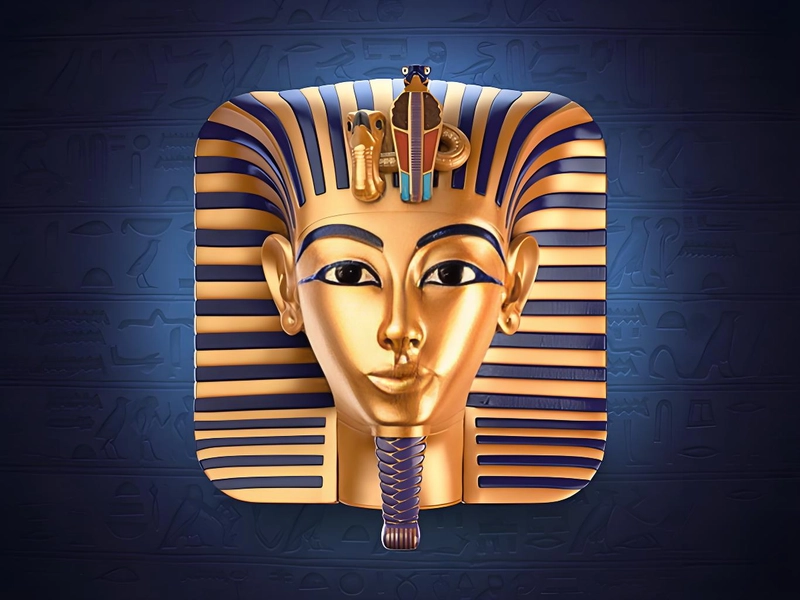
Chinese Gold: Craftsmanship, Wealth, and Auspiciousness
The Specter in the Vault and the Shackles of Rules
Twilight of the Gods and Rebirth in the Digital Torrent
The Eternal Mirror