Hello In Mandarin

Table of Contents [hide]
- Why Learning 'Hello' in Mandarin Matters
- The Essential Phrase: 'Nǐ hǎo' (Hello in Mandarin)
- Mastering Chinese Tones for Accurate Hello Pronunciation
- Beyond 'Nǐ hǎo': Other Mandarin Greeting Words for Different Contexts
- Common Chinese Greetings for Time of Day and Occasions
- Body Language and Etiquette When Saying Hello in Chinese
- Practice Tips for Using Basic Chinese Phrases Hello Confidently
- From Hello to Conversation: Next Steps After Your First Mandarin Greeting
- Quick Reference: Mandarin Greeting Cheat Sheet
- FAQ
Why Learning 'Hello' in Mandarin Matters
Mastering the hello in Mandarin isn’t just about memorizing a phrase—it’s your first step into a culture where language, respect, and context are deeply intertwined. When you learn how to say hello in Chinese—specifically ‘Nǐ hǎo’ (pronounced *knee-how*, with a rising second tone on ‘nǐ’ and a falling-rising third tone on ‘hǎo’)—you’re not merely uttering sounds; you’re signaling openness, humility, and cultural awareness. Unlike English, where ‘hello’ is often used casually or even impersonally, Mandarin greeting words carry subtle weight: tone accuracy, appropriate timing, and situational awareness all shape how your hello in Mandarin is received. For example, using ‘Nǐ hǎo’ with a warm smile and slight nod conveys sincerity, while mispronouncing the tones—say, saying ‘nī hāo’ (flat-flat) instead of ‘Nǐ hǎo’—can unintentionally shift meaning or sound dismissive. This makes Chinese hello pronunciation more than phonetic drill; it’s foundational listening and speaking practice that trains your ear and mouth for all future Mandarin learning. Beyond linguistics, common Chinese greetings serve as social gateways. In daily life, ‘Nǐ hǎo’ opens doors—from ordering breakfast at a Beijing street stall to initiating small talk with a neighbor in Shanghai. It signals that you’ve made an effort, which fosters goodwill far beyond what a generic ‘hi’ might achieve. More importantly, this basic Chinese phrase hello is rarely used in isolation. It’s the springboard to other Mandarin greeting words like ‘Zǎo shàng hǎo’ (Good morning), ‘Wǎn shàng hǎo’ (Good evening), or the respectful ‘Nín hǎo’ (used for elders or superiors)—all built on the same tonal and structural logic. Learning the hello in Mandarin thus teaches you core patterns: subject–verb–object order, tone sandhi rules, and honorific usage—skills that accelerate mastery of other basic Chinese phrases hello and beyond. Practically, knowing how to say hello in Chinese reduces friction in real-world interactions. Tourists who confidently use ‘Nǐ hǎo’ before asking for directions often receive more patient, detailed help. Business travelers who open meetings with a correctly pronounced ‘Nǐ hǎo’ demonstrate cross-cultural competence that builds trust before a single agenda item is discussed. Even digitally, typing ‘Nǐ hǎo’ in WeChat messages or recognizing it in voice notes strengthens your functional literacy. And because Mandarin is spoken by over 1.1 billion people across diverse regions—from mainland China and Taiwan to Singapore and diaspora communities—this one phrase has unmatched reach.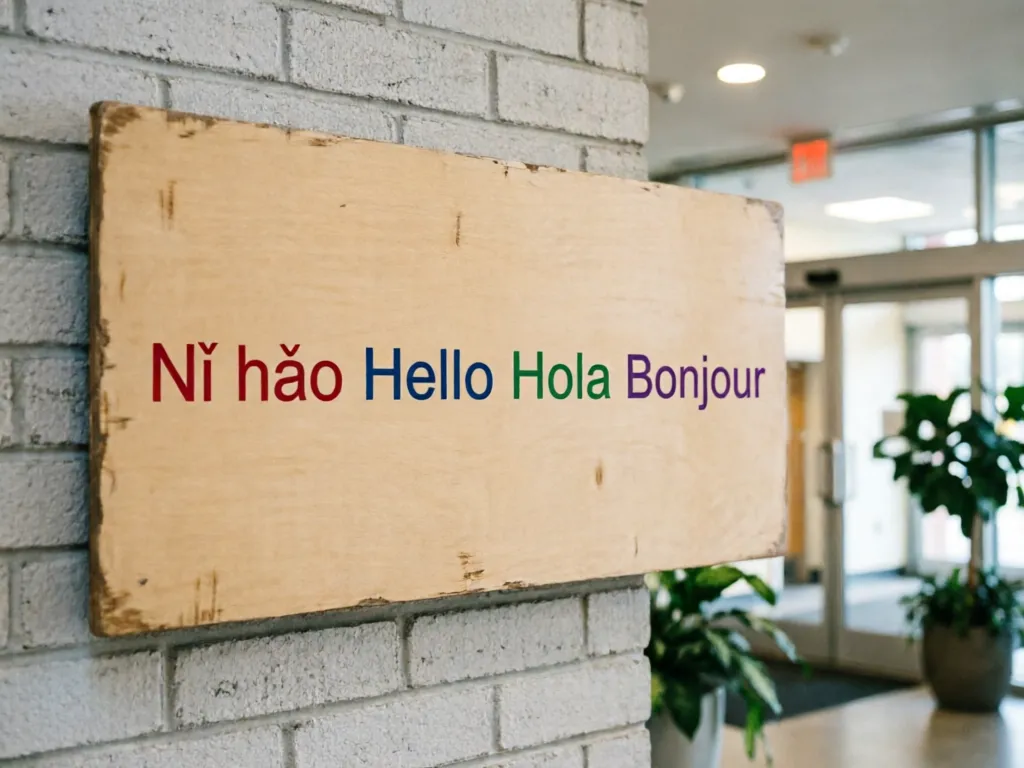 So don’t underestimate the hello in Mandarin. It’s not filler—it’s functional, relational, and cultural infrastructure. Every time you practice the Chinese hello pronunciation aloud, record yourself, compare with native audio, and adjust your tones, you’re building neural pathways for fluency. Every time you use a Mandarin greeting word appropriately—whether greeting a teacher, a vendor, or a new friend—you reinforce norms of reciprocity and respect. Start here, master this, and you’ll find that the rest of the language doesn’t feel like climbing a mountain—but walking up a well-marked, welcoming path.
The Essential Phrase: 'Nǐ hǎo' (Hello in Mandarin)
The essential phrase for saying hello in Mandarin is 'Nǐ hǎo' — the universal, polite, and widely recognized way to say hello in Mandarin. If you’re learning how to say hello in Chinese, this is your foundational Mandarin greeting word and the first of many basic Chinese phrases hello situations will require. Written in Chinese characters as 你好, it literally means 'you good' — a concise, respectful acknowledgment of the other person’s well-being. Pronouncing it correctly matters: 'Nǐ' (third tone) starts mid-pitch, dips low, then rises slightly; 'hǎo' (third tone again) follows the same contour. Though both syllables carry the third tone, when spoken together, the first tone shifts to a second tone (ní hǎo) in natural speech — a crucial tonal sandhi rule beginners often miss. So while you’ll see it written as nǐ hǎo, listen for and practice saying *ní hǎo* — like “knee how?” with rising inflection on “knee” and a falling-then-rising “how.” Tones are non-negotiable in Mandarin: mispronouncing them can turn 'hello in Mandarin' into something entirely different (e.g., nī hāo could mean 'dull hao,' ní hāo sounds like 'muddy hao,' and nì hào might mean 'to hate'). That’s why mastering the Chinese hello pronunciation isn’t optional — it’s the gateway to being understood. Use pinyin (the Romanized spelling system) as your guide: always pay attention to the tone marks over vowels — ǐ and ǎ here — not just the letters. Visually, 你好 is composed of two characters: 你 (nǐ/ní), meaning 'you,' and 好 (hǎo), meaning 'good' or 'well.' Neither character is pictographic, but their combination is instantly recognizable across all Chinese-speaking regions — from Beijing to Taipei to Kuala Lumpur. Unlike English greetings that vary by time of day ('good morning,' 'good evening'), 你好 works anytime, making it one of the most versatile common Chinese greetings. It’s appropriate for strangers, colleagues, teachers, and even elders — though for seniors or formal settings, adding a title like 'Lǎoshī nǐ hǎo' (Hello, Teacher) or 'Shūshu nǐ hǎo' (Hello, Uncle) adds cultural nuance. Don’t overcomplicate it: for absolute beginners, 'Nǐ hǎo' is your go-to basic Chinese phrases hello anchor. Skip the variations (like 'Nǐ hǎo ma?' — 'How are you?') until you’ve internalized this core form. Practice aloud daily — record yourself, compare with native audio (we recommend apps like HelloChinese or Forvo), and drill the tone shift: nǐ → *ní*, hǎo stays hǎo. Repeat five times slowly, then five times at conversational speed. Within days, you’ll produce it naturally. Remember: every fluent speaker started right here. Saying hello in Mandarin isn’t about perfection — it’s about respect, clarity, and connection. Once you’ve got ní hǎo down, you’ve unlocked access to real conversations, opened doors to deeper language learning, and joined millions who greet each other daily with this simple, powerful phrase. It’s more than a basic Chinese phrases hello starter — it’s your first confident step into the Mandarin-speaking world. Learn more: Summer Camp & Winner Camp | Chinese Language Immersion Programs.
Mastering Chinese Tones for Accurate Hello Pronunciation
Mastering Mandarin’s four tones is non-negotiable for saying hello in Mandarin correctly—because tone changes meaning, not just sound. The standard hello in Mandarin is ‘nǐ hǎo’ (你好), but mispronouncing its tones can turn your friendly greeting into something confusing or even nonsensical. Here’s how it works: ‘nǐ’ (you) carries the third tone—a dipping contour that starts mid, falls low, then rises slightly; ‘hǎo’ (good) uses the third tone too, though in connected speech it often shifts to a second-tone-like rise due to tone sandhi rules. Crucially, if you say ‘ní hǎo’ (second tone + third tone), you’re unintentionally saying ‘your good’—not a greeting at all. And ‘nī hǎo’ (first tone + third tone) sounds like ‘dust good’, while ‘nì hǎo’ (fourth tone + third tone) resembles ‘against good’. None mean ‘hello in Mandarin’. So how to say hello in Chinese accurately? Start by isolating each syllable: record yourself saying ‘nǐ’ while tracing a downward-then-upward motion with your finger (like a V-shape), and ‘hǎo’ with a clear rising arc (like drawing an upward slash ‘/’). Then practice them together slowly—‘nǐ… hǎo’—pausing between to reinforce tone shape before linking. Use minimal pairs: contrast ‘nǐ hǎo’ (hello) with ‘ní hǎo’ (your good), ‘nī hǎo’ (dust good), and ‘nì hǎo’ (against good) to train your ear. Apps like HelloChinese or Tandem offer instant tone feedback, and YouTube channels like Yoyo Chinese provide slowed-down native audio of common Chinese greetings. Remember: Mandarin greeting words rely entirely on pitch, not stress or vowel length. A flat, monotone ‘ni hao’—even with perfect consonants—won’t register as ‘hello in Mandarin’ to a native speaker. For basic Chinese phrases hello, prioritize tone accuracy over speed: speak deliberately, mirror native speakers’ mouth shapes (note how ‘nǐ’ involves slight tongue retraction and lip rounding), and exaggerate the pitch movement at first—it’s easier to refine than to rebuild from habit. Finally, when practicing Chinese hello pronunciation, pair each tone with a physical cue: third tone = hand dips then lifts; second tone = hand sweeps up; fourth tone = hand chops down sharply; first tone = hand glides horizontally. This kinesthetic anchor builds muscle memory faster than listening alone.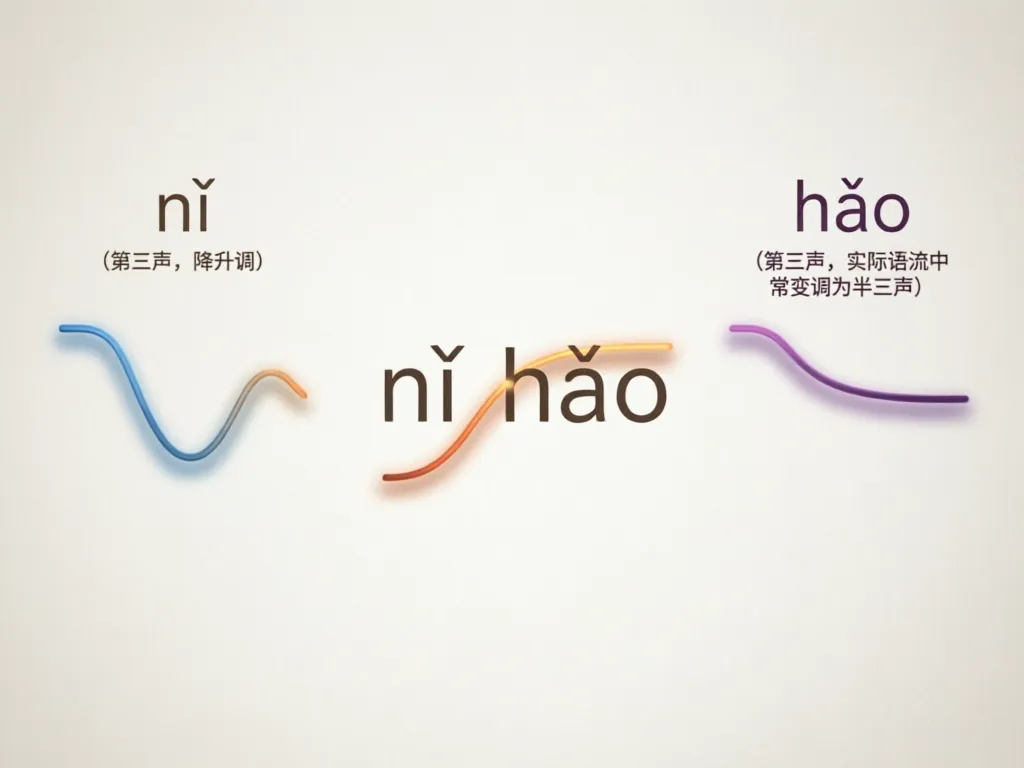 With consistent daily tone drills—even just 5 minutes using flashcards with tone marks (nǐ, hǎo)—you’ll internalize the melody of ‘nǐ hǎo’ so it feels natural, not forced. That’s how to say hello in Chinese with confidence, clarity, and cultural respect.
Beyond 'Nǐ hǎo': Other Mandarin Greeting Words for Different Contexts
While 'Nǐ hǎo' (pronounced /nee how/) is the go-to hello in Mandarin and the most reliable choice for beginners, relying solely on it can miss important social nuance. Knowing when and how to say hello in Chinese beyond this basic phrase helps you sound more natural, respectful, and culturally aware. Let’s explore key Mandarin greeting words used across different contexts — formal, informal, time-sensitive, and situational — with clear guidance on pronunciation, tone, and usage. For formal or respectful situations — such as addressing elders, teachers, clients, or strangers in professional settings — use 'Nín hǎo' (/neen how/). The character 'nín' replaces 'nǐ' to convey deference; the second tone on 'nín' is flat and high, unlike the rising second tone of 'nǐ'. This small shift makes a big difference: it signals politeness without overcomplicating your speech. It’s one of the most essential Mandarin greeting words for real-world interactions. Time-based greetings are equally practical. 'Zǎo' (/dzow/, with a falling-rising third tone) means 'good morning' and is widely used between ~6 a.m. and noon — especially in workplaces, schools, or neighborhoods. Unlike English, it stands alone; no need to add 'hǎo' or 'morning'. Say it warmly and briefly when passing a colleague or neighbor — it’s a friendly, efficient way to say hello in Mandarin during early hours. Similarly, 'Wǎnshàng hǎo' (/wahn-shung how/) — literally 'evening good' — serves as a polite, slightly more formal alternative to 'Nǐ hǎo' after 6 p.m., particularly in service settings or evening meetings. In relaxed, peer-to-peer exchanges — think texting friends, bumping into classmates, or casual hangouts — 'Hēi' (/hay/, first tone, flat and high) functions like 'Hey!' or 'Hi!'. It’s upbeat, neutral, and universally understood among younger speakers. Avoid it with superiors or elders unless invited to do so — context matters. Another informal favorite is 'Hāi' (/hi/, also first tone), borrowed from English but fully nativized in spoken Mandarin, especially among urban youth and online. Don’t overlook situational greetings. 'Chī le ma?' (/chir luh mah?/, 'Have you eaten?') isn’t literal small talk — it’s a warm, caring hello in Mandarin rooted in traditional hospitality. Use it with family, close friends, or neighbors (not in formal business). Likewise, 'Qù nǎr?' (/chew nur?/, 'Where are you going?') is a friendly, low-stakes opener during chance encounters — not an interrogation, but a culturally embedded form of acknowledgment. Pronunciation tip: All these basic Chinese phrases hello rely on accurate tones. Misplacing a tone — e.g., saying 'nǐ hǎo' with a fourth-tone 'nì' — could unintentionally mean 'you're good?' or even something nonsensical. Practice with audio tools or native speakers, and remember: clarity trumps perfection. Even saying 'Zǎo' with approximate tone beats staying silent. Mastering these common Chinese greetings doesn’t require memorizing dozens of phrases — just knowing which basic Chinese phrases hello fit which moment builds confidence and connection. Whether you’re learning how to say hello in Chinese for travel, work, or daily life, choosing the right Mandarin greeting word shows respect, awareness, and genuine effort — and that’s the true spirit behind every hello in Mandarin. Learn more: One-on-One Chinese Lessons | Personalized Mandarin Tutoring in Beihai.
Common Chinese Greetings for Time of Day and Occasions
Mastering how to say hello in Chinese goes beyond a simple ‘nǐ hǎo’—it’s about aligning your Mandarin greeting words with time, context, and cultural nuance. For beginners, understanding when and why to use specific greetings is just as important as learning the Chinese hello pronunciation. Let’s break down the most practical, time-sensitive and occasion-based common Chinese greetings. Time-of-day greetings are essential for polite daily interaction. ‘Zǎo shàng hǎo’ (pronounced /dzǎo shàng hǎo/, with falling-rising-falling tones) means ‘Good morning’ and is used from sunrise until roughly 10 a.m. It’s a warm, respectful alternative to the generic ‘nǐ hǎo’, especially with elders or in formal settings. After 10 a.m., switch to ‘Shàng wǔ hǎo’ (‘Good afternoon’) until about 4 p.m., though this phrase is less commonly used than its English counterpart—many native speakers default to ‘nǐ hǎo’ instead. From late afternoon into early evening (roughly 4–7 p.m.), ‘Xià wǔ hǎo’ is occasionally heard, but again, it’s not strictly required. Once dusk sets in, ‘Wǎn shàng hǎo’ (‘Good evening’) becomes appropriate—and crucially, it’s often used as a polite opener *before* parting, not just upon meeting. This reflects a broader cultural emphasis on harmony and timing: saying hello in Mandarin isn’t just an exchange—it’s a gesture calibrated to the rhythm of the day. Occasion-specific greetings carry even deeper weight. During Spring Festival, ‘Xīn Nián Kuài Lè’ (‘Happy New Year’) is the cornerstone greeting—but note: it’s pronounced /shin nyén kwài lè/, with careful attention to the rising tone on ‘xīn’ and the falling tone on ‘lè’. More authentically, many families prefer ‘Guò Nián Hǎo’ (‘Have a good year’), which feels warmer and more intimate. For Mid-Autumn Festival, ‘Zhōng Qiū Jié Kuài Lè’ (‘Happy Mid-Autumn Festival’) is standard, while Lunar New Year red envelope exchanges often include ‘Gōng Xǐ Fā Cái’ (‘Wishing you prosperity’)—a phrase that doubles as both greeting and blessing. Even birthday wishes shift: ‘Shēng Rì Kuài Lè’ is widely understood, but elders may receive ‘Fú Rú Dōng Hǎi, Shòu Bǐ Nán Shān’ (‘May your fortune be as vast as the East Sea, your life as long as the Southern Mountains’), illustrating how basic Chinese phrases hello evolve into layered expressions of respect. Importantly, tone accuracy matters more than speed. Mispronouncing ‘hǎo’ (good) as ‘háo’ (a different word meaning ‘good’ in some contexts but carrying unintended connotations) can cause confusion. Practice each greeting slowly, using tone marks: zǎo (3rd), shàng (4th), hǎo (3rd). And remember—while ‘nǐ hǎo’ remains the universal fallback, choosing the right time- or occasion-appropriate greeting signals genuine cultural awareness. That’s what transforms a basic Chinese phrases hello into a meaningful human connection.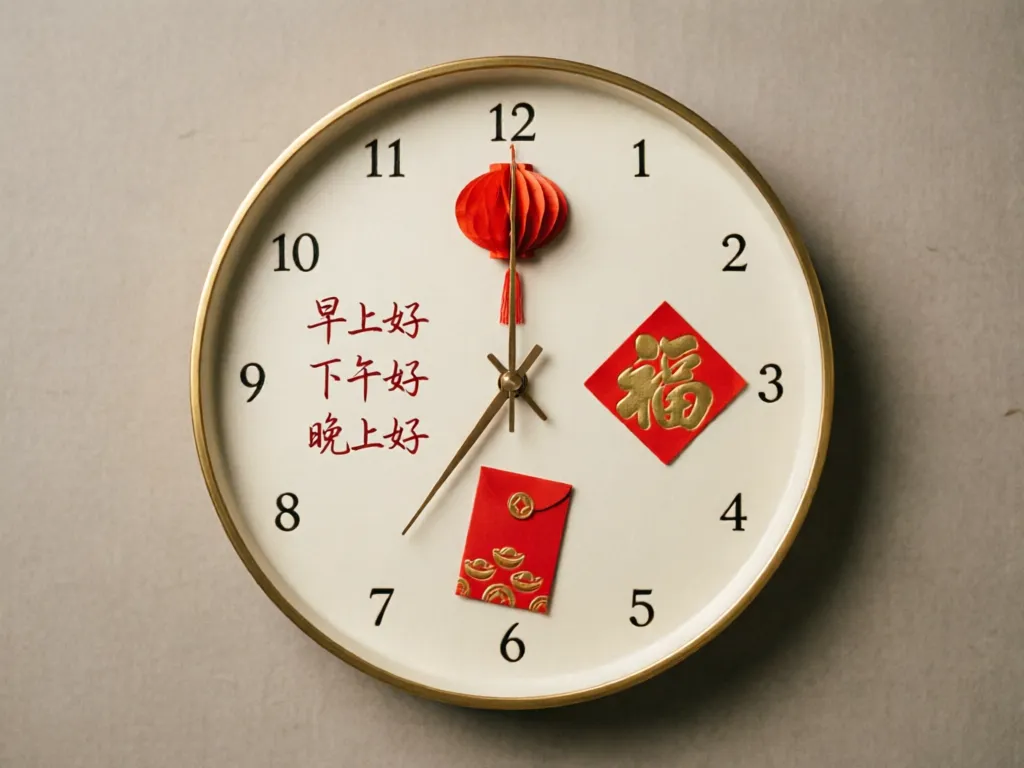
Body Language and Etiquette When Saying Hello in Chinese
When saying hello in Mandarin, your words are only half the message—body language and etiquette carry equal weight in Chinese culture. A warm but restrained smile is universally appropriate, but avoid overly broad or toothy grins, which can be perceived as insincere or overly familiar. Eye contact should be gentle and moderate: sustained staring is considered confrontational or impolite, while avoiding eye contact entirely may suggest shyness or dishonesty. Brief, respectful glances—especially when meeting elders or superiors—are ideal. Bowing is subtle in modern mainland China—not the deep 30°–45° bows seen in Japan—but a slight, natural nod of the head (about 10°–15°) conveys sincerity and humility. This nod often accompanies common Chinese greetings like ‘Nǐ hǎo’ (hello in Mandarin) or ‘Nǐ hǎo ma?’ (how are you?). In formal or traditional settings—such as meeting elders, teachers, or business partners—you may place your right fist lightly in your left palm (a gesture known as *zuoyou*, symbolizing respect and balance) before or during the nod. This isn’t required for casual interactions, but using it thoughtfully shows cultural awareness. Personal space expectations differ significantly from Western norms: Chinese people typically stand closer during greetings—roughly 1 to 1.5 feet apart—especially among peers or in crowded urban settings. Stepping back abruptly after saying ‘hello in Mandarin’ might unintentionally signal discomfort or disapproval. Likewise, touching—like patting the back or hugging—is rare in initial greetings and generally reserved for close family or long-standing friends. Handshakes are increasingly common in professional contexts, especially in cities like Beijing or Shanghai, but they’re usually lighter, shorter, and less firm than in the U.S. or Europe. Wait for the elder or higher-status person to extend their hand first. Also note vocal delivery: Mandarin greeting words like ‘Nǐ hǎo’ (pronounced /nee how/, with ‘hǎo’ in the third tone—falling-then-rising) should be spoken clearly but softly, never loudly or hurriedly. Rushed pronunciation undermines the polite intent behind basic Chinese phrases hello. Pausing briefly after saying ‘hello in Mandarin’—just half a second—gives space for the other person to reciprocate, reinforcing mutual respect. Finally, context matters deeply. In a university hallway, a quick ‘Nǐ hǎo’ with a nod suffices; at a family dinner introducing yourself to grandparents, add ‘Lǎo rén jiā hǎo’ (hello to the elders) with both hands lightly clasped and a deeper nod. Understanding these layers ensures your how to say hello in Chinese goes beyond phonetics—it becomes an act of cultural empathy. Whether you’re practicing Chinese hello pronunciation for the first time or refining your use of Mandarin greeting words, remember: every gesture, glance, and pause supports the meaning behind the words.Practice Tips for Using Basic Chinese Phrases Hello Confidently
Mastering how to say hello in Chinese isn’t just about memorizing ‘Nǐ hǎo’—it’s about building muscle memory, confidence, and cultural awareness through deliberate, daily practice. Start with **shadowing**: play a 30-second audio clip of a native speaker saying common Chinese greetings (e.g., ‘Nǐ hǎo’, ‘Nǐ hǎo ma?’, ‘Zǎo shàng hǎo’) from a trusted source like Yoyo Chinese or Mandarin Corner on YouTube, then immediately repeat *aloud*, matching rhythm, tone, and mouth shape—not just the words. Record yourself weekly and compare: this sharpens your Chinese hello pronunciation and reveals subtle tone shifts you might miss otherwise. Pair shadowing with **spaced-repetition flashcards**—use Anki or Quizlet to create cards where the front shows a context (e.g., ‘Meeting a colleague at work’) and the back displays the appropriate Mandarin greeting word (‘Nǐ hǎo’ for formal settings; ‘Hēi!’ for casual peers) plus pinyin, tones, and a brief usage note. Tag cards by formality level so you internalize when to use each basic Chinese phrases hello variation. Next, **integrate apps intelligently**: set your phone’s language-learning app (like HelloChinese or Tandem) to push one Mandarin greeting word per day as a notification—then reply *out loud* before swiping away. Bonus: enable voice recognition features to get instant feedback on your hello in Mandarin tone accuracy. Finally, seek **real-life practice opportunities**, even before you feel ‘ready’. Begin with low-stakes interactions: greet the barista at your local café with ‘Nǐ hǎo’ and a smile (no translation needed); text a language exchange partner ‘Nǐ hǎo! Wǒ shì [Your Name]. Jīntiān xiǎng liànxí nǐmen de wèn hòu yǔ.’ (Hello! I’m [Name]. Today I’d like to practice your greetings.). Many Chinese-speaking communities host free online ‘Hello Hour’ meetups—search Facebook Groups or Meetup.com for ‘Mandarin beginners greeting practice’. Remember: every time you use hello in Mandarin authentically—even if it’s just ‘Nǐ hǎo’ followed by a laugh—you reinforce neural pathways and normalize speaking. Avoid translating literally in your head; instead, associate ‘Nǐ hǎo’ with the *feeling* of opening a door or offering a handshake. Consistency beats perfection: five focused minutes daily (2 min shadowing + 1 min flashcards + 2 min real-world use) yields stronger retention than one hour of passive study. And don’t skip tone drills—practice the four tones using minimal pairs like ‘mā’ (mom), ‘má’ (hemp), ‘mǎ’ (horse), ‘mà’ (scold) alongside ‘Nǐ hǎo’ to anchor pitch contour. With these strategies, ‘hello in Mandarin’ becomes second nature—not a phrase you recite, but a reflex you trust.From Hello to Conversation: Next Steps After Your First Mandarin Greeting
Now that you’ve mastered the foundational hello in Mandarin—'Nǐ hǎo' (pronounced 'knee how', with a rising second tone on 'nǐ' and a falling-rising third tone on 'hǎo')—you’re ready to move beyond the greeting and begin real, meaningful exchanges. Knowing how to say hello in Chinese is just the doorway; what follows determines whether the conversation opens wide or closes politely. Start by pairing your hello in Mandarin with one of the most natural follow-up questions: 'Nǐ jiào shénme míngzi?' (What’s your name?), pronounced 'knee jee-ow shun-muh ming-dzuh?' This question uses the core Mandarin greeting words for personal connection—and it invites reciprocity. When answering, respond with 'Wǒ jiào…' (My name is…), followed by your name transliterated into Pinyin (e.g., 'Wǒ jiào Lǐ Míng'). Note that 'Wǒ' (I) carries a third tone, so practice the dip-and-rise contour to avoid sounding flat or abrupt. Next, add warmth and intentionality with 'Hěn gāoxìng rènshi nǐ' (Nice to meet you), pronounced 'hun gow-shing run-shir knee'. This phrase builds directly from your hello in Mandarin—it’s the social glue that transforms a formal exchange into a friendly one. Pay special attention to the 'r' sound in 'rènshi': it’s not English 'r', but a retroflex 'r'—lightly curled tongue, soft and buzzing, like a gentle hum. For beginners, it’s okay to approximate; clarity and sincerity matter more than perfection. To keep momentum, learn four essential question words: 'shénme' (what), 'nǎ' (which), 'shéi' (who), and 'zěnme' (how). These form the skeleton of countless basic Chinese phrases hello learners can deploy instantly—for example, 'Nǐ hǎo! Nǐ shì nǎ guó rén?' (Hello! Which country are you from?) or 'Zěnme qù zhàn? (How do I get to the station?). Each question word attaches seamlessly to subject–verb structures, reinforcing tone awareness and word order (subject–verb–object, just like English). Don’t overlook tone pairs—two-syllable words where tones interact. In 'Nǐ hǎo', the second-tone 'nǐ' shifts slightly before the third-tone 'hǎo', creating a smoother glide. Likewise, 'gāoxìng' (happy) combines first + fourth tones, requiring crisp pitch contrast. Record yourself saying 'Nǐ hǎo', 'Nǐ jiào shénme míngzi?', 'Wǒ jiào…', and 'Hěn gāoxìng rènshi nǐ' daily—even 60 seconds builds muscle memory. Finally, remember: common Chinese greetings aren’t just about vocabulary—they’re cultural entry points. A slight bow of the head, relaxed eye contact, and speaking at moderate pace signal respect far more than flawless pronunciation. Your hello in Mandarin opens the door; these next phrases invite you inside. Practice them aloud—not as isolated terms, but as connected, breathing exchanges. That’s how 'hello in Mandarin' becomes your first real conversation in Chinese.Quick Reference: Mandarin Greeting Cheat Sheet
| Greeting | Pinyin | Literal Meaning | Usage Note |
|---|---|---|---|
| 你好 | Nǐ hǎo | You good | Universal, informal to formal |
| 您好 | Nín hǎo | You (honorific) good | Respectful, for elders or superiors |
| 早上好 | Zǎoshang hǎo | Morning good | Used before noon only |
| 再见 | Zàijiàn | See again | Standard farewell, neutral tone |
FAQ
What is the most common and polite way to say 'hello' in Mandarin?
Nǐ hǎo (你好) is the standard, universally appropriate greeting for 'hello' in Mandarin—used in both formal and informal contexts with people of all ages.
How do you greet someone older or in a position of authority respectfully?
You can add titles like Lǎoshī (teacher), Xiānsheng (Mr.), or Nǚshì (Ms.) after Nǐ hǎo—for example, 'Nǐ hǎo, Lǎoshī!'—to show respect and cultural awareness.
Is it necessary to use tones when saying 'hello' in Mandarin?
Yes—tones are essential. 'Nǐ hǎo' uses the third tone on 'nǐ' (falling-rising) and the third tone on 'hǎo' (falling-rising); mispronouncing tones can change meaning or cause confusion.
What’s the difference between 'Nǐ hǎo' and 'Nǐ hǎo ma?'?
'Nǐ hǎo' means 'Hello', while 'Nǐ hǎo ma?' (with rising intonation) literally asks 'Are you well?', functioning as a friendly, conversational 'How are you?'; it’s commonly used informally but not expected to be answered literally.
Do Chinese speakers commonly greet with handshakes or bows like in other cultures?
No—traditional Mandarin greetings rarely involve physical contact; a slight nod, smile, or verbal 'Nǐ hǎo' suffices. Handshakes are increasingly accepted in business settings but are not required or customary in daily interactions.