Chinese 手脚 literally means hands and feet
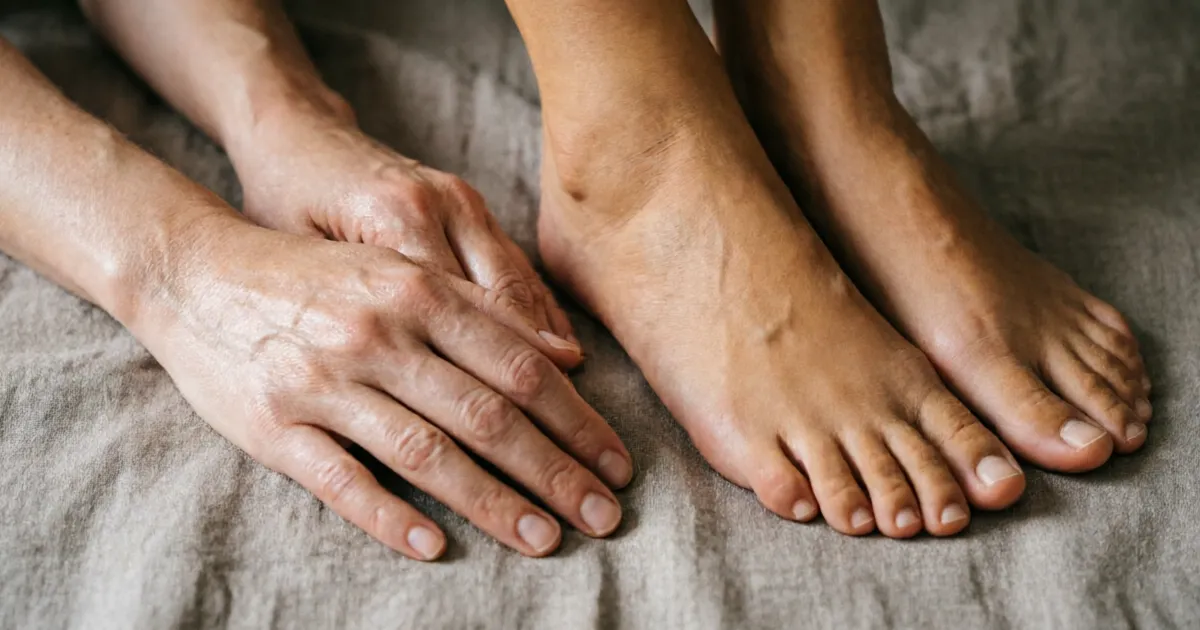
Table of Contents [hide]
- What Does Shou Jiao Mean in Chinese?
- The Literal Meaning of Shou Jiao in Chinese
- Shou Jiao in Everyday Chinese Body Part Vocabulary
- Beyond Anatomy: Figurative Uses of Shou Jiao
- Shou Jiao in Idioms and Proverbs
- Pronunciation, Tones, and Writing Practice
- Cultural Notes: Why Hands and Feet Are Paired in Chinese
- Teaching Shou Jiao in the Classroom: Tips for Learners and Educators
- Shou Jiao at a Glance: Core Facts and Usage Summary
- FAQ
What Does Shou Jiao Mean in Chinese?
The Chinese term shou jiao (手脚) is a compound noun formed by two independent characters: shǒu (手), meaning 'hand', and jiǎo (脚), meaning 'foot' or 'leg'. Literally, shou jiao translates to 'hands and feet'—a straightforward, concrete expression rooted in the physical body. This is the foundational Chinese shou jiao meaning: a dual-body-part term that appears frequently in everyday speech, medical contexts, martial arts instruction, and idiomatic expressions. To understand what does shou jiao mean in Chinese, it’s essential to recognize that each character carries precise anatomical reference: shǒu denotes the entire upper limb distal to the wrist—including palm, fingers, and thumb—while jiǎo refers broadly to the lower limb below the hip, commonly used for 'foot' in colloquial usage (though technically encompassing ankle, sole, toes, and sometimes calf). Unlike English, where 'feet' is plural by default, jiǎo is grammatically singular but contextually flexible; shou jiao as a pair inherently implies plurality and coordination—hands *and* feet working in tandem. As part of Chinese body part vocabulary shou jiao, it belongs to a core lexical set that includes yǎn (eye), ěr (ear), kǒu (mouth), and tóu (head)—all monosyllabic, high-frequency nouns taught early in language learning. The literal meaning of shou jiao Chinese is thus unambiguous: no metaphor, no abstraction—just the human extremities required for manipulation and locomotion. Yet this literal clarity belies its functional richness: in Traditional Chinese Medicine, shou jiao are viewed as key conduits for qi circulation; in kung fu, drills emphasize shou jiao coordination for balance and power generation; and in daily life, parents tell children to 'use your shou jiao' when encouraging active participation—not just physically, but attentively. It’s worth noting that while shou jiao literally means 'hands and feet', it rarely appears in isolation without context. You’ll hear it in phrases like shou jiao bìng (hands-and-feet illness, i.e., hand-foot-and-mouth disease), shou jiao xiān (hands-and-feet fresh—meaning 'physically alert'), or shou jiao bù xián ('hands and feet not idle', i.e., industrious). This underscores how even basic Chinese words hands and feet explanation reveals cultural priorities: embodiment, action, and tangible engagement with the world. Pronunciation matters too—shǒu is third tone (falling-rising), jiǎo is third tone when standalone but often shifts to second tone (jiáo) in compounds due to tone sandhi rules, though many native speakers retain the original tone in careful speech. For learners, mastering shou jiao isn’t just about memorizing two characters—it’s anchoring vocabulary in kinesthetic reality. Try tracing the stroke order: shǒu (4 strokes, pictograph of a hand with extended fingers) and jiǎo (11 strokes, combining 'flesh' radical yue 月 with 'to cut' quē 卩—evoking the foot’s role in stepping and grounding).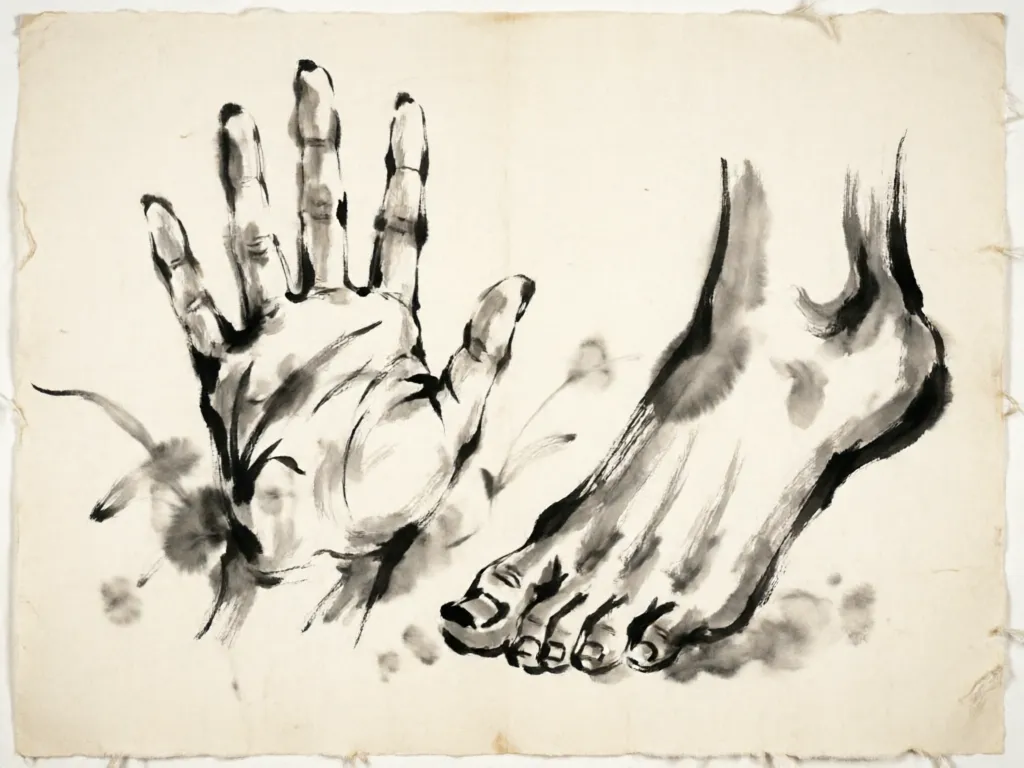
The Literal Meaning of Shou Jiao in Chinese
The Chinese term 手脚 (shǒu jiǎo) is a compound noun formed from two monosyllabic morphemes: 手 (shǒu), meaning 'hand', and 脚 (jiǎo), meaning 'foot'. Neither character carries abstract or metaphorical weight in isolation—both are concrete, anatomically precise nouns rooted in classical Chinese body-part vocabulary. 手 appears in oracle bone inscriptions over 3,000 years old, consistently depicting the five-fingered upper limb; its modern form preserves the pictographic essence of an outstretched palm with fingers. 脚, though slightly younger in written attestation, evolved from the older character 足 (zú, 'foot' or 'leg') and specifically denotes the lower extremity distal to the ankle—the foot itself, including toes and sole. Crucially, 脚 does not mean 'leg' in contemporary Standard Mandarin; that role belongs to 腿 (tuǐ). This distinction matters: when paired as 手脚, the term refers strictly to the distal, manipulative, and locomotive endpoints of the human body—not limbs broadly, but hands and feet in Chinese meaning as discrete, functional units. This pairing reflects a deep-seated linguistic pattern in Chinese morphology: binary body-part compounds that denote complementary, symmetrical, and functionally coordinated extremities. Other examples include 头脚 (tóu jiǎo, 'head and feet') or 眼耳 (yǎn ěr, 'eyes and ears'), but 手脚 stands out for its semantic cohesion—hands and feet share roles in interaction, expression, and agency. They are the primary interfaces between the body and the world: grasping, gesturing, stepping, balancing, kicking, writing, dancing. Their pairing isn’t arbitrary; it’s grounded in embodied cognition and observable biomechanics. In everyday usage, the Chinese shou jiao meaning extends beyond anatomy—e.g., in idioms like 暗中搞手脚 (àn zhōng gǎo shǒu jiǎo, 'to secretly manipulate things'), where the literal meaning of shou jiao Chinese underpins the figurative sense of covert physical interference. Yet even there, the foundation remains tangible: hands and feet are instruments of action. Understanding this literal meaning of shou jiao Chinese is essential for learners navigating Chinese body part vocabulary shou jiao—it reveals how morphological transparency supports both lexical acquisition and cultural insight. What does shou jiao mean in Chinese? At its core: the paired, dexterous, grounded extremities that anchor human movement and intention. As a foundational phrase in Chinese words hands and feet explanation, 手脚 exemplifies how precision in naming reflects precision in perception—where every stroke, every sound, and every pairing serves a logical, observable, and deeply human purpose.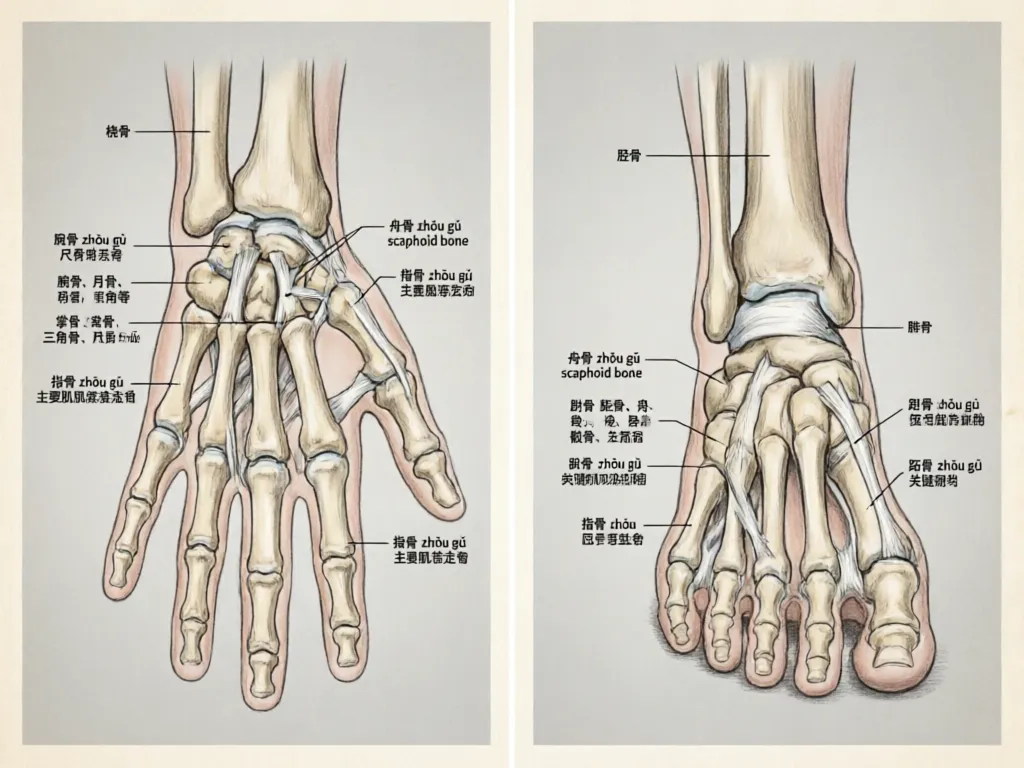 Learn more: Chinese Homestay in Beihai | Immersive Language Learning Accommodation.
Shou Jiao in Everyday Chinese Body Part Vocabulary
In Chinese body part vocabulary, shou jiao (手脚) stands out not as a single anatomical unit—but as a compound noun that literally means 'hands and feet'—a pairing rooted in functional synergy rather than structural adjacency. Unlike tóu (头, head), yǎn (眼, eye), or zuǐ (嘴, mouth), which denote discrete, highly localized organs with singular semantic weight, shou jiao operates as a dual-element lexical unit reflecting coordinated physical agency: hands manipulate, feet locomote, and together they embody volitional action—both literal and figurative. This distinction is critical for learners: while tóu, yǎn, and zuǐ are taught early as isolated nouns with clear singular referents, shou jiao requires grasping the grammatical and cultural logic of binomial compounds—a hallmark of Chinese shou jiao meaning. What does shou jiao mean in Chinese? At its core, it’s the lexical shorthand for the body’s primary instruments of interaction with the world: manual dexterity and ambulatory control. The hands and feet in Chinese meaning aren’t just limbs; they’re metonymic anchors for intentionality—hence idioms like ‘shǒujiǎo bù gānjìng’ (手脚不干净, ‘hands and feet not clean’) implying dishonesty or covert manipulation. Structurally, shou (手) and jiao (脚) are both Level 1 HSK characters, yet their compound usage appears only from HSK 4 onward—not because it’s complex, but because its pragmatic force emerges only when learners encounter context-driven usage: e.g., ‘tā zài hòuhòu de shǒujiǎo’ (他在后后的手脚, ‘he’s been pulling strings behind the scenes’). This contrasts sharply with tóu, which functions independently in phrases like ‘tóu tòng’ (headache) or ‘yǒu tóu xùn’ (to have sense), and yǎn, which combines productively but differently (e.g., yǎn jīng 眼睛, ‘eyes’, a reduplicated form emphasizing paired perception). Notably, no equivalent compound exists for ‘head and mouth’ or ‘eyes and ears’—underscoring that shou jiao isn’t arbitrary; it reflects embodied cognition prioritizing motor output over sensory input. In pedagogical terms, Chinese words hands and feet explanation must emphasize collocation patterns: shou jiao rarely appears without modifiers (e.g., ‘má fán de shǒujiǎo’, ‘troublesome hands-and-feet’) or in set expressions, unlike zuǐ, which freely heads verb phrases (zuǐ shuō, ‘to speak’). Mastery hinges on recognizing that the literal meaning of shou jiao Chinese isn’t merely anatomical—it’s a semantic frame for human intervention: visible, tangible, and often morally charged. For learners navigating Chinese body part vocabulary shou jiao, this means moving beyond rote memorization to interpret how grammar encodes cultural assumptions about agency, transparency, and bodily ethics.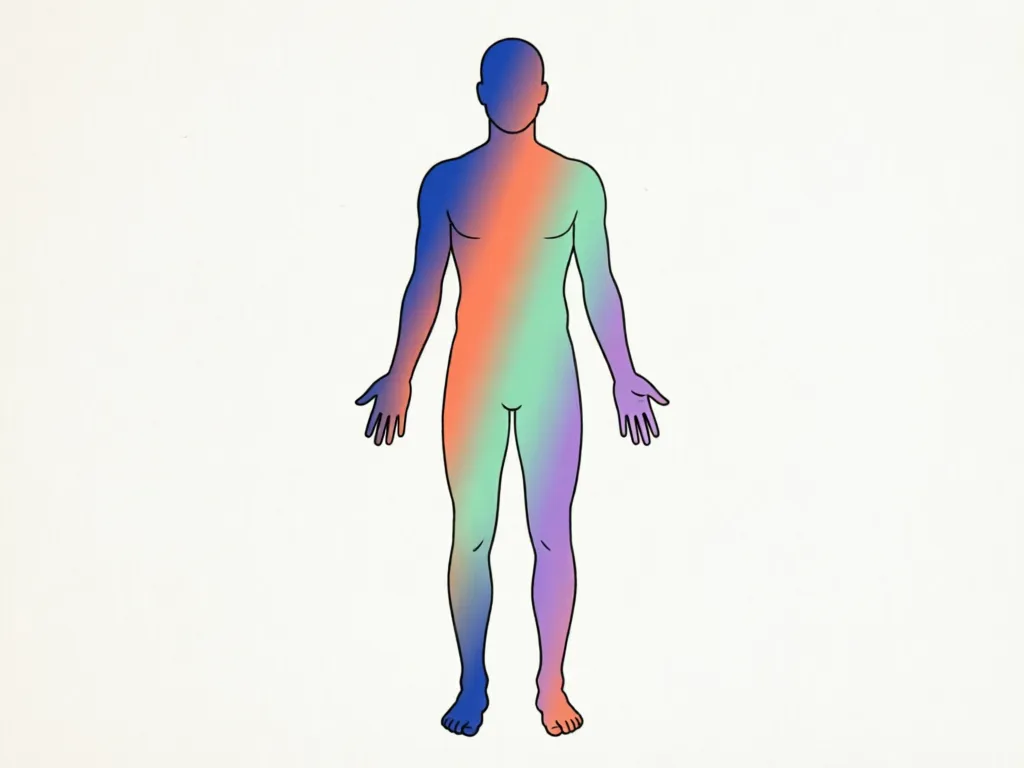
Beyond Anatomy: Figurative Uses of Shou Jiao
Beyond its literal meaning of 'hands and feet'—the straightforward Chinese shou jiao meaning rooted in basic body part vocabulary—shou jiao functions powerfully as a metaphor for physical involvement, initiative, or even discreet action. What does shou jiao mean in Chinese beyond anatomy? In everyday usage, it signals *doing*, not just thinking: when someone says 'tā zài shou jiao', they’re not describing limb movement but signaling that the person is rolling up their sleeves, stepping in, or getting things done—often with tangible, hands-on effort. This figurative extension arises naturally from the literal meaning of shou jiao Chinese: hands and feet are our primary instruments for interaction with the world, so naming them collectively evokes agency, presence, and exertion. In idioms like 'shou jiao bìng yòng' (hands and feet used together), the phrase underscores coordinated, whole-body engagement—commonly applied to teamwork, craftsmanship, or crisis response. Less visibly, shou jiao also carries connotations of covert activity: in contexts like 'tā men zài bèi hòu zuò shou jiao' ('they’re doing shou jiao behind the scenes'), the term implies unseen labor—logistics, setup, or quiet maneuvering—that enables visible outcomes. This duality reflects how Chinese body part vocabulary shou jiao operates: grounded in concrete physiology yet elastic enough to encode intention, scale, and even moral valence. Notably, shou jiao rarely appears alone in formal writing; it thrives in colloquial speech, news headlines about grassroots efforts ('cūn mín qǐ dòng shou jiao, gǎi zào lǎo jiù cūn zhuāng'), or workplace slang ('bù néng zhǐ kǒu tóu shuō, yào zhēn zhèng dòng shou jiao'). Crucially, it’s distinct from synonyms like 'cāo zuò' (operation) or 'zhí xíng' (implementation): shou jiao emphasizes *embodied* action—the sweat, timing, and tactile reality of participation. Understanding this nuance clarifies why learners often misinterpret early encounters with the term: hearing 'shou jiao' in a political report about infrastructure rollout doesn’t refer to construction workers’ limbs, but to the broad, coordinated mobilization of human effort across regions and roles. As a Chinese words hands and feet explanation reveals, the phrase collapses distance between agent and action—it’s never abstract. Whether building a school, organizing a protest, or troubleshooting a server outage, 'shou jiao' names the indispensable, often unglamorous work that bridges plan and reality. So next time you hear shou jiao invoked, look past the literal meaning of shou jiao Chinese—past the anatomical image—and ask: *whose hands are gripping, whose feet are moving, and what unseen structure are they holding together?*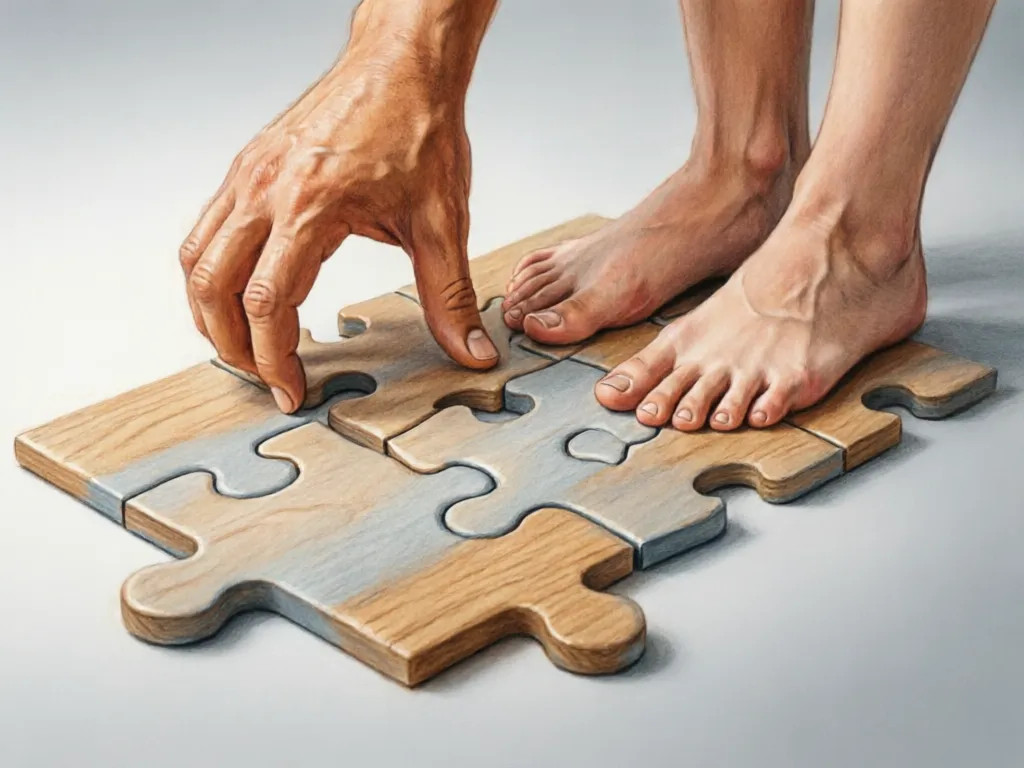 Learn more: Flexible Chinese Classes | Flexi Classes - Group Chinese Classes in Beihai.
Shou Jiao in Idioms and Proverbs
The phrase 手脚 (shǒu jiǎo) — literally meaning 'hands and feet' in Chinese — operates far beyond its anatomical denotation in idiomatic usage. While the Chinese shou jiao meaning begins with the most basic body part vocabulary — shǒu (hand) and jiǎo (foot/leg) — its idiomatic force emerges precisely from this physical grounding: hands and feet are instruments of action, agency, and intervention. What does shou jiao mean in Chinese when stripped of context? Simply 'hands and feet in Chinese meaning' — a neutral compound in Chinese body part vocabulary shou jiao. But in moral or behavioral expressions, it transforms into a potent metonym for covert, often unethical, physical involvement. Take 手脚不干净 (shǒu jiǎo bù gānjìng), literally 'unclean hands and feet'. Here, the literal meaning of shou jiao Chinese is deliberately invoked to evoke tactile contamination: not dirt, but moral stain — the act of stealing, cheating, or manipulating behind the scenes. A clerk who tampers with invoices doesn’t just 'falsify records'; they ‘use dirty hands and feet’. Similarly, in 打手脚 (dǎ shǒu jiǎo, 'to strike hands and feet'), the phrase implies obstructing someone’s actions physically or bureaucratically — not through open confrontation, but by tripping up their operational capacity. The idiom 手脚利落 (shǒu jiǎo lìluò, 'nimble hands and feet') flips the valence: it praises efficiency and dexterity, especially in skilled labor or quick-witted problem-solving — again anchoring virtue in bodily competence. This duality reveals a core principle of Chinese words hands and feet explanation: shǒu jiǎo never refers to limbs alone; it indexes *how* agency is enacted — whether ethically (clean, swift, precise) or corruptly (clandestine, grasping, destabilizing). Historical texts reinforce this: in Ming dynasty legal codes, 'having hands and feet' was synonymous with having the means and opportunity to commit fraud. Even modern anti-corruption campaigns deploy 手脚 as shorthand — e.g., 'cutting off illegal hands and feet' (斩断非法手脚) — underscoring that shǒu jiǎo represents actionable leverage, not passive anatomy. Crucially, no equivalent English idiom maps cleanly onto shǒu jiǎo: 'getting one’s hands dirty' hints at it, but lacks the paired bodily logic and the full behavioral spectrum — from craftsmanship to sabotage. Understanding shǒu jiǎo thus demands attention to its dual scaffolding: the concrete Chinese body part vocabulary shou jiao (hands = manipulation, feet = movement/positioning), and the cultural weight assigned to embodied intention. When a teacher warns a student, 'Don’t let your hands and feet wander' (别让手脚乱动), she isn’t policing posture — she’s invoking centuries of linguistic habit where shǒu jiǎo signifies the boundary between permissible action and transgressive interference. To master this term is to recognize how Chinese moral grammar encodes ethics not in abstract principles, but in the very grammar of the body in motion.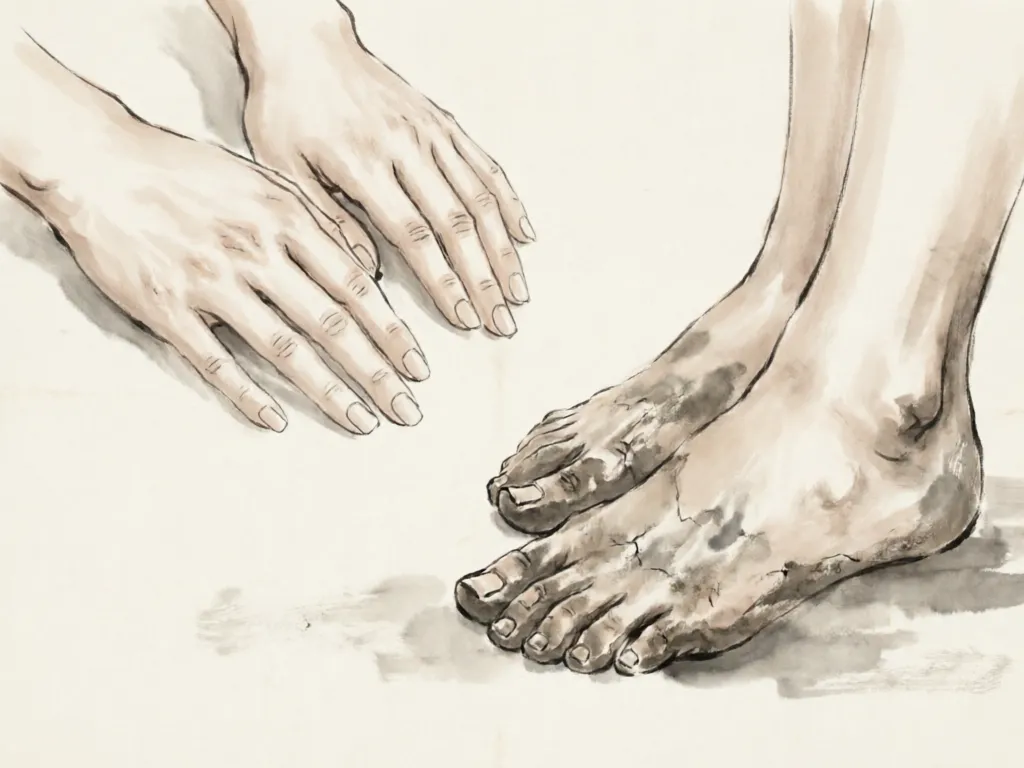 Learn more: Contact RPL School | Get in Touch for Chinese Language Courses.
Pronunciation, Tones, and Writing Practice
Mastering the pronunciation and writing of 手 (shǒu) and 脚 (jiǎo) is essential to understanding the Chinese shou jiao meaning — literally “hands and feet in Chinese meaning.” What does shou jiao mean in Chinese? At its core, it’s a compound noun rooted in Chinese body part vocabulary: shou jiao. Its literal meaning of shou jiao Chinese reflects two fundamental anatomical terms — no idiomatic twist, no hidden metaphor. This makes it an excellent entry point for learners building foundational Chinese words hands and feet explanation skills. Pronunciation starts with tone accuracy. Shǒu (手) is third tone — a falling-then-rising contour, like saying “huh?” with rising curiosity. Practice by starting low, dipping lower, then lifting sharply: *shǒu* — not “show” (which is first tone). Jiǎo (脚) is also third tone, but often mispronounced as “jiao” without the dip-rise. Say it like “jyow?” with audible curvature: *jiǎo*. Together: shǒu jiǎo — both characters carrying that distinctive third-tone ‘hook.’ Record yourself and compare with native audio clips; subtle tone errors can shift meaning entirely (e.g., jiāo = “to teach,” jiǎo = “foot”). For writing, stroke order matters deeply — it affects legibility, speed, and memory retention. 手 (shǒu, “hand”) has 4 strokes: 1) horizontal line (—), 2) left-falling diagonal (/), 3) right-falling diagonal (\), 4) downward vertical (|) — forming a simplified, open palm shape. Think: “roof → left finger → right finger → wrist.” 脚 (jiǎo, “foot”) is more complex at 11 strokes, built from the radical 肉 (ròu, “flesh”) on the left and 却 (què) on the right. Begin with the “flesh” radical: 1–4 strokes form the squarish, slightly tilted “moon” shape (⺼); then write 却 step-by-step — start with the “going” radical (辶) last, wrapping under the upper component. Avoid rushing the final stroke of 辶 — it must curve smoothly and extend just past the character’s base. Handwriting tip: Use grid paper to maintain proportion. 手 should be compact and balanced; 脚 needs clear separation between left (flesh) and right (sound) components. Trace slowly five times per character, saying the pinyin and tone aloud each time. Consistency beats speed — aim for clean, tonally anchored repetition. Remember: every time you write 手 or 脚, you’re reinforcing the Chinese body part vocabulary shou jiao — grounding abstract language in physical reality. That tactile repetition cements both form and function. As you practice, ask yourself: Does this match the literal meaning of shou jiao Chinese? Yes — hands and feet, precisely. No embellishment, no abstraction — just clarity, one stroke, one tone, one meaning at a time.Cultural Notes: Why Hands and Feet Are Paired in Chinese
In Chinese culture, the pairing of shou (hands) and jiao (feet) is far more than a lexical convenience—it reflects a foundational worldview rooted in functional duality, cosmological balance, and embodied philosophy. The Chinese shou jiao meaning—literally 'hands and feet'—encapsulates a holistic understanding of human agency: hands grasp, shape, and transmit intention; feet ground, propel, and anchor movement. This complementary division echoes the yin-yang principle: hands (shou), often associated with yang qualities—active, outward, expressive—are paired with feet (jiao), which carry yin attributes—receptive, structural, foundational. Historically, classical texts reinforce this pairing: the *Zuo Zhuan* (c. 4th century BCE) uses 'shou jiao' metaphorically to denote 'all limbs' or 'entire physical capacity', as in 'exhausting shou jiao' to describe total bodily exertion in service or labor. Similarly, Confucian ritual texts emphasize proper shou jiao posture during rites—hands held in respectful symmetry while feet maintain precise alignment—underscoring that moral cultivation manifests through coordinated bodily discipline. What does shou jiao mean in Chinese beyond anatomy? It signals integrity of action: to 'use shou jiao well' implies ethical, skillful, and harmonious engagement with the world. In Traditional Chinese Medicine (TCM), this pairing gains physiological depth: the twelve primary meridians originate or terminate in the extremities—six yin channels end in hands, six yang channels end in feet (and vice versa for their origins), making shou jiao critical access points for diagnosis and treatment. Acupoints like Hegu (LI4) on the hand and Taichong (LV3) on the foot are routinely paired to regulate liver qi or calm the shen—demonstrating how the hands and feet in Chinese meaning serve as microcosmic gateways to systemic balance. Linguistically, Chinese body part vocabulary shou jiao stands apart from isolated terms like 'zhi' (fingers) or 'zu' (foot alone): it functions as a fixed binomial compound, resisting reordering ('jiao shou' is ungrammatical), reflecting its conceptual unity. This grammatical rigidity mirrors its cultural weight—the literal meaning of shou jiao Chinese isn’t merely anatomical inventory but a compact symbol of integrated human function. Even modern idioms preserve this resonance: 'shou jiao bing yong' (hands and feet used together) denotes seamless teamwork, while 'shou jiao bu ling' (hands and feet unresponsive) diagnoses neurological or energetic stagnation—not just motor impairment, but a rupture in somatic coherence. Understanding shou jiao thus requires moving past the surface-level Chinese words hands and feet explanation: it invites recognition of how language encodes embodiment, ethics, and ecology in one concise phrase.Teaching Shou Jiao in the Classroom: Tips for Learners and Educators
Teaching shou jiao (手 and 脚) in the classroom offers a rich entry point into Chinese body part vocabulary—especially because its literal meaning of “hands and feet” makes it highly visual, memorable, and culturally resonant. To maximize learning, start with gesture-based anchoring: have students physically tap their hands while saying shǒu (with a rising tone), then stomp gently while uttering jiǎo (with a falling-rising tone). This kinesthetic pairing reinforces tone accuracy and motor memory. For mnemonics, link shǒu to the character’s shape—a simplified pictograph of a hand with outstretched fingers—and jiǎo to its radical 足 (zú), meaning “foot,” which appears in related terms like zúqiú (football). Emphasize that the Chinese shou jiao meaning isn’t idiomatic here; it’s deliberately literal—what does shou jiao mean in Chinese? Simply: “hands and feet.” That clarity is pedagogical gold: learners grasp early that compound nouns in Chinese often stack meanings directly, unlike English phrasal equivalents. Common errors include tone misplacement (shōu instead of shǒu) and confusing jiǎo with jiāo (to teach) or jiǎo (horn)—so build quick contrast drills: “Shǒu jiǎo (hands and feet) vs. jiāo xué (to teach) vs. niú jiǎo (cow horn). Integrate shou jiao into broader Chinese body part vocabulary by mapping it on a labeled body diagram: place shǒu at the wrists, jiǎo at the ankles, then scaffold upward (bózi, neck) and downward (dàtuǐ, thigh). Use sentence frames like “Wǒ yòng shǒu lái xiě” (I use my hand to write) and “Tā yòng jiǎo tī qiú” (He kicks the ball with his foot) to embed usage contextually. Crucially, clarify that while shou jiao literally means “hands and feet in Chinese meaning,” it rarely appears alone as a phrase—it’s most useful as a paired lexical unit for teaching radicals, tones, and compounding logic. For educators, pre-teach the characters’ stroke orders using animated GIFs or whiteboard tracing; for learners, assign a ‘body journal’ where they sketch themselves performing daily actions (e.g., brushing teeth with shǒu, walking with jiǎo) and label each in pinyin and characters. Finally, leverage the literal meaning of shou jiao Chinese to spark cross-linguistic reflection: compare how English uses “hand and foot” idiomatically (“lend a hand and foot”), whereas Chinese keeps it concrete—reinforcing how language shapes perception of the body. With consistent gesture practice, error-focused repetition, and contextual scaffolding, shou jiao becomes more than vocabulary—it’s a tactile gateway to tone, character literacy, and embodied cognition.Shou Jiao at a Glance: Core Facts and Usage Summary
| Term | Literal Meaning | Figurative Use |
|---|---|---|
| 手 (shǒu) | hand | symbolizes skill, action, or agency (e.g., 手段 'means/methods') |
| 脚 (jiǎo) | foot/leg | implies foundation, movement, or support (e.g., 脚跟 'heel' → 'support base') |
| 手脚 (shǒu jiǎo) | hands and feet | colloquial for covert activity or underhanded manipulation |
| 成语例 (idiom example) | — | 暗中手脚 (àn zhōng shǒu jiǎo) — 'secret maneuvers' |
FAQ
Why does the Chinese term 手脚 (shǒu jiǎo) literally mean "hands and feet" but often imply dishonesty or underhanded behavior?
The article explains that while 手脚 is a literal compound of "hand" (手) and "foot" (脚), its figurative meaning evolved from the physical actions these body parts perform—sneaking, manipulating, or covertly handling things—leading to idiomatic use for secret, deceptive, or illicit activity.
Does 手脚 always carry a negative connotation in Mandarin?
No—the article notes that 手脚 can be neutral or even positive in certain contexts, such as in martial arts (e.g., 手脚功夫, "hand-and-foot skills") or when describing physical coordination, though negative usage dominates in everyday idioms like 暗中做手脚 ("to tamper secretly").
How does the article connect 手脚 to broader Chinese linguistic patterns?
The article highlights how 手脚 exemplifies Mandarin’s preference for concrete, bodily metaphors to express abstract concepts—a pattern also seen in terms like 心眼 ("heart-eyes," meaning cunning) and 脸面 ("face-surface," meaning dignity or social standing).
Are there common collocations with 手脚 mentioned in the article?
Yes—the article lists frequent phrases including 做手脚 ("to rig/tamper"), 有手脚 ("there’s foul play"), and 没有手脚 ("completely aboveboard"), emphasizing how the noun functions primarily in verb-object constructions conveying intentionality and concealment.
Does the article discuss regional or historical variations in the usage of 手脚?
Yes—it traces 手脚’s documented use back to Ming- and Qing-dynasty vernacular literature, noting consistent negative valence in classical texts, while observing that modern Northern Mandarin dialects retain stronger idiomatic force than some Southern varieties where literal meanings occasionally prevail.