Chinese Idiom Story – 花好月圆 (huā hǎo yuè yuán)
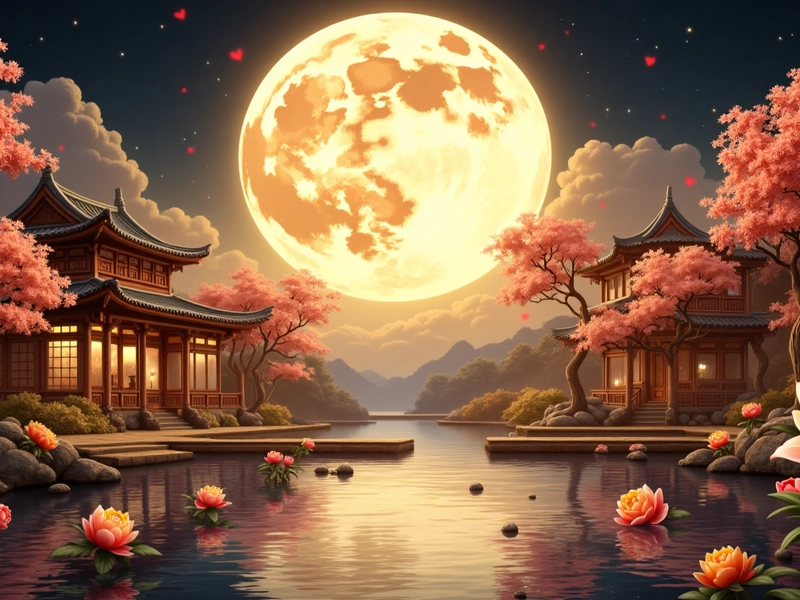
What Does 花好月圆 Mean in Chinese Idioms?
The Chinese idiom 花好月圆 (huā hǎo yuè yuán) literally means “flowers are beautiful and the moon is full.”
Literal meaning: Beautiful flowers and a full moon.
Figurative meaning: Symbolizes happiness, harmony, and a perfect life; often used to convey good wishes during festive occasions, especially the Mid-Autumn Festival.
In Chinese idiom study, huā hǎo yuè yuán is associated with family reunion, joy, and festive celebrations. It is commonly used in idiom usage, greetings, and cultural contexts during traditional Chinese festivals.
The Idiom Story Behind 花好月圆
The idiom 花好月圆 originates from classical Chinese poetry and folklore, where flowers in full bloom and a round moon are symbols of completeness and happiness. During the Mid-Autumn Festival, families gather to admire the full moon and celebrate together, reflecting the meaning of the idiom.
In Chinese culture, flowers symbolize beauty and prosperity, while the full moon symbolizes reunion and harmony. Thus, huā hǎo yuè yuán is often used in festive greetings to express blessings for love, family happiness, and a peaceful life.
Summary
- Idiom: 花好月圆
- Pinyin: huā hǎo yuè yuán
- Literal meaning: Flowers are beautiful and the moon is full.
- Figurative meaning: Symbolizes happiness, harmony, and a perfect life; often used to convey good wishes during festivals like the Mid-Autumn Festival.
Character Introduction
Cultural Symbolism: This idiom does not refer to specific historical figures but is closely tied to Chinese cultural traditions. Understanding huā hǎo yuè yuán helps learners integrate Chinese study with idiom study and festive cultural knowledge.
Idiom Example Sentences – 花好月圆 in Use
| Chinese | Pinyin | English |
|---|---|---|
| 中秋节到了,祝大家花好月圆,家庭幸福,阖家团圆! | Zhōngqiū jié dàole, zhù dàjiā huā hǎo yuè yuán, jiātíng xìngfú, héjiā tuán yuán! | The Mid-Autumn Festival is here! Wishing everyone happiness, harmony, and a perfect family reunion! |
Moral Lesson and Cultural Significance of 花好月圆
- Happiness and harmony are central to life.
- Family reunion and celebration are deeply valued in Chinese culture.
The cultural significance reflects traditional Chinese emphasis on love, family, and completeness. Studying idioms like huā hǎo yuè yuán helps learners improve Chinese learning skills, understand Chinese idiom meanings, and explore cultural traditions associated with the Mid-Autumn Festival.
Mid-Autumn Festival Greetings
| Chinese | Pinyin | English |
|---|---|---|
| 中秋节快乐,花好月圆,阖家幸福,万事如意! | Zhōngqiū jié kuàilè, huā hǎo yuè yuán, héjiā xìngfú, wàn shì rúyì! | Happy Mid-Autumn Festival! Wishing you happiness, family reunion, and all the best! |
FAQ About the Chinese Idiom 花好月圆
Q1: What does 花好月圆 (huā hǎo yuè yuán) mean?
It means “happiness, harmony, and perfection,” often used as a greeting during the Mid-Autumn Festival or weddings.
Q2: What is the story behind 花好月圆?
It comes from classical Chinese poetry and folklore, symbolizing flowers in full bloom and a full moon, representing family reunion, joy, and completeness.
Q3: How do you use 花好月圆 in daily conversation?
You can say: “祝你花好月圆!” (Wishing you happiness and harmony!). It is also commonly used in Mid-Autumn Festival greetings.
Q4: Is 花好月圆 still commonly used today?
Yes. It is widely used in Chinese idiom lessons, festive greetings, and cultural contexts during the Mid-Autumn Festival or family celebrations.
Q5: How can I learn more Chinese idioms like 花好月圆?
Read idiom stories, practice idiom usage, and study both literal and figurative meanings. Online resources for learning Chinese idioms provide example sentences, idiom stories, and cultural notes.
Q6: Why is 花好月圆 important in Chinese idiom study?
It combines language learning with cultural understanding, enhancing Chinese study, improving idiom usage, and deepening appreciation of traditional festivals such as the Mid-Autumn Festival.