Chinese Idiom Story – 杞人忧天 (qǐ rén yōu tiān)
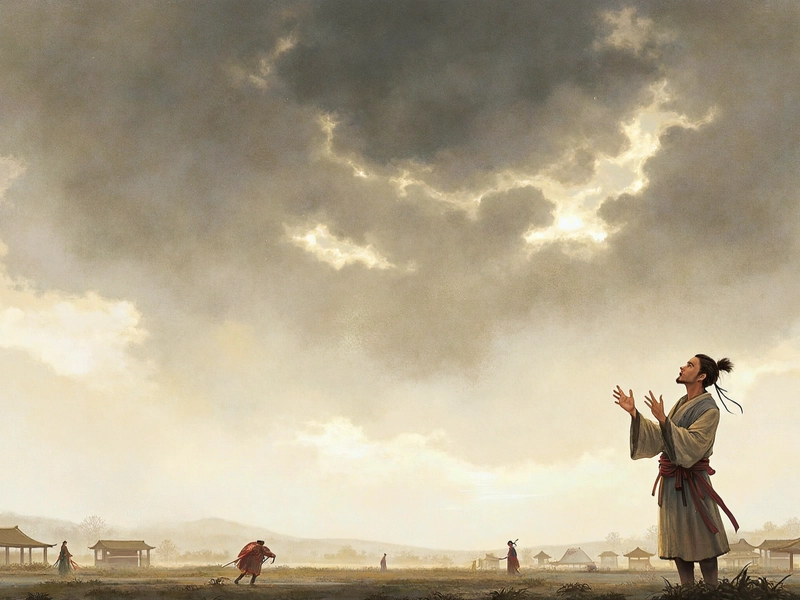
What Does 杞人忧天 Mean in Chinese Idioms?
The Chinese idiom 杞人忧天 (qǐ rén yōu tiān) literally means “the people of Qi worry that the sky will fall.”
- Literal meaning: The people of Qi were afraid the sky might collapse.
- Figurative meaning: Describes unnecessary or groundless worries; to worry about improbable or impossible things.
This idiom is commonly used in Chinese idiom study and is useful for understanding traditional Chinese humor and philosophical thinking.
The Idiom Story Behind 杞人忧天
The idiom originates from an ancient story recorded in Chinese classics. People in the State of Qi were so fearful that the sky might fall that they could not sleep or live peacefully.
This behavior became a metaphor for excessive or irrational worry, and over time, 杞人忧天 has been used to describe anyone who frets unnecessarily about things that are unlikely to happen. It highlights the value of rational thinking in Chinese culture.
Summary
- Idiom: 杞人忧天
- Pinyin: qǐ rén yōu tiān
- Literal meaning: The people of Qi worry that the sky will fall.
- Figurative meaning: To worry unnecessarily; to be overly anxious about improbable things.
Character Introduction
- The people of Qi — Though the story involves the citizens of Qi, it serves as a cautionary tale rather than focusing on specific historical figures. It emphasizes the importance of rational thinking and avoiding needless anxiety.
Idiom Example Sentences – 杞人忧天 in Use
- Chinese: 他总是杞人忧天,担心明天会出意外。
Pinyin: Tā zǒng shì qǐ rén yōu tiān, dānxīn míngtiān huì chū yìwài.
English: He always worries unnecessarily, fearing that something unexpected will happen tomorrow. - Chinese: 不要杞人忧天,事情没那么糟糕。
Pinyin: Bùyào qǐ rén yōu tiān, shìqíng méi nàme zāogāo.
English: Don’t worry needlessly; things are not that bad.
Moral Lesson and Cultural Significance of 杞人忧天
The idiom teaches the lesson that overthinking and worrying about improbable events is unhelpful, and one should maintain rational judgment. Culturally, it reflects Chinese philosophy valuing reason and mental balance. Studying idioms like 杞人忧天 helps learners improve Chinese study, understand idiom meanings, and apply them in daily life.
FAQ About 杞人忧天
- Q1: What does 杞人忧天 mean in Chinese?
It describes someone who worries unnecessarily about things that are unlikely to happen. - Q2: Where does the idiom 杞人忧天 come from?
It comes from an ancient story about the people of the State of Qi fearing that the sky might fall, symbolizing groundless worry. - Q3: Can 杞人忧天 be used in modern conversation?
Yes, it can describe people who overthink or stress about improbable events, often used humorously. - Q4: Is 杞人忧天 negative?
It can be mildly negative, as it points out unnecessary anxiety, but it’s often used in a cautionary or humorous way. - Q5: How can I use 杞人忧天 in daily life?
You can use it to describe someone’s needless worry or in advice, like saying: “Don’t be 杞人忧天; things will work out.”