Chinese Colors: From the Universe of Nature to the Codes of Aesthetics
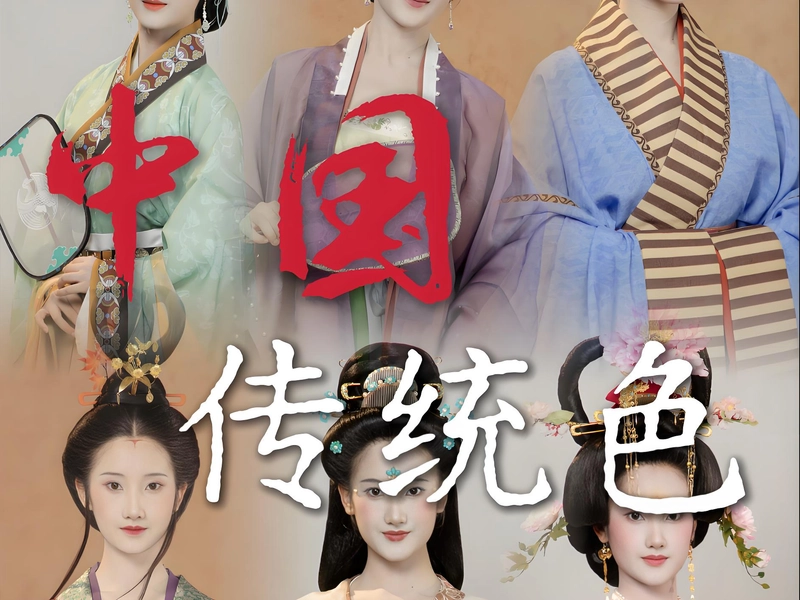
I. Color: The Philosophy of Seeing
After rain, when the sky clears and clouds part, a faint touch of blue appears — poetic and picturesque; painters grind stone blue at their tables, and dyers mix madder root by the furnace. The birth of Chinese colors is not merely the blending of pigments, but like a breath of nature itself, a subtle dialogue between the elements. They come as gifts from mountains, rivers, and streams, reflecting the radiance of the sun, moon, and stars; every mixing, every delicate wash, is an intimate conversation between humans and nature, a condensation of culture and philosophical thought. This is the essence captured in a Chinese traditional color palette or Chinese traditional pigment palette, a foundation for art, design, and fashion in the East.
Why are the names of Chinese colors so enchanting? They are more than mere labels; they are miniature universes, carrying stories, emotions, and wisdom. The gentle Powder Blue evokes the first blossoms of early spring; the profound Indigo resembles distant mountain outlines hidden in mist; the tender Rouge Powder recalls the soft smile of a lady in ancient times brushing her cheek. Each hue is a fold of time and space, a visual embodiment of Chinese color meanings and culture and a key reference in a Chinese color symbolism guide.
Chinese color symbolism is a bridge connecting culture and nature, mind and cosmos. Within these colors, we see not only the world, but also the inner hearts of the ancients and the rhythms of the universe. They carry both the texture of nature and the warmth of culture; every shade is like a flowing piece of history, allowing one to decode the aesthetic secrets of the East through light and color. For designers, artists, and learners, exploring a Traditional Chinese color chart or Chinese color palette for design is an invitation to understand the depth of Chinese cultural color significance, from interior design to fashion, from art to education.
II. Finding Meaning in Things: Colors as Poetry
The naming of Chinese colors has never been a simple labeling; they are often drawn from subtle observations of nature, geography, and daily life. Each name reads like a short poem, a painting, carrying the insights and wisdom of the ancients — a living example of Chinese color symbolism in art and Chinese color meanings and culture.
Observing the Heavens — Drawing Colors from the Sky and Stars
After a rain, when clouds disperse and the sky clears, the clear blue is called Tian Qing (Sky Blue). Tian Qing is more than a color; it embodies the ideals of “heavenly order” and purity, symbolizing cosmic balance and the refined taste of scholars. Song dynasty Ru ware porcelain captured the luster of Tian Qing in clay, reflecting the morning light on the earth, almost allowing one to touch the essence of daylight itself. The ancients sought not only visual beauty but also subtle resonance between color, nature, the cosmos, and the human spirit, a philosophy still evident in Traditional Chinese color guides.
Yue Bai (Moon White) is the cool bluish-white of moonlight falling on the earth. Not pure white, it carries the quietness and poetic charm of the night. In literati writings, it often appears in depictions of moonlit nights, courtyards, and plain garments, like the soft whisper of wind brushing treetops, evoking serenity and distant thoughts. Chinese traditional colors such as Yue Bai continue to inspire artists, designers, and cultural products, connecting Chinese colors in fashion and interior design with historical and emotional resonance.
The shifting sky gives colors additional layers: post-rain blue is called Ji Lan (Clear Sky Blue), fresh and revitalizing; deep blue-gray of the heavens is Cang Qiong (Azure), extending the human gaze to infinity. Observing the sun, moon, stars, clouds, and mist, the ancients transformed subtle natural changes into precise color names, giving each hue a natural rhythm and temporal imprint. Capturing Tian Qing and Yue Bai in craft is no simple task. Glazing requires careful mineral ratios, temperature control, and firing precision to achieve subtle variations, making these colors rare and precious artistic treasures.
Observing Geography — Drawing Colors from Mountains, Rivers, and Minerals
Colors gifted by the earth are rich and profound, recording the texture of land and regional character. Zhu Sha (Cinnabar) comes from minerals, its vivid red symbolizing life, the sun, and good fortune. Dai Se (Indigo Black) comes from the mineral Dai Shi, a bluish-black rock once used for eyebrow coloring, evoking distant mountains — misty, melancholy, and profound. These Chinese color examples frequently appear in poetry, art, and crafts, reflecting both geographic diversity and Chinese cultural color significance.
Different regions produced different colors: loess plateau yields Zhe Shi (Ochre), steady like autumn hills; Jiangnan water towns nurture Yan Yu Hui (Mist Gray), evoking tranquil rivers; Tibetan Plateau reflects in Xue Qing (Snow Blue), blending glacier and sky into a vast vision. Rivers, lakes, minerals, and soils — each hue records the textures of nature and the spirit of place. These geographic hues are incorporated into murals, ceramics, silk, and scholar’s tools, forming a Chinese color palette for design that fuses culture, history, and natural inspiration.
Drawing from Life — Colors Inspired by Daily Life and Plants
Colors from daily life carry nature’s gifts and human aesthetic experience. Yan Zhi (Rouge) colors the cheeks of beauties, symbolizing love and charm; Qiu Xiang (Autumn Fragrance) is the yellow-green of ripening rice, symbolizing harvest and hope. Other hues such as Huai Huang (Sophora Yellow), Ju Huang (Chrysanthemum Yellow), Cha He (Tea Brown), Teng Luo Zi (Wisteria Purple), and Cao Lv (Grass Green) derive from plants or materials. Ancient artisans applied these in weaving, embroidery, painting, and ceramics, expressing emotion, life, and Chinese color heritage.
Color is an invisible thread connecting nature, daily life, and human emotion. Each color name tells a micro-story, a flowing cultural symbol, extending the aesthetic wisdom of the ancients into the present. They beautify life while weaving human emotion, nature, and seasonal rhythms into vibrant visual poetry, allowing us to experience the poetic and cultural depth of life through Chinese colors in art, design, and cultural inspiration.
III. Extracting the Soul from Nature
The beauty of Chinese colors lies not only in their poetic names but also in the craftsmanship and skill behind them. Every hue is a crystallization of nature’s essence, embodying the wisdom of artisans, the patience of time, and the depth of Chinese cultural heritage. Exploring these colors provides insight into Chinese color meanings, Chinese color symbolism, and the traditions that shaped Chinese art and design.
Colors of Stone — The Eternity of Minerals
Mineral colors are rich and vivid, carrying the weight of millennia. Ancient craftsmen followed complex processes: mining stones from mountains, grinding them into fine powder, washing and refining repeatedly until achieving the ideal hue and texture. Lapis lazuli required hundreds of grindings to produce Shi Qing (Stone Blue), while turquoise became Shi Lü (Stone Green) after careful polishing. The refinement of cinnabar was especially meticulous, capturing the very essence of the mineral.
These mineral colors were not only used in painting but also widely applied in Buddhist murals, imperial decorations, and ceramic glazes. The cinnabar in the Dunhuang murals, or the lapis blue and turquoise in traditional landscape paintings, still retain their brilliance after centuries, carrying the spirit of their era and Chinese color history. Each mineral is like a vessel of time, concentrating the forces of heaven and earth into pigments that speak across a thousand years. For designers and artists, understanding these hues is a way to study a Traditional Chinese color palette and explore the Chinese color symbolism in art.
Colors of Plants — The Breath of Flora
Compared with minerals, plant-based colors are soft and dynamic, like the pulse of life itself. Their preparation was equally meticulous: harvesting at the optimal time, soaking and fermenting, then fixing the color with mordants such as alum or slaked lime to ensure brightness and durability. Indigo came from blue plants, Qian Hong (Madder Red) from madder root, Huai Huang (Sophora Yellow) from sophora seeds, and purple from the purple gromwell plant.
These plant colors were widely used in traditional textiles, embroidery, painting, and calligraphy pigments. In the Ming and Qing dynasties, Suzhou and Hunan embroidery employed madder red and sophora yellow to depict flowers, birds, and clothing, achieving rich yet natural hues. Song dynasty meticulous flower-and-bird paintings often used indigo and purple gromwell to depict jade feathers, distant landscapes, or morning mist, bringing nature vividly to life. Folk fabrics, thangka paintings, and Buddhist ritual items also frequently employed plant colors, using yellow, green, and purple to convey auspiciousness, divinity, and seasonal moods, integrating Chinese colors in everyday life, art, and cultural practice.
Colors from Insects — The Essence of Tiny Creatures
In addition to minerals and plants, the Chinese also extracted colors from small creatures, such as the cochineal insect. Yan Zhi (Carmine Red), derived from the insect’s body fluids, is among the warmest and most vivid red pigments. In ancient court clothing, meticulous figure paintings, and Buddhist murals, Yan Zhi was used to depict the cheeks of noblewomen, flowers, and sunsets, producing a charming, brilliant, and enduring red.
For example, in the Ming dynasty painting Women Adorning Hair with Flowers, carmine red colors the cheeks and garments of the figures, bringing them to life. In Dunhuang murals, Yan Zhi is applied to Buddha robes, guardian deities’ attire, and decorative patterns, making the scenes bright yet gentle, retaining vividness across centuries. In scholar’s tools and ritual implements, carmine red was also used to decorate talismans, ceremonial objects, or auspicious motifs, symbolizing celebration, prosperity, and good wishes.
Although derived from tiny insects, these colors impart irreplaceable warmth and vitality to artworks. They remind us that the sources of Chinese traditional colors are diverse: minerals, plants, and animals alike. Every hue embodies natural rhythms and human wisdom, serving as a carrier of Chinese color heritage, Chinese color inspiration, and aesthetic knowledge for artists, designers, and learners exploring Chinese color theory and Traditional Chinese color guides.
IV. The Symphony of Colors in Art and Life
Chinese colors do not merely exist in nature or craft; they bloom with a unique aesthetic brilliance in poetry, painting, objects, and clothing. They provide more than visual pleasure—they carry culture, philosophy, and the wisdom of daily life, making color one of the most vivid languages of Eastern aesthetics. For artists, designers, and learners, exploring a Chinese traditional color palette reveals the philosophical depth and cultural resonance of Chinese color meanings and symbolism.
In Poetry — Colors as Imagery
In classical Chinese poetry, colors are more than visual elements; they convey emotion and life itself. Poets connect deeply with nature, society, and their inner world, using colors to resonate visually and emotionally with words. Du Fu wrote, “The river is green, the birds whiter still; the mountains are verdant, flowers ablaze,” using the green of the river to highlight the birds’ whiteness and the mountain blue to contrast blooming flowers, depicting the vibrancy of spring. Wang Wei’s “Green trees cluster by the village; blue hills slope beyond the walls” integrates color into the rural landscape, letting readers feel the tranquil harmony between earth and sky.
In Song dynasty poetry, colors were subtly applied to describe both people and scenery. Lines like “Dark brows frame her eyes across distant peaks; green locks dyed with spring mist” transfer natural hues to portray a woman’s features, blending human beauty with the splendor of nature. During the late Ming and Qing periods, colors such as Yan Zhi Shui Fen (Rouge Pink), apricot yellow, sophora yellow, and chrysanthemum yellow were widely used in poetry to depict flowers, clothing, or festive scenes, imbuing verses with emotional warmth and visual vibrancy. Misty gray, twilight blue, and moon white conveyed quietude, melancholy, or solitude, while cinnabar, fiery red, and golden yellow symbolized celebration, passion, or hope. In poetry, color becomes a language, merging scenery, emotion, and cultural imagery so readers can not only “see” but also “feel” the essence of Chinese colors in literature.
In Painting — “Assigning Colors According to Nature” and Philosophical Expression
In traditional Chinese painting, color is not only for reproducing nature but also a medium to convey ideals, philosophy, and life rhythms. Blue-and-green landscape paintings primarily use Shi Qing (Stone Blue) and Shi Lü (Stone Green), creating magnificent vistas of mountains and rivers with an ethereal, almost transcendent quality. In Li Tang’s A Thousand Li of Rivers and Mountains, layered greens and blues render rivers, mountains, forests, and mist with both visual grandeur and the philosophical ideal of “unity of heaven and man,” showing that landscapes reflect not only nature but also the spiritual world.
Meticulous flower-and-bird paintings emphasize color layers, shading, and light, allowing viewers to sense life’s rhythm in minute details. Song dynasty painter Zhao Chang applied madder red, indigo, and sophora yellow with delicate precision, making petals flutter and feathers shine, almost audible with the wind and bird song. In Ming and Qing court paintings of women, the use of rouge pink, moon white, and dark gray conveyed lifelike expressions, textures, and emotions, making color a language for life and feeling.
Ink painting pursues a minimalist approach: “ink divided into five shades” conveys infinite meaning through gradations of black, white, and gray. Within blank spaces and washes, landscapes, clouds, and distant scenery breathe. The colors are highly abstracted yet imbued with the philosophy of yin and yang and the rhythm of nature. Literati painting often applied pale blue, smoky white, or gray-blue lightly, allowing viewers to experience the cadence of nature and life through subtle Chinese color inspiration.
In Objects and Clothing — Colors of Ritual and Daily Life
The colors in objects and clothing are not only visually pleasing but also carry deep cultural meaning and ceremonial significance. The sky-blue glaze of Ru ware porcelain is subtle, restrained, and refined, exuding the scholarly spirit and Eastern philosophical temperament. Bright “red under the glaze” conveys the palace’s authority and grandeur, commonly seen in Ming and Qing imperial kilns, symbolizing power and nobility. Blue-and-white, soy glaze, and polychrome ceramics also carry distinct meanings, enhancing daily life while reflecting ritual and social hierarchy.
Clothing colors signify status, rank, and social order. The Yellow Robe of the Yellow Emperor symbolizes supreme authority; Tang officials of the third rank and above wore purple, signifying rank; folk wedding customs—red for men, green for women—express celebration and harmony, wishing prosperity for the family. In the Ming and Qing court, embroidered fabrics were meticulously layered and color-coordinated, with red, yellow, blue, and green conveying specific meanings. Patterns and hues interweave to make clothing a combined symbol of ritual, identity, and aesthetics.
Daily life, festivals, tableware patterns, and textile designs also display color wisdom. Red lanterns for Spring Festival, colorful cords for Dragon Boat Festival, golden tones in autumn, and snowy white in winter reflect seasonal rhythms and ritual significance. The colors of tea sets, screens, furniture, and vases enhance spaces while embodying feng shui, auspiciousness, and the cyclical passage of seasons. By exploring Chinese colors in interior design and Chinese colors for fashion, one can see how cultural principles translate into aesthetics, mood, and symbolism.
The flow of Chinese colors in art and life is more than a visual feast—it carries culture, philosophy, and emotion. Colors compose a silent symphony, interweaving poetry, painting, objects, clothing, and life into the rich tapestry of Eastern aesthetics. Every gaze resonates with history, whispers of nature, and the stirrings of the human heart, allowing us to perceive the rhythm of time, culture, and beauty in everyday life.
V. The Everlasting Cultural DNA
Chinese colors are a dialogue between nature and the human mind—first internalizing nature within the heart, then externalizing one’s inner state through color. Each hue forms a complete, coherent, and vibrant aesthetic system, carrying stories, philosophy, and Chinese cultural memory. This system reflects Chinese color meanings and symbolism, connecting centuries of artistic practice, philosophy, and daily life into a living heritage.
Today, these ancient colors are experiencing a revival in modern life: Palace Museum cultural products, national trend (Guochao) designs, cinematic aesthetics, and contemporary fashion—all showcase the enduring vitality of Chinese traditional colors. For instance, the soft yet profound “Morandi-inspired tones” in Story of Yanxi Palace allow viewers to feel the timeless energy and charm of these colors, offering modern audiences a direct encounter with Chinese color heritage and Chinese color inspiration.
When we speak names like Tian Qing (Sky Blue), Yue Bai (Moon White), and Dai Se (Dark Gray) today, we awaken more than just a color; we evoke entire natural landscapes, emotional experiences, and the cultural DNA embedded in these hues. These colors never fade, just as the profound and enduring aesthetic spirit of Chinese civilization continues to live on with every gaze and perception. For designers, artists, and learners, exploring these tones provides insight into Chinese color history, Chinese color theory, and the living tradition of Traditional Chinese color palettes, allowing both appreciation and application in modern design, fashion, and art.
Related Vocabulary
| Chinese | Pinyin | English |
|---|---|---|
| 天青 | Tiān Qīng | Sky Blue |
| 月白 | Yuè Bái | Moon White |
| 寄蓝 | Jì Lán | Clear Sky Blue |
| 苍穹 | Cāng Qióng | Azure / Sky Blue-Gray |
| 朱砂 | Zhū Shā | Cinnabar |
| 代色 | Dài Sè | Indigo Black |
| 矾黄 | Huái Huáng | Sophora Yellow |
| 菊黄 | Jú Huáng | Chrysanthemum Yellow |
| 茶褐 | Chá Hè | Tea Brown |
| 藤萝紫 | Téng Luó Zǐ | Wisteria Purple |
| 草绿 | Cǎo Lǜ | Grass Green |
| 胭脂 | Yān Zhī | Rouge / Carmine Red |
| 乾青 | Qián Qīng | Stone Blue |
| 乾绿 | Qián Lǜ | Stone Green |
| 红花 | Hóng Huā | Madder Red |
FAQ — Chinese Colors
1. What are the main sources of traditional Chinese colors?
Traditional Chinese colors come from minerals such as cinnabar and lapis lazuli, plants like madder root and indigo, and insects such as cochineal. These natural sources form the foundation of a traditional Chinese color palette with rich hues and Chinese color symbolism.
2. How do natural elements influence the naming of Chinese colors?
Many colors are named after natural phenomena, landscapes, or daily life observations. For example, Tian Qing (Sky Blue) reflects the clear sky after rain, and Yue Bai (Moon White) evokes the soft glow of moonlight. This connection between nature and aesthetics is central to Chinese art, design, and culture.
3. How were traditional Chinese pigments prepared and preserved?
Minerals were ground, washed, and refined; plant-based dyes were harvested and processed with mordants; insect-based pigments were carefully extracted. These meticulous techniques ensured durability, vibrancy, and authenticity in Chinese cultural artifacts.
4. What role did colors play in Chinese art and imperial culture?
Colors conveyed status, ritual, and aesthetics. Imperial yellow represented the emperor, red symbolized celebration, and specific pigments were reserved for porcelain, paintings, and ceremonial clothing, reflecting hierarchy and cultural values.
5. How are Chinese colors represented in poetry and painting?
Poets and painters used colors to convey emotion, atmosphere, and philosophical ideas. Blues and greens evoke harmony with nature, while reds and yellows highlight vitality and authority, illustrating the enduring influence of Chinese color symbolism.
6. How do geography and seasonal cycles shape Chinese color palettes?
Local minerals, flora, and climate influence hues. Jiangnan rivers inspire mist gray, Tibetan glaciers inspire snow blue, and ripening rice fields inspire yellow-green tones, reflecting the traditional Chinese perception of seasons and environment.
7. How are traditional Chinese colors applied in modern contexts?
Modern applications include fashion, interior design, cultural products, and media. Designers reference historical hues like Tian Qing or Dai Se to blend modern aesthetics with Chinese cultural heritage.
8. Why are Chinese colors considered both an art and a cultural philosophy?
Each color embodies nature, human perception, and philosophical concepts like harmony and balance. Through pigments, painting, and design, Chinese colors communicate emotion, history, and worldview, forming a living artistic and cultural legacy.