A Giant Falls, Soul Completes Its Cycle: Farewell to Chen-Ning Yang
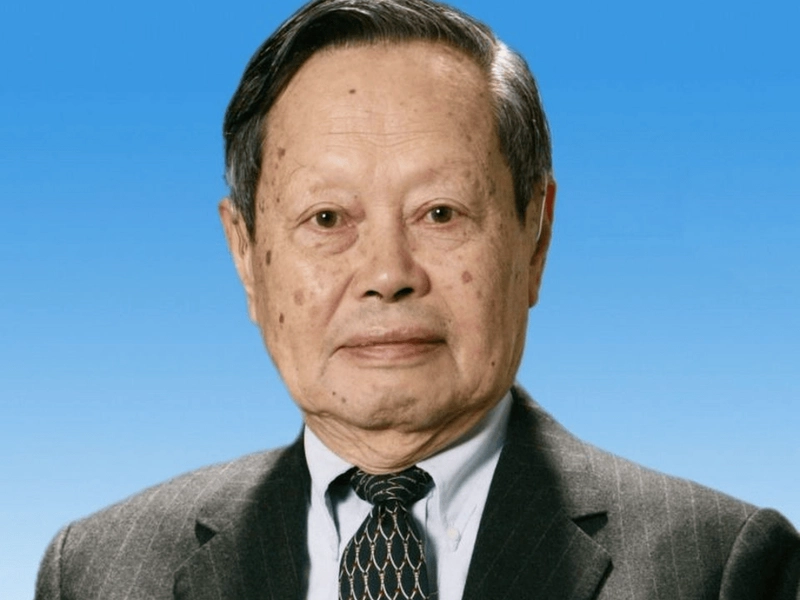
On October 18, Chen-Ning Yang, a world-renowned physicist, Nobel laureate in Physics, academician of the Chinese Academy of Sciences, professor at Tsinghua University, and honorary president of the Institute for Advanced Study at Tsinghua University, passed away in Beijing due to illness. He was 103 years old. A pillar of the scientific community has transformed into an eternal celestial trajectory, having once likened his own monumental century of life to "a circle" — beginning at Tsinghua Garden, traversing the world, and ultimately returning to his roots.
Reflecting on his life, the first half was that of a master exploring the truths of physics, while the latter half was that of a devoted son pouring his heart into China's scientific and educational endeavors. On the day of his passing, the entire nation mourned him, each person bidding farewell to this centenarian in their own way.
Remembrances at Tsinghua Garden — "His Achievements Transcended the Nobel Prize"
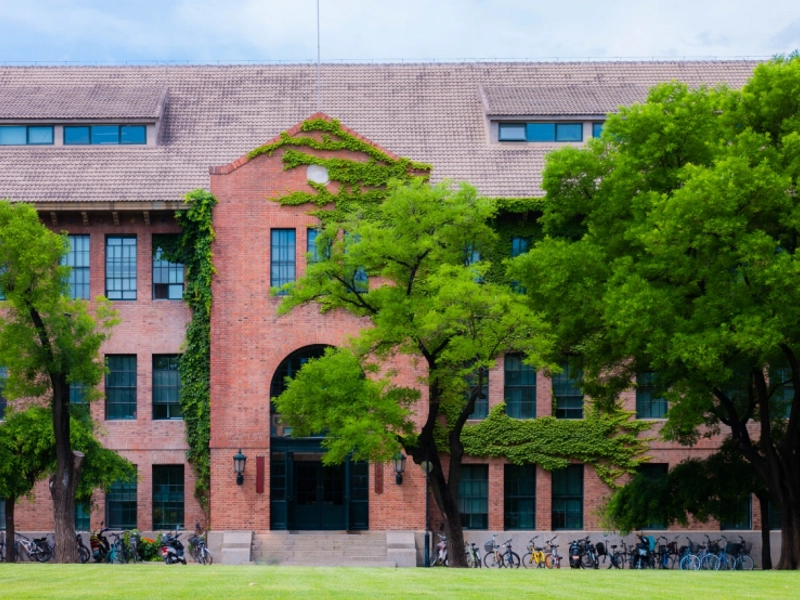
Autumn deepened in Beijing. Within Tsinghua Garden, the Institute for Advanced Study, founded by Mr. Yang himself, stood silent. Vines crept over its red-brick walls, swaying gently in the autumn wind. The warm light that once shone from the second-floor office window was now forever darkened.
As night fell, the mourning area set up within the institute was surrounded by flowers and candlelight. Above the entrance, the citation for the "2021 Touching China Award" was strikingly visible under the soft light: "Standing at the crossroads of science and tradition, breathtakingly brilliant. What you contributed to the world is so profound, few truly understand it. What you dedicated to the motherland is so pure, we all comprehend." These words now carried immense weight.
Among the crowd, a young student soon to begin his doctoral studies here stood for a long time, a white chrysanthemum in hand. "Within the physics community, we are all deeply aware that Mr. Yang's greatness long surpassed the scope of the Nobel Prize," he said softly, yet with the certainty unique to a student of physics. "He was very likely the foremost Chinese physicist, unmatched by any other in his time." Speaking of the institute Mr. Yang founded, his tone filled with respect: "Though modest in scale, it inherits the intellectual lineage of the Institute for Advanced Study in Princeton — championing free thought and pursuing deep discussion. Mr. Yang's scholarly rigor is truly admirable."
Autumn leaves drifted down, gently covering the stone steps before the institute. This spiritual home into which Chen-Ning Yang poured his heart will continue to bear witness to his profound impact on Chinese science, just as the lights still burning late into the night within its walls carry on his relentless quest for truth.
The Lights of "Homecoming Residence" – Strategic Vision and Unfulfilled Regrets
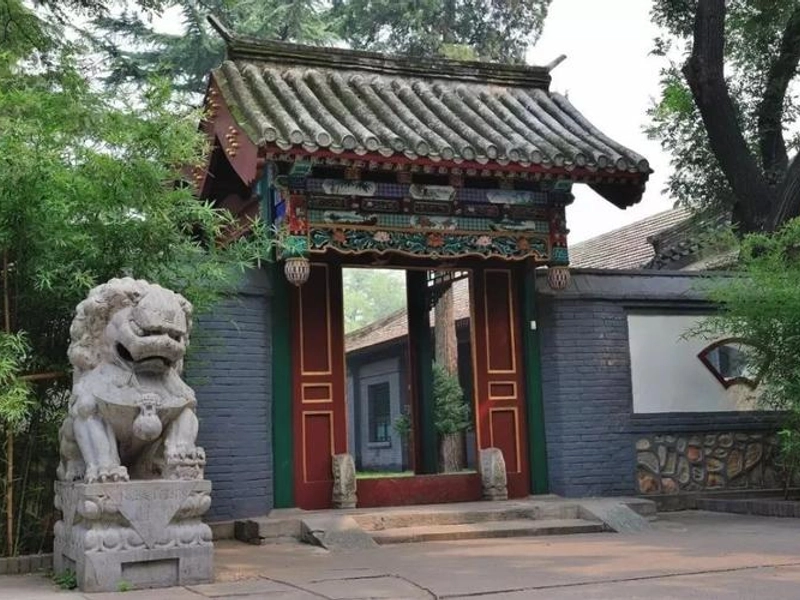
Within Tsinghua Garden's Zhaolan Court, the cream-colored building named "Homecoming Residence" stands quietly, embraced by verdant bamboo as if guarding an extraordinary era. In 2003, Mr. Chen-Ning Yang chose to settle here, dedicating the full passion of his later years to China's scientific and educational endeavors, encapsulated in his poetic lines: "New ventures in my twilight years, an old man returning to his roots by the eastern fence."
Autumn evenings arrive especially early. As scheduled, the warm light in the window of "Homecoming Residence" glows once more. This same light once accompanied the master through countless nights of contemplation. Now, though its owner is no longer there, it still illuminates the reverent faces of students coming to remember. They pause before the building, standing in silent tribute, capturing this eternal homage with their cameras, as if hoping to preserve the glow of this lamp forever.
This light did more than just illuminate the manuscripts on the master's desk; it also lit the path forward for China's scientific development. As nuclear physicist Academician Wenlong Zhan noted, Mr. Yang possessed "lofty strategic vision, spoke objective truths, and focused on national development." This light also "selflessly guided" scholars like Xiaoyun Wang, reflecting the master's lifelong aspiration—"my greatest hope is that Chinese people will produce world-class scientific research."
Tonight, though the light of "Homecoming Residence" shines in remembrance, the spiritual torch it symbolizes has long been passed on, burning eternally in the hearts of countless researchers.
A Poem in the Hometown Rain – An Inspiration for All Chinese
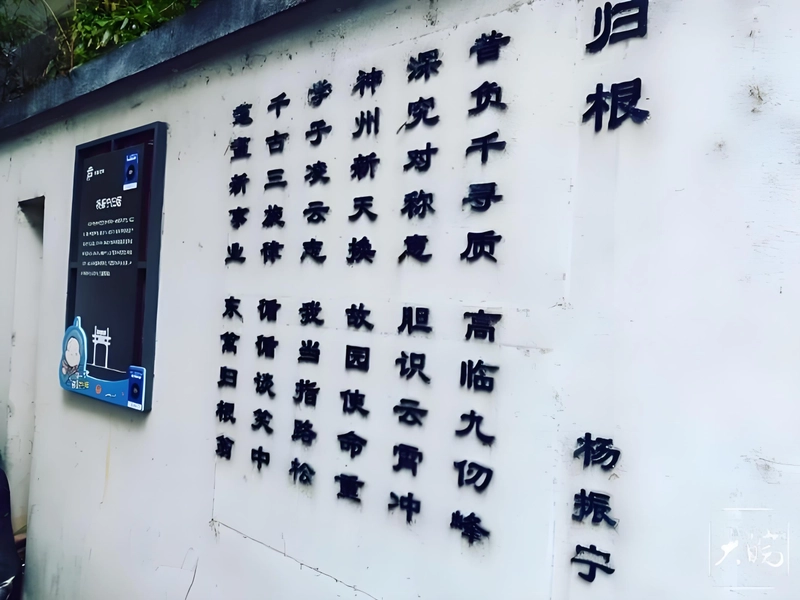
That same afternoon, a thousand miles away in Hefei, a fine rain soaked the old city's Sigu Alley—Yang's birthplace. On the wall at the alley's entrance, his poem "Returning to the Roots" is inscribed: "The divine land has changed its skies, weighty the mission of the native shore. The student's ambition soars high; I shall be the pine that points the way."
In the rain, citizens gathered spontaneously, many parents having brought their children purposefully. A Hefei resident's words spoke for everyone: "I believe it's not just people from Hefei; any Chinese person would feel proud of him." He said earnestly that Yang, winning the Nobel Prize in his thirties, was a tremendous role model for the Chinese people. "He always kept the motherland in his heart… That is also why we admire him so much." The continuous drizzle seemed like heaven itself weeping for this scientific giant.
In the evening, in front of Yang's old residence in Sanhe Ancient Town, Hefei, lanterns cast a faint glow in the night rain. People came braving the weather, a father standing quietly, holding his child's hand. The master's roots are deeply planted here; his spirit, through scenes like this, is quietly being passed on to the next generation.
A Century of Quest: The Legacy of Chen-Ning Yang's Life and Achievements
Behind the public's profound mourning and the academic world's deep respect lies the legendary life of Mr. Chen-Ning Yang, which spanned a century, bridged East and West, and his scientific accomplishments that expanded the boundaries of human understanding.
Yang's century-long life is a grand tapestry intricately woven with modern Chinese history, leaving an indelible mark on the world's scientific hall of fame.
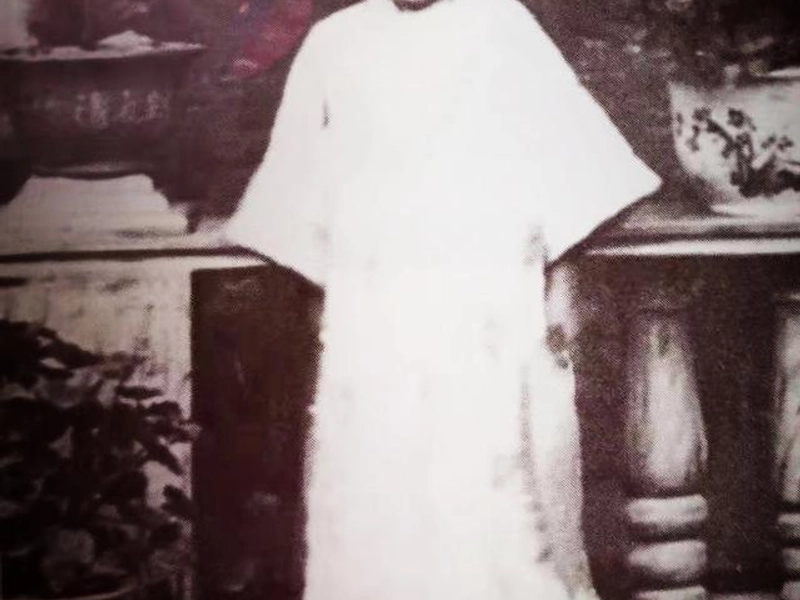 Chen-Ning Yang was born into a family of scholars in Hefei, Anhui. His father, Yang Wuzhi, was a prominent early Chinese mathematician and a pioneer of modern mathematics in China. He not only personally provided Yang's early education but also imparted a spirit of rigorous scholarship and deep traditional cultural literacy. However, his childhood and youth coincided with a period of national crisis and turmoil. Moving from place to place with his family, he completed his secondary education amidst displacement, personally witnessing the suffering of a nation in peril.
He was admitted to and graduated from National Southwest Associated University (SWAU)—a legendary institution formed by the merger of Peking University, Tsinghua University, and Nankai University during the War of Resistance against Japan. Under extremely arduous conditions, he studied under physics masters such as Ye Qisun, Wu Ta-you, and Wang Zhuxi, receiving the finest physics education available in China at the time. SWAU's ethos of "Fortitude, Perseverance, Hard Work, and Excellence," combined with its rich academic atmosphere, shaped his initial scientific taste and sense of national purpose.
Awarded a scholarship based on his outstanding academic record, he went to the United States for further study, entering the University of Chicago. As one of the world's centers of physics in the post-war era, he studied under Edward Teller, "the father of the hydrogen bomb," and received his Ph.D. in 1948. At Chicago, he immersed himself fully in the forefront of physics, laying a solid foundation for future academic breakthroughs.
He entered the world-renowned Institute for Advanced Study in Princeton for postdoctoral research and began his fruitful collaboration with Tsung-Dao Lee. He subsequently held a long-term professorship at Princeton University and, in 1966, moved to Stony Brook University as the Director of the Institute for Theoretical Physics, building it into a leading center for theoretical physics. These nearly two decades marked the peak of his academic creativity, producing epoch-making achievements such as Parity Nonconservation and Yang-Mills Gauge Theory, establishing his status as a master of his generation.
During the Cold War, prior to the thaw in Sino-American relations, he acutely perceived the signs of historical change. In 1971, he became one of the first prominent ethnic Chinese scientists to resolutely visit China, breaking more than two decades of academic isolation. His meeting with Premier Zhou Enlai marked the beginning of his decades-long endeavor to foster scientific exchange and cultivate talent between the two nations—an endeavor in which his strategic foresight and courage proved indispensable.
Progressing from an honorary professor at Tsinghua to formally settling in Tsinghua Garden, he moved the final stage of his life entirely back to his homeland. This was not merely a geographical return but a return of spirit and career. He poured all his energy into "Homecoming Residence," dedicating himself to advancing basic scientific research in China and guiding young students.
He renounced his U.S. citizenship and became an Academician of the Chinese Academy of Sciences. This decision marked the completion of his "return to the roots" journey, symbolically finalizing his ultimate transition from a "citizen of the world" scientist to a "devoted son of the nation," dedicating his entire identity and honor to his motherland.
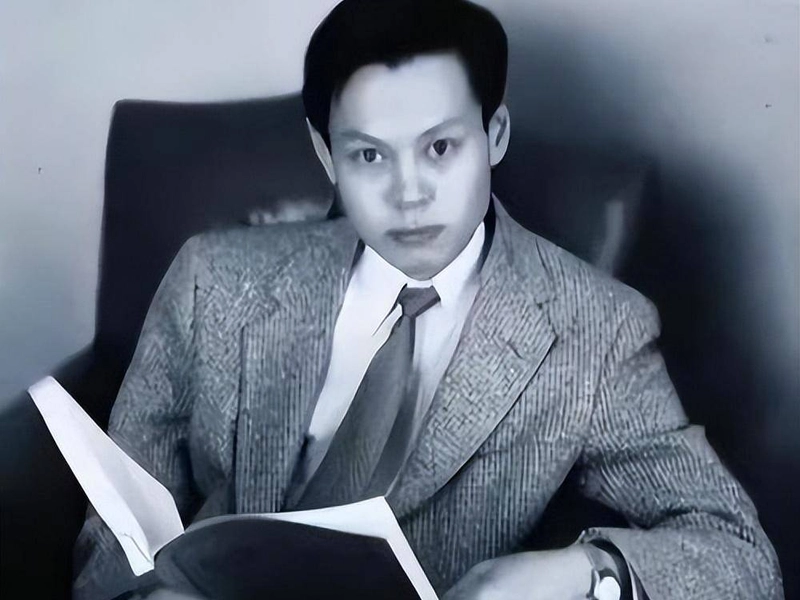
Chen-Ning Yang's scientific work profoundly reshaped the landscape of physics from the second half of the 20th century onward. His contributions far exceed the honor of the Nobel Prize, with his core achievements constituting three milestones, each sufficient to secure an immortal legacy in the history of science.
In 1956, in collaboration with Tsung-Dao Lee, Yang challenged a fundamental dogma of physics.
This represents the pinnacle of Yang's scientific career and is widely recognized as his most important and far-reaching contribution.
This work originated from research in statistical mechanics models but unexpectedly sparked a revolution in mathematics.
Beyond these three milestones, Chen-Ning Yang also made foundational and pioneering contributions in fields such as statistical mechanics (e.g., phase transition theory) and condensed matter physics (e.g., superconductivity, flux quantization). His life was a process of systematically and transformationally shaping multiple core domains of physics. His scientific legacy is not merely a collection of specific formulas and theories, but an exploratory spirit rooted in profound mathematical beauty and physical intuition, continuously inspiring generations of scientists.
III. Spiritual Legacy: A Master of Science and Cultural Ambassador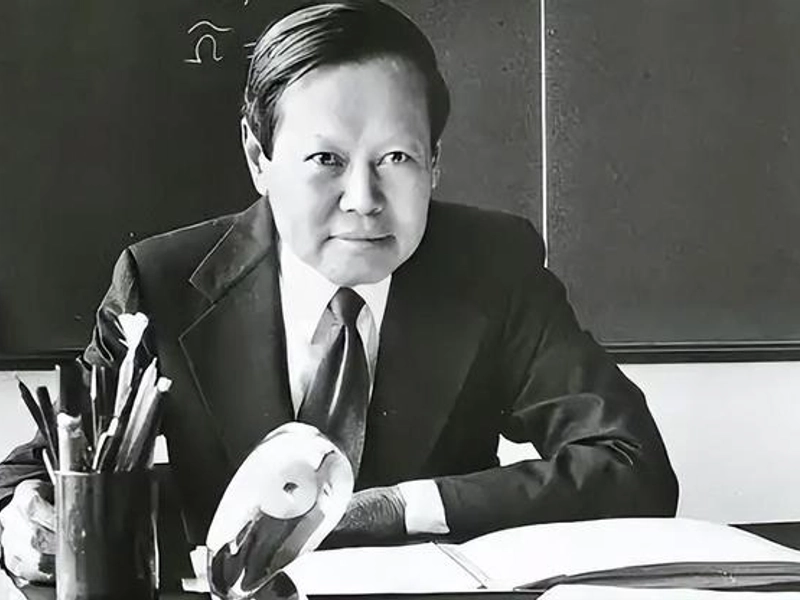
Mr. Chen-Ning Yang's life was an epic that perfectly blended the exploration of "the principles of things" with the practice of "the way of humanity." What he bequeaths to the world extends far beyond his brilliant scientific achievements, encompassing a rich and profound spiritual legacy.
As a scientific thinker, Yang possessed a deep understanding of the nature of science. He summarized the process of scientific discovery into three levels: "inspiration – insight – demonstration," placing particular emphasis on the spontaneous and creative value of "inspiration." His exposition on "scientific beauty" was especially incisive; he believed the beauty of physics lies in the "mystery" that a handful of fundamental laws can enable the understanding and prediction of immensely diverse natural phenomena. His research methodology of "thirty percent conception, seventy percent factual foundation" emphasized achieving conceptual breakthroughs based on solid groundwork, reflecting his unique philosophy of science.
Yang consistently observed China's scientific and technological development with profound strategic foresight. As early as the 1970s, he presciently suggested that China should prioritize developing "rooted" disciplines like applied mathematics and computer science. His advice regarding the development path for China's high-energy physics demonstrated both his grasp of the international scientific frontier and his deep understanding of China's national conditions. He repeatedly stressed the importance of "cultivating top-tier talent within China itself," a philosophy that directly contributed to the founding and development of the Institute for Advanced Study at Tsinghua University.
With his profound grounding in Chinese culture and broad international perspective, Yang built bridges of understanding between Eastern and Western civilizations. He could engage deeply with Western academia in fluent English, while also expressing himself masterfully in elegant Chinese within his native cultural context. His astute observation that "the history of the twentieth century is, as Du Fu wrote, a history where 'war flames have spanned three consecutive months'" showcased his unique ability to integrate modern science with classical humanities. He defined his cultural role as "an interpreter conversant with both East and West," promoting deep dialogue between civilizations by comparing Eastern and Western modes of thinking.
"Rather be awkward than clever; rather be plain than ornate" was not merely a motto of scholarship in his study but a lifelong creed he steadfastly upheld. This wisdom of "great skill seems clumsiness" was reflected in his academic courage to tackle the most fundamental and difficult problems in physics, as well as in his simple choice to return to Tsinghua in his later years, content to be a "guiding pine." He rejected ostentation and shortcuts, always maintaining the purest pursuit of truth. This spiritual temperament has become a treasured asset for the Chinese scientific community.
Yang understood deeply that the sustained development of science requires the nourishment of tradition. He brought the academic traditions and scholarly spirit of top institutions like the Institute for Advanced Study in Princeton back to China, carefully cultivating them within Tsinghua Garden. His guidance for young scientists was both rigorous and warm; renowned scientists like Yigong Shi and mathematician Shou-Wu Zhang were profoundly influenced and encouraged by him. Through various initiatives such as the "Chen-Ning Yang Lectures" and "Chen-Ning Yang Scholarships," he quietly labored to help form China's scientific traditions.
Yang once said affectionately, "My life is like a drama." The protagonist of this grand drama was both a physicist exploring the universe's mysteries and a cultural son ever-mindful of his homeland; both a thinker standing at the pinnacle of human intellect and a generous mentor nurturing younger scholars. His life trajectory proves that the most cutting-edge scientific exploration and the deepest humanistic concern can achieve perfect unity within one individual—this is the most precious revelation he has left for the world.
Preferring Awkward Sincerity over Flashy Cunning, His Spirit Endures for Eternity
From the bluestone slabs of Sigu Alley to the ivy-covered walls of Tsinghua Garden, from the warm lamplight of "Homecoming Residence" to the solemn sea of flowers at the Institute for Advanced Study—the circle drawn by Mr. Chen-Ning Yang has now come to a perfect close.
He bequeathed to the world profound contributions like the "Yang-Mills Gauge Theory," and a life creed as genuine as "Rather be awkward than clever; rather be plain than ornate." He was a scientist of dazzling brilliance, but even more, he was a "Guiding Pine," deeply rooted in his homeland and nation.
Mr. Yang once expressed his hope to leave behind not just his scientific work, but also an authentic "Chen-Ning Yang." Today, in the spontaneous reminiscence of countless people, in the reverent gaze of students, and in the moist air of his hometown, the answer has become clear—
He was a man whose century-long life perfectly embodied what it means to be a "master" and a "devoted son." His star-trail is now eternal; his circle of life illuminates the path for generations to come.